A proposed data center in Brookwood is being described in familiar economic-development terms: investment, jobs, tax revenue and growth.
But the more important story is physical.
The project would place a building roughly 2 million square feet in size near Brookwood Middle School, with construction stormwater authorized to flow toward Hurricane Creek and its tributaries. The developer has not formally committed to building there. The state has nevertheless approved a construction permit, and local officials are preparing to consider rezoning.
That sequence reveals something important about Alabama’s data-center expansion: The technology may be digital, but the consequences are not.
These facilities require land, substations, transmission capacity, cooling systems, roads, water management and long-term utility contracts. Before a server is installed, a community may already have committed itself to decades of infrastructure decisions.
The Brookwood proposal is therefore not simply a question of whether a company will build a large computer facility. It is a test of whether local governments can evaluate an industrial project whose most important effects are difficult to see from the road.
What has actually been approved?
The Alabama Department of Environmental Management approved a construction stormwater permit July 20 for APLD BHM-01 LLC. Documents reviewed by WBRC connect that company to Applied Digital, a Dallas-based data-center developer. The permit anticipates construction beginning July 22 and continuing through Dec. 31, 2028.
The filing describes a facility of approximately 2 million square feet on a parcel approaching 1,300 acres. The initial construction area would cover a little more than 130 acres. (Source)
That is substantial. But the permit does not establish that the data center will definitely be built.
Applied Digital told WBRC that it continually evaluates potential sites and that no decision had been made to proceed at the Brookwood location. The company’s public announcement in June referred to a new campus in “a new southern state” without naming Alabama.
This distinction matters. A permit is evidence that a project has advanced through one part of the regulatory process. It is not proof that financing, utility service, tenant commitments, final zoning or construction will follow.
Nor does the stormwater permit answer the questions many residents are asking. It does not specify the facility’s final cooling system, water source or electrical load.
The building is only the visible part
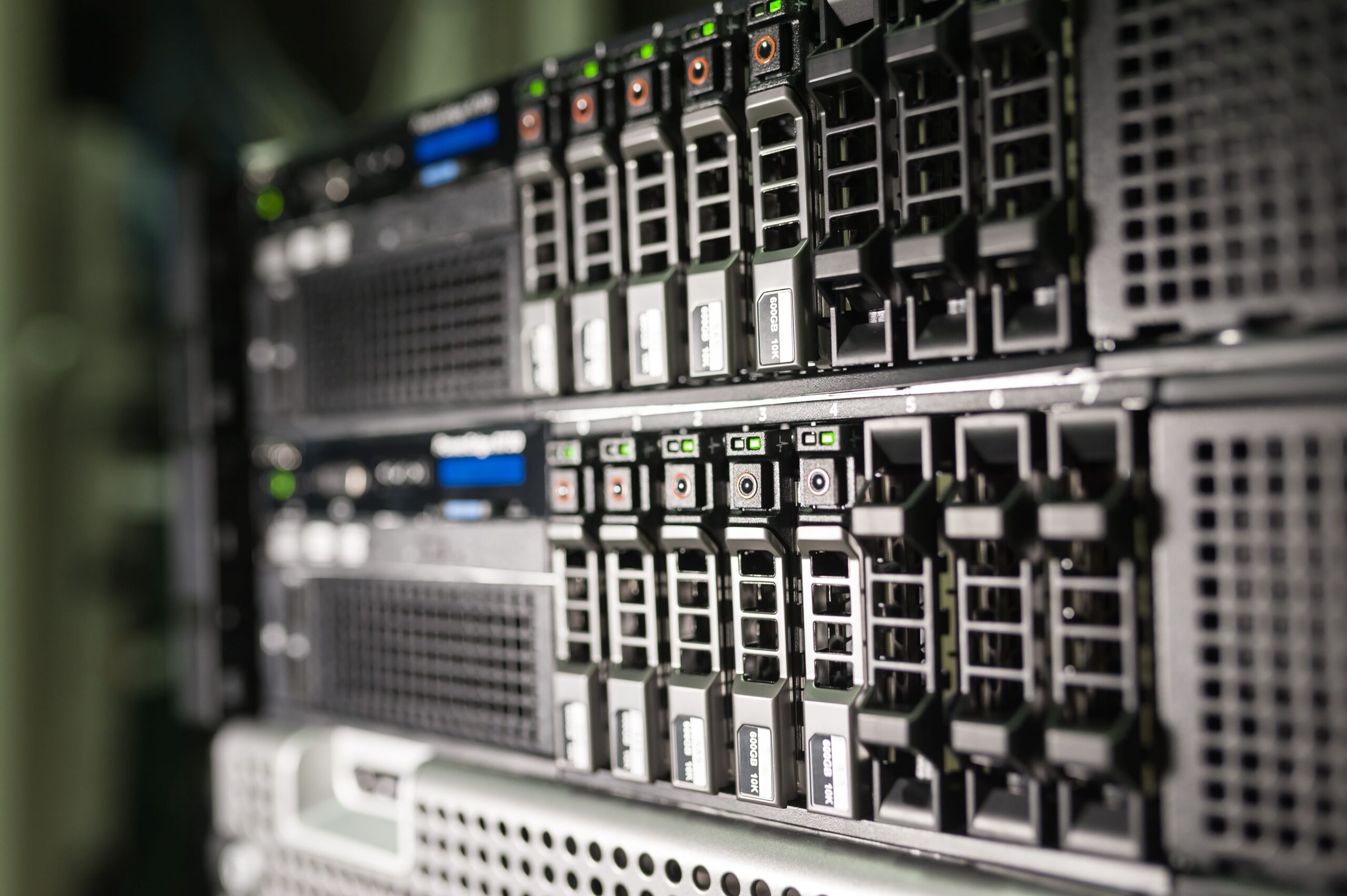
A data center is often described as a warehouse full of computers. That is technically accurate but practically incomplete.
The building is a shell around several tightly coupled systems:
- High-voltage electrical service and substations
- Backup generators and fuel storage
- Cooling equipment
- Fiber-optic connections
- Security systems
- Roads and construction access
- Drainage and stormwater controls
- Continuous maintenance and equipment replacement
The computer equipment is only one part of the project. The harder question is what must be built around it.
Applied Digital’s June securities filing offers an indication of the scale involved. The company disclosed a 210-megawatt campus in an unnamed Southern state, supported by a 15-year “take-or-pay” lease. Under that arrangement, the customer remains obligated to pay for contracted capacity even if it does not use all of it. The company valued the base lease at approximately $5.2 billion and said initial operations were expected in 2028. (SEC filing)
Applied Digital did not identify that campus as Brookwood. It would be a mistake to treat the two projects as definitively identical. But the disclosure shows what modern hyperscale facilities can represent: not merely a large building, but an industrial power customer with a long-term financial and utility footprint.
That is why square footage is a poor substitute for the information the public actually needs.
The meaningful numbers are likely to be electrical demand, peak load, cooling design, water consumption, backup-generation requirements and the cost of connecting the facility to the grid.
The power question is moving to the state level
Alabama’s Public Service Commission opened a generic proceeding in July to establish procedures for reviewing electric-service contracts between Alabama Power and large data-center customers. The proposed process would allow contracts to be submitted for commission review, with the possibility of approval if they are not rejected within 60 days. (PSC information)
That proceeding is an acknowledgment that data centers are different from ordinary commercial customers.
A retail store or office building can usually be added to an existing electrical system without reshaping the utility’s long-term planning. A large data center may require new substations, transmission upgrades and generation capacity. Those investments must be paid for somehow. The central policy question is whether the costs remain with the new customer or are distributed more broadly across the utility system.
The answer cannot be inferred from a company’s projected investment or a mayor’s estimate of future tax revenue.
A project can produce billions of dollars in construction spending and still create difficult questions about who pays for roads, water systems, grid upgrades and environmental oversight. Those questions are not arguments against development. They are the basic accounting of development.
Jobs are real—but easy to misunderstand
Brookwood Mayor Joe Barger has said a project could bring significant revenue to the city, including money for infrastructure, parks and services. At a Sept. 2 community meeting, he said economic development could help support grocery stores and medical facilities.
The mayor also referred in earlier comments to the possibility of thousands of workers coming to the area during construction. (Source)
The distinction between construction employment and permanent employment is critical.
Large facilities can require substantial labor during site preparation and construction. Once operating, however, they are designed to perform a great deal of computing with relatively few people on site. The permanent workforce may include electrical and mechanical technicians, security staff, network specialists and facility managers. It is not necessarily proportional to the building’s size or capital cost.
A 2-million-square-foot facility does not create 2 million square feet of office employment. Much of the building may be occupied by equipment, cooling systems, electrical infrastructure and space reserved for future expansion.
The public should therefore ask for job projections divided into categories:
- Temporary construction jobs
- Permanent on-site jobs
- Indirect jobs created in the surrounding economy
- Expected wages and required qualifications
- The time period over which those jobs will exist
Without that breakdown, “jobs” is a description of activity, not an analysis of economic benefit.
The transparency problem is not incidental
At the September meeting, residents raised concerns about water, electricity, environmental effects and the nearby middle school. The city also acknowledged that the mayor had signed a nondisclosure agreement while working with the Tuscaloosa County Economic Development Authority. The rezoning request under “Project Brookwood” is scheduled for possible city council consideration Sept. 15. (WBRC report)
Nondisclosure agreements are common in commercial site selection. Companies do not want competitors to know where they are negotiating, and economic-development officials often argue that confidentiality is necessary to attract investment.
But the logic changes when a project reaches the point where it may alter zoning, public infrastructure and environmental conditions.
A private company may keep its business plans confidential. A government should not use that confidentiality to prevent residents from understanding the public obligations being considered on their behalf.
The recent history of Project Marvel in Bessemer illustrates the stakes. Residents challenged the rezoning process for a proposed $14.5 billion hyperscale data center, alleging that the decision lacked adequate planning justification. The lawsuit was dismissed in June after more than a year of litigation, but court records did not state why the parties agreed to end the case. (WBRC report)
The case did not establish that data centers are inherently inappropriate. It did demonstrate that secrecy and accelerated development can turn a planning decision into a legal dispute.
The correct question is not whether Brookwood needs technology
Data centers are not inherently good or bad. They are industrial facilities serving a digital economy.
The relevant question is whether a particular project produces benefits that justify its demands—and whether those demands are understood before the commitments become difficult to reverse.
For Brookwood, that means the public process should establish, at minimum:
- The facility’s expected electrical load
- Who will pay for grid upgrades
- Its water source and projected consumption
- The cooling technology to be used
- Backup-generator emissions and fuel storage
- Stormwater and erosion controls
- Construction effects on the nearby school
- Permanent employment projections
- Tax abatements and their duration
- What happens if the facility is delayed, downsized or abandoned
The technology itself is not mysterious. A data center is a concentrated industrial consumer of electricity, connected to communications networks and operated for a customer that may not be publicly identified.
What remains uncertain is the contract between the facility and the community around it.
That contract is being written now—in permits, zoning decisions, utility agreements and tax policies. The people who will live with the result should be able to read it before construction begins.