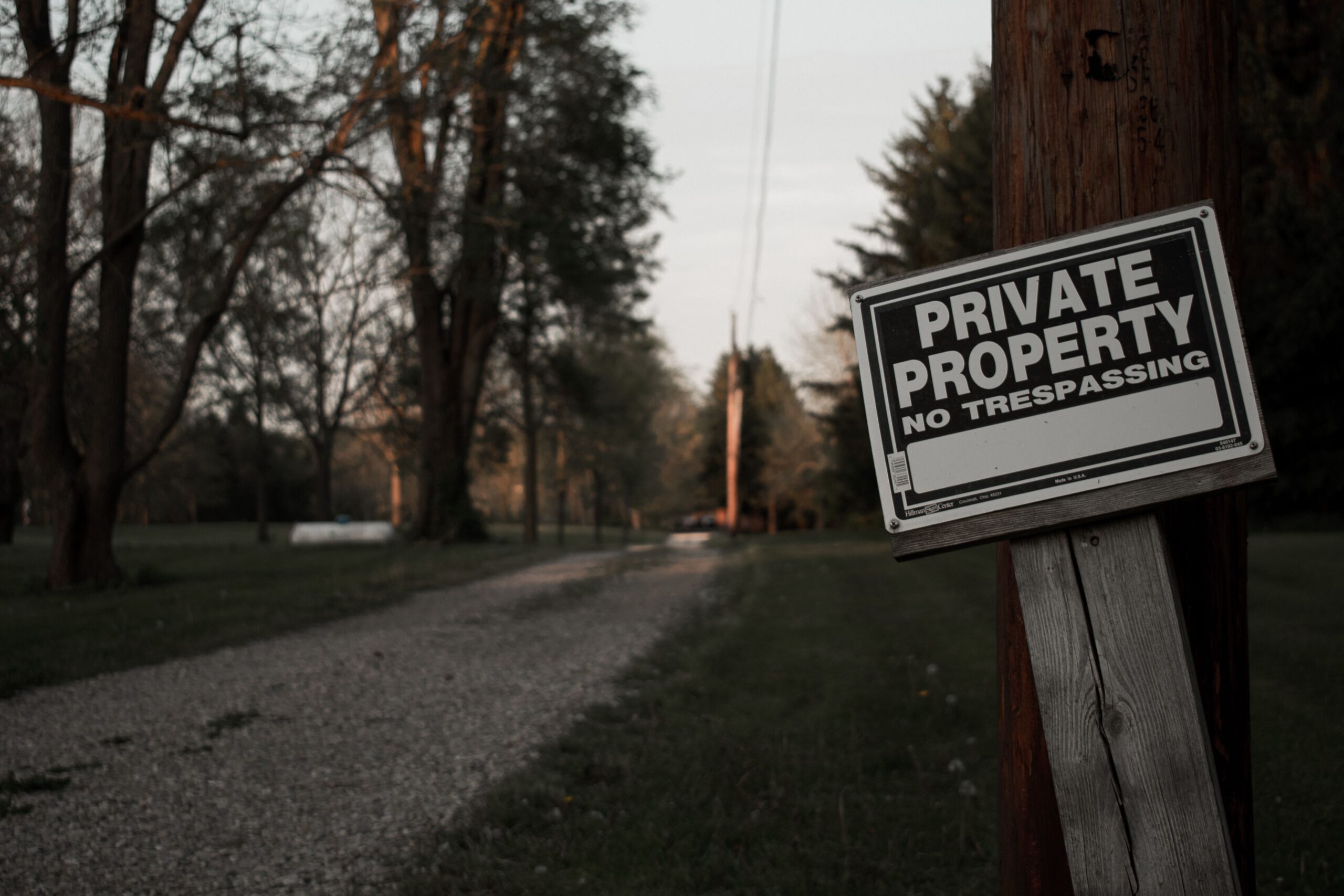
The administration’s new hunting-access push starts with a reasonable complaint: too much public ground is difficult to reach, difficult to understand or surrounded by rules that do not make sense to the people expected to follow them.
But a presidential order can direct an agency to review a restriction. It cannot repair a washed-out road, rebuild a bridge, buy an access easement, clear a boat ramp or put more game on a dry piece of ground.
That distinction matters. The difference between legal access and usable access is where this policy will either prove itself or come up short.
The order opens a policy window, not every gate
Executive Order 14429, signed September 17, directs federal agencies to propose broader hunting, fishing, shooting and recreation access on federal lands. It calls for infrastructure construction and maintenance, better access to difficult-to-reach federal lands, voluntary easements, land exchanges and cooperative agreements with states and local governments.
The order also directs a review of high-demand Forest Service river-access lotteries within 60 days, calls for proposed changes to the seasonal migratory-bird hunting process within 90 days and encourages states to expand Sunday hunting within 365 days. Those are instructions for future agency action. They are not an immediate guarantee that a hunter can enter a particular parcel, drive a particular road or hunt a particular species.
The Fish and Wildlife Service has already adopted a similar presumption. Its Director’s Order 233 tells Service offices to identify new or expanded hunting and fishing opportunities and to document existing barriers. It also says restrictions must be justified by law, public safety or resource conditions, with coordination among federal, state, Tribal and local authorities.
That is a useful starting point. It is not the same thing as having a maintained access system.
A public parcel can still be a hard place to hunt
Anybody who has spent time in the field knows the map is only the first part of the answer.
A parcel may be public but reachable only by crossing private land. A road may appear on a digital map but be closed after rain, fire or a bridge failure. A refuge may be open to hunting but have too little parking, no usable launch or more competition than the habitat can support. A boundary may be legal on paper and nearly invisible on the ground.
Those are not technicalities. They determine whether a family can make a safe day trip, whether an older hunter can reach the water and whether a new participant decides to come back next season.
The federal government is still building the information system needed to describe these conditions consistently. Under the MAPLand Act implementation schedule, standardized federal data on access easements was due in April 2026, while data on roads, trails, recreation sites and hunting restrictions is scheduled for April 2027. Even when those layers are published, users will still need to verify seasonal closures, road conditions, permitted travel modes and local rules.
A map can tell you where the boundary is. It cannot tell you whether the road holds after a week of rain or whether the creek crossing has become a mistake.
Every new access point creates a maintenance bill
The Forest Service already has more access infrastructure than it can keep in good shape. The agency says its deferred-maintenance backlog exceeded $8.6 billion in fiscal year 2023. That portfolio includes roads, bridges, recreation sites, buildings and other assets needed for the agency’s missions.
That number is not a hunting bill, and it should not be presented as one. It does show the condition of the system agencies are being asked to expand.
A new road is not finished when the gravel is spread. Somebody has to maintain the road, replace culverts, manage erosion, clear fallen trees, inspect bridges and decide whether the route is safe after a storm. A new boat launch needs parking, sanitation, signage, law enforcement and a plan for heavy use. An access easement needs clear boundaries, communication with landowners and enforcement when somebody ignores the agreement.
There is nothing wrong with building access when the benefit justifies the cost. But the cost has to be assigned before the ribbon cutting. Otherwise the government is not creating access. It is creating another piece of deferred maintenance.
More access can produce more pressure
Opening a place does not guarantee a better hunt. Sometimes it only makes a crowded place easier to find.
A U.S. Geological Survey study of waterfowl hunters in the Atlantic and Mississippi flyways found that limited public hunting places, crowding, hunting pressure and interference from other hunters were meaningful barriers. In the study, 43 percent of Atlantic subflyway respondents and 49 percent of Mississippi subflyway respondents described overcrowding as extremely or very limiting. The same study found that a quarter of Mississippi subflyway respondents and more than a third of Atlantic respondents described the availability of public hunting places as extremely or very limiting.
That is not an argument against access. It is an argument for managing access honestly.
If a new road sends more vehicles into a sensitive drainage, the agency needs to know what happens to wildlife movement, habitat, fire risk and neighboring landowners. If a refuge opens another unit, managers need a plan for parking, enforcement, harvest monitoring and conflicts with anglers, hikers and wildlife watchers. If a river lottery is reformed, officials need to measure whether the change improves fair opportunity or simply moves the line from one crowded access point to another.
Habitat is not a parking lot. It has limits.
What should count as success?
The administration is right to ask whether unnecessary restrictions are keeping people out. The mistake would be to measure success only by the number of regulations removed or acres described as available.
A serious access program should report practical measures:
- How many access points are open and usable during the season?
- How often are roads, bridges and ramps closed or unsafe?
- How far must an ordinary user travel to reach a functioning opportunity?
- Are boundaries, easements and restrictions understandable on the ground?
- What happens to crowding and hunter conflict after access improves?
- Can wildlife populations and habitat withstand the added pressure?
- What is the annual maintenance cost per access point?
- Do agencies have enough staff for enforcement, search and rescue, and public communication?
Those questions are less dramatic than announcing millions of newly accessible acres. They are also more useful to the people who actually have to use the ground.
Not every restriction is waste
Some restrictions are unnecessary. Others exist because of fire danger, endangered species, seasonal wildlife needs, private-property rights, public safety or conflicts among users. Even the Fish and Wildlife Service’s access policy recognizes that limitations can be justified by law, safety or resource conditions.
A hunter who has walked into a closed drainage after a dry summer understands this better than most. A locked gate is not automatically government overreach. Sometimes it is the reason a bad situation does not become a rescue call or a dead fishery.
The right standard is not maximum access at all times. It is the greatest practical opportunity that the land, wildlife and surrounding community can support without being damaged beyond repair.
Access is a continuing service
Hunting heritage is often discussed as if it can be restored by proclamation. It cannot. The tradition survives through work: maintaining a boat, reading a map, teaching a new hunter, respecting a locked gate, checking the weather, carrying out meat and accepting that a legal opportunity may still be a poor decision.
The federal government can make some of that work easier. It can clarify rules, publish better maps, negotiate easements, fix infrastructure and remove restrictions that no longer serve a purpose. States, Tribes, counties, landowners and local communities will have to do their part as well.
But the final test is simple. Can a person with a legal license reach the place safely, understand the boundaries, find enough functioning habitat and share the opportunity without overwhelming the resource?
Public access is not a line in an executive order. It is a road that holds, a boundary that is clear, a boat ramp that reaches water, a trail that is maintained and a wildlife population that can withstand another season of pressure.
Open the gate, by all means. Just make sure there is somewhere worth going when people arrive.