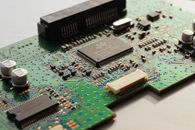

Remote work depends on a chain of assumptions. The person who applies for the job is assumed to be the person who appears on camera, receives the company laptop, logs in from the declared location and performs the work.
That chain is not always intact.
On October 13, the Justice Department announced charges, arrests and searches connected to a North Korean remote-IT-worker operation that allegedly affected more than 70 U.S. companies and generated approximately $3 million. Investigators said U.S.-based facilitators hosted employer-issued laptops in residential “laptop farms,” while overseas workers used remote-access tools and proxy infrastructure to appear to be working from inside the United States.
The defendants are accused, not convicted. But the technical lesson does not depend on the eventual outcome of every criminal case. The operation demonstrates that remote employment has become an identity and access-control problem, not merely a hiring problem.
The Justice Department’s account of the coordinated actions says investigators charged 14 people, made two arrests, searched more than 40 suspected laptop farms in Texas and seized approximately 187 laptops and KVM devices. The affected employers included companies in health care, communications, cybersecurity, retail and manufacturing.
The laptop can be genuine while the employment is fraudulent
A company may issue a real laptop to a real address. The network connection may be ordinary. The credentials may be valid. Multifactor authentication may work exactly as designed.
None of those facts proves that the person operating the computer is the person the company hired.
A laptop farm is a physical location where employer-issued computers are received, powered and connected to the internet for remote operators. The FBI says North Korean IT workers have increasingly distributed these arrangements across more residences, with fewer devices at each location, making them less vulnerable to a single discovery or outage.
The overseas operator may control the device through remote-access software. The FBI has identified tools including AnyDesk, TeamViewer, RustDesk, Chrome Remote Desktop and Splashtop Streamer. These are legitimate products with legitimate uses. Their presence is not proof of criminal activity. It is evidence that the company needs to understand who installed the software, why it is present, what it can control and whether its use is logged.
The operation may also use hardware KVM devices. A keyboard-video-mouse-over-IP device can provide remote control of a computer’s keyboard, display and mouse, sometimes below the level at which ordinary endpoint tools operate. That creates a simple but important question: Does the employer know every path by which the laptop can be controlled?
Identity verification stops too early
Many organizations treat remote hiring as a sequence of paperwork checks:
- Verify the applicant’s identity.
- Run a background check.
- Conduct a video interview.
- Ship a managed laptop.
- Require multifactor authentication.
- Monitor the endpoint.
Those controls are useful. They are not the same as continuity of identity.
Continuity means connecting the person who applied, the person who interviewed, the person who received the equipment, the person who logged in and the person who performed the work. In a conventional office, physical presence supplies some of that continuity. Remote work removes it and replaces it with signals that are easier to separate, borrow or manipulate.
The FBI’s October 13 public service announcement describes facilitators who may appear in interviews, provide professional-networking accounts, complete identity checks, receive company equipment or keep laptops connected from their residences. It also warns that North Korean IT workers are increasingly subcontracting work to third-party freelancers in countries including Pakistan, India and Nigeria.
That creates a chain that may look like this:
U.S. employer → apparent employee → overseas operator → third-party freelancer
At every step, the employer’s permissions and data may travel farther than the company’s records indicate.
Remote work turns the device into a misleading witness
Security systems are often asked to infer human identity from technical evidence. The laptop reports its operating system. The identity provider sees a successful login. The network records an address. The endpoint tool reports activity.
Those systems may accurately describe the device while saying very little about the person operating it.
This is the distinction companies need to understand. Device identity, account identity, network location and human identity are related, but they are not interchangeable.
A U.S.-based laptop can be operated from another country. A clean background check can belong to a real person whose identity has been stolen or rented. A video interview can involve someone other than the applicant. An approved remote-management tool can be used for unauthorized access. Multifactor authentication can confirm possession of a credential without confirming the operator’s physical identity.
None of this means companies should respond with constant biometric surveillance or nationality-based screening. Those approaches would create privacy problems, false accusations and new security risks. The FBI itself warns that name-based blocklists and single identity signals can exclude legitimate applicants, including people whose identities have been stolen.
The more defensible approach is layered verification across the employment lifecycle, combined with least-privilege access and an ability to investigate anomalies without assuming that one signal proves fraud.
The risk is larger than a fraudulent paycheck
The obvious loss is salary paid to someone who did not perform the work as represented. The more serious risk begins when the position provides access to sensitive information, source code, customer records, internal systems or government contracts.
The FBI describes North Korean IT-worker activity as an insider-threat and intellectual-property risk. It also says the workers may steal data, extort companies and target positions connected to security clearances or defense contractors. The agency estimates that North Korea may receive 85 to 90 percent of the revenue generated by these workers, although that is an agency assessment rather than a case-specific accounting of the October operation.
The public record does not establish how many of the more than 70 companies suffered confirmed data theft, how many workers had privileged access or how much information may have been removed. It also does not establish that every affected employer experienced a network compromise. Those distinctions matter.
A fraudulent hire is not automatically a confirmed intrusion. A remote-access tool is not automatically malware. A suspicious location change is not automatically proof of a North Korean operator. Companies that collapse those categories will either miss real compromises or accuse legitimate workers on inadequate evidence.
What companies should be able to answer
After a suspected fraudulent hire is discovered, the company should be able to determine more than whether the account has been disabled.
- Who applied, interviewed and accepted the job?
- Who received and configured the laptop?
- What remote-access software was installed, when and by whom?
- Was the device connected to a KVM or other external control system?
- Which accounts, files, repositories and systems did the worker access?
- Were credentials copied, reused or added to another device?
- Did the worker use an unapproved contractor or subcontractor?
- Can the laptop be trusted, or should it be rebuilt?
- How long are identity, endpoint, network and collaboration logs retained?
- Can human resources, information technology and security teams correlate their records?
If answering those questions requires a week of assembling records from separate systems, the company may have security products without having a coherent identity system.
The control problem is organizational
No single vendor sees the complete employment relationship. Human-resources platforms hold applicant records. Identity-verification companies validate documents. Professional networks provide reputation signals. Endpoint-management tools monitor devices. Cloud providers retain activity logs. Security teams investigate unusual behavior. Managers know whether the work appears to be getting done.
Each system sees a fragment. The vulnerability appears in the gap between them.
This is consistent with a broader problem in modern security: organizations often secure individual components without maintaining a reliable model of how the components fit together. Robert’s recent WBC reporting has examined related gaps involving third-party industrial-control-system access, connected-device inventories and security appliances. The remote-worker cases present the same systems problem at a different boundary. The question is not only who can access the system. It is who is actually performing the work inside it.
The answer cannot come from a background check alone, and it cannot come from a laptop’s location alone. It has to be reconstructed from multiple, proportionate signals: hiring records, identity evidence, device custody, access patterns, software changes, work-product history and the organization’s stated operating rules.
Remote work is not the problem
Remote work did not create identity fraud. It did, however, distribute trust across people, devices, homes, cloud services, payment systems and access controls. That distribution creates opportunities for an employer to verify each part separately while missing the fact that the parts do not describe the same person.
The practical response is not to abolish remote employment. It is to stop treating identity as paperwork that becomes settled at onboarding.
Identity is a live technical property. It changes when a device changes hands, when a contractor is added, when remote-control software appears, when a login pattern shifts or when work is performed through an intermediary. Companies need controls that recognize those changes without treating every unusual employee as an adversary.
The most important question after the October arrests is therefore not how many laptop farms investigators searched.
It is how many companies can determine, from their own records, who actually used the laptops they issued.