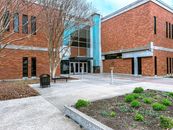
When a school closes, the district may record a building, a boundary and a budget line. Families experience something more complicated: a different commute, a new child-care problem, a disrupted program or the loss of a place that organized daily life.
That is why Portland Public Schools’ proposed “rightsizing” plan deserves to be examined as a family-policy decision, not only as an administrative response to declining enrollment.
On October 5, PPS released two scenarios that would close either 14 schools or 11 schools, redraw dozens of attendance boundaries and relocate or combine some programs. A third option would make no immediate closure decision. The school board is scheduled to discuss the proposals at a work session on October 20, with a superintendent’s recommendation expected in November and a board vote planned for December. If changes are approved, implementation would begin in the 2027–28 school year.
The district says it is responding to a structural budget deficit of approximately $50 million for the 2026–27 fiscal year. PPS attributes the gap to declining enrollment, rising costs and the expiration of one-time funding. Its stated goal is to create schools large enough to sustain robust programs and support services.
That is a legitimate problem. It is also an incomplete description of what is at stake.
A school is part of a family’s infrastructure
Families do not use schools only for classroom instruction. Schools provide meals, transportation, special-education services, counseling, nursing support, supervision and predictable schedules around which adults organize work and caregiving.
When a building disappears, those functions do not disappear with it. They move to another school, another bus route, another provider or another household member. The district may reduce the number of buildings it operates while families absorb longer travel times, new after-school arrangements and additional transportation costs.
This is different from the facility emergencies examined in my recent article, “When a School Building Fails, Families Lose More Than a Day of Class.” That story examined what happens when a school cannot safely operate because of a broken pipe, dangerous temperature or other facility problem. Portland presents a different question: what happens when a district decides that a school should no longer exist as a neighborhood institution?
The disruption may be planned rather than sudden, but planned disruption is still disruption.
Portland’s choices are shaped by a real demographic shift
PPS is not facing a one-year fluctuation that can be solved by waiting for enrollment to rebound. The district’s own planning materials describe a longer-term combination of smaller student cohorts, rising operating costs and fewer available dollars.
The national picture points in the same direction, although not everywhere equally. The National Center for Education Statistics projects that total public-school enrollment will decline from approximately 49.6 million students in fall 2022 to 46.9 million in fall 2031, a reduction of about 5 percent. It projects declines in 40 states and the District of Columbia, while some states are expected to grow.
The more accurate national story is therefore not that every district is emptying. It is that children are being redistributed across the country while the overall school-age population declines. Some districts are adding classrooms because of housing growth or migration. Others are left with excess capacity, smaller kindergarten classes and buildings whose costs remain even after students leave.
That creates a difficult public decision. Continuing to operate substantially under-enrolled schools can divert money from teachers and services. Closing schools can impose transportation, transition and community costs that do not appear in the same budget calculation.
Efficiency is not the same as access
PPS says its scenarios are intended to produce more sustainable, well-resourced schools. The district has published maps, enrollment trajectories, demographic information and faculty-utilization data through its rightsizing scenario dashboard.
Those materials are necessary. They are not sufficient.
A receiving school may have room on a spreadsheet while lacking enough special-education staff, bilingual educators, counselors, nurses or transportation capacity to absorb new students without changing the quality of support. A program may be described as “relocated” while becoming harder to reach or less viable because staff and families cannot make the new arrangement work.
Portland says dual-language immersion programs would be relocated or combined rather than eliminated. That distinction matters, but preservation on paper is not the same as continuity in practice. A program depends on teachers, classroom space, transportation, family participation and trust. Moving the name does not guarantee that the institution feels the same to children or remains equally accessible to families.
The same is true of arts programs, special education and school-based health services. The relevant question is not whether a service appears somewhere in the new structure. It is whether students can reliably reach it and whether the receiving school has the staff and capacity to deliver it.
The hidden child-care problem
A school closure can create additional demand for child care even when no child-care center closes.
Families may need care before a new school’s start time, after its dismissal time or during longer gaps created by transportation. Siblings who previously attended nearby schools may be sent in different directions. A parent who walked a child to school may now need a car, a bus connection or paid care.
That burden falls hardest on families with inflexible jobs, limited transportation, disabilities, multiple children or already-fragile care arrangements. WBC has previously documented how child-care assistance is becoming a waiting list rather than a dependable support system. A school consolidation decision can widen that gap without appearing in the child-care budget.
Officials should therefore ask how many families will need new before- and after-school arrangements, whether providers have capacity near receiving schools and whether transportation plans align with existing care schedules. These are not peripheral concerns. They determine whether parents can keep working or studying after the school day changes.
The district must count transition costs honestly
Before approving a closure plan, Portland should publish school-by-school estimates that distinguish recurring savings from one-time costs.
That accounting should include:
- transportation and additional bus routes;
- building security, maintenance and disposition costs after closure;
- staff reassignment, severance or recruitment expenses;
- class sizes and classroom utilization at receiving schools;
- special-education, counseling, nursing and English-language services;
- program relocation costs and the effect on bilingual and arts staffing;
- walking safety, travel times and access for families without cars; and
- the likely need for new child-care arrangements.
The district’s approximately $50 million structural deficit is a real fiscal constraint. But the existence of a deficit does not establish that every proposed closure produces a net saving, or that the savings will improve students’ experience. A plan can reduce building costs while increasing transportation costs, transition expenses and family burdens.
The decision is not simply between “saving money” and “doing nothing.” It is between different ways of distributing cost and risk.
Families are not wrong to value neighborhood schools
Parents who oppose closures are sometimes portrayed as defending familiar buildings against necessary change. That is too dismissive.
Families may be defending walking access, a trusted teacher, a stable special-education relationship, a bilingual community or a daily schedule that allows adults to work. A neighborhood school can also function as a meeting place, polling site, recreation space and informal support network.
Community opposition does not prove that every proposed closure is financially unsound. But it does show that families measure school value differently from a utilization report. A school can be under-enrolled and still be highly valuable to the people who depend on its proximity, identity or specialized services.
Nor should officials assume that consolidation will automatically stabilize enrollment. Some families may welcome larger schools and broader programs. Others may leave the district for private schools, charter schools, homeschooling or a different neighborhood if they conclude that remaining schools are less accessible or less distinctive.
What Portland should show before it decides
The strongest version of a closure proposal would answer practical questions rather than rely on general promises about efficiency.
How many students will attend each receiving school? What will class sizes be by grade? Which teachers, counselors, nurses and special educators will move? How many students will lose walking access? What will happen to siblings? How long will bus rides be? How will the district support students with disabilities and families who need interpretation? What will happen to unused buildings, and who will pay to maintain them?
The district should also establish measures for the first three years after implementation: enrollment retention, transfer rates, attendance, transportation reliability, class sizes, special-education staffing, program participation, disciplinary incidents and family-reported access to care.
Without that information, “rightsizing” risks becoming a word that describes contraction without measuring whether the resulting system works better.
The larger question
Portland’s debate is part of a broader demographic and fiscal transition. Public schools were built for populations that many communities no longer have. Districts cannot preserve every building indefinitely, and some consolidations may be necessary.
But a school is not merely a container for enrollment. It is one of the institutions through which families reach education, food, health services, transportation and one another.
The test for Portland is therefore not whether officials can demonstrate that fewer buildings cost less. It is whether they can show that the proposed system gives students dependable access to instruction and support while identifying who will absorb the new travel, care and transition burdens.
Families will experience demographic change not as a population chart. They will experience it as a longer bus ride, a lost neighborhood program, a new child-care bill or a decision about whether they can remain in the district at all.
A responsible closure plan must count those consequences before the buildings close, not after.