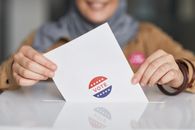
The California ballot dispute has moved beyond the question of whether noncitizens may vote in federal elections. That proposition is not seriously contested. The more consequential question is whether the executive branch can pressure state and county officials to alter ballot processing before the government has demonstrated that its classifications are reliable, reviewable and legally sufficient.
The escalation has taken two forms. The Justice Department has asked at least 18 California counties to provide identifying information about voters connected to a federal list of more than 20,000 people described as likely noncitizens. The department has also asked officials to segregate ballots when citizenship cannot be verified. Separately, a federal judge has restricted specified Department of Homeland Security election-related field operations in nine states through Election Day, citing evidence that the matching system could wrongly target citizens and intimidate voter-participation groups.
Those developments make this less a dispute about a number on a voter list than a test of institutional limits.
From lawsuit to county-by-county pressure
The Justice Department sued California, the California secretary of state and Los Angeles County on October 15. In its announcement of the lawsuit, the department said federal agencies had identified more than 20,000 people whom it believed were likely noncitizens and who had been sent California vote-by-mail ballots.
The department wants ballots associated with those individuals set aside while citizenship is verified. It argues that California’s voter-registration attestations are insufficient and relies on federal authority to prevent unlawful voting in federal elections.
That argument has an understandable starting point. Federal law prohibits noncitizens from voting in federal elections, and credible allegations should be investigated. But an investigation and a ballot-counting procedure are not the same thing. The government must still establish who is ineligible, what evidence supports that conclusion, whether the person voted and whether the ballot can be identified without compromising the ordinary custody and secrecy rules of the election.
The latest county letters raise the stakes because they seek action from local officials on a compressed timetable. According to reporting by The Associated Press, the letters gave counties 48 hours to provide identifying information and requested that ballots be segregated when citizenship could not be verified. A Justice Department official warned that election officials who knowingly process a noncitizen ballot could face legal jeopardy.
That warning may be intended to emphasize the seriousness of federal election law. It also changes the practical relationship between federal investigators and local administrators. A request backed by threatened legal consequences is not merely an invitation to cooperate. It is an attempt to make a contested federal classification operational inside county election systems.
The evidence problem remains unresolved
The Justice Department has also announced charges against 28 foreign nationals in California for alleged election crimes. Those prosecutions establish that individual violations are being pursued. They do not establish that the remaining people on the larger list are noncitizens, registered unlawfully, returned ballots or voted in federal contests.
The distinction matters. A criminal case is built around an identified defendant and specific alleged conduct. A mass matching list is a screening tool. It may be useful for generating leads, but it is not automatically an adjudicated finding of citizenship status or unlawful voting.
The public record still does not provide a complete, independently reviewable account of the list’s methodology, error rate, matching criteria or confidence levels. It does not establish how many listed people are current noncitizens, how many are naturalized citizens, how many returned ballots or how many ballots contain votes in federal contests.
Those are not minor technical questions. They determine whether the proposed remedy is narrowly targeted or whether it risks placing lawful voters inside an administrative category they cannot readily challenge.
California officials have also raised an operational problem. Once a mail ballot’s signature is verified, the ballot envelope may be separated from the ballot itself and the ballot may be processed with others. As The Associated Press has reported, state and county officials say the requested procedure may be difficult or impossible to carry out after ordinary processing has begun.
That problem exposes the gap between a legal demand and an election system. A court can order officials to set ballots aside. It cannot make an anonymous ballot identifiable if the relevant information has already been separated under established state procedures.
The parallel DHS injunction
The separate DHS case makes the reliability concern more concrete. On October 21, Judge Araceli Martínez-Olguín issued a preliminary injunction restricting certain election-related field operations and interviews in California, Connecticut, Georgia, Missouri, Nevada, New York, Pennsylvania, Washington and Wisconsin when federal officials know, suspect or reasonably should suspect that the target is a U.S. citizen.
The court’s order described a system that used government records and matching methods to generate investigative targets. It also described a minimum review pace under which officers were expected to process 40 suspected subjects and spend no more than 12 minutes eliminating a person from the target list through commercial databases.
The judge noted that no federal database provides a complete citizenship record for every person in the United States. The order therefore identified a basic institutional risk: a system can appear precise because it produces names, while the records beneath those names remain incomplete, outdated or difficult to interpret.
The ruling does not establish that every federal match is wrong, nor does it prohibit all federal investigations of election crimes. It does establish that the court found enough evidence of potential error and intimidation to restrict a particular investigative program during the period immediately preceding the election.
That finding is relevant to the ballot lawsuit even though the cases are legally distinct. Both involve the conversion of administrative records into government action. In one case, a match may prompt a field interview or investigation. In the other, the government wants the match to affect whether a ballot is counted. The consequences are different, but the demand for reliable classification is the same.
Investigative authority is not ballot authority
The federal government has a legitimate role in enforcing federal election law. That does not automatically mean it may direct county registrars to create a new ballot-segregation process based on an executive list.
States administer voter registration and elections. The federal government regulates federal elections in important respects and investigates federal crimes. Those responsibilities overlap, but overlap is not equivalent to command authority.
The difference becomes especially important after ballots have been mailed and voting is underway. A procedure that might be reviewed prospectively before an election becomes far more disruptive when imposed after county systems, custody rules and voter deadlines are already operating. The closer the election, the less practical opportunity voters and officials have to correct an error.
The Justice Department has asked the Ninth Circuit to intervene before the district court resolves the underlying dispute. The appeals court ordered California and Los Angeles County to respond by noon on October 24. A district-court hearing remains scheduled for October 27, less than a week before the November 3 election. As of October 24, the public record reviewed for this article does not establish that the Ninth Circuit has granted the requested emergency relief or issued a merits ruling.
The procedural posture is itself significant. Courts are being asked to decide not only whether the government’s theory is legally sound, but whether election administrators can execute the requested remedy at this late stage without creating a second category of electoral risk.
Election integrity requires a process that can be checked
The strongest argument for the federal government is that waiting may allow unlawful ballots to be counted. That concern cannot be dismissed. Election officials should respond to credible evidence of ineligible voting, and federal authorities should enforce the law against people who knowingly violate it.
But urgency does not remove the need for evidence. It increases the need for a procedure that can distinguish a genuine violation from a mistaken classification before a ballot is delayed, segregated or excluded.
That procedure would ordinarily require answers to basic questions: Who made the classification? What records were used? How current were they? What confidence level supported the match? Was the voter notified? Could the voter correct the record? Could the ballot be identified after signature verification? Who would decide the dispute, and under what legal standard?
Those questions are not obstacles placed in the way of election integrity. They are the substance of election integrity.
The California dispute will likely continue through emergency motions, appellate review and the litigation of individual procedures. Whatever happens before November 3, the institutional issue will remain. A government that uses contested data to demand control over ballot handling must be prepared to show not only that unlawful voting is possible, but that its own method can reliably identify it.
Otherwise, executive power may move faster than the process designed to distinguish a real election violation from a government error. That is not a settled solution to voter eligibility. It is a new test of who controls the machinery of an election.