On October 31, disaster case managers helping Los Angeles fire survivors navigate insurance, mortgage payments and rebuilding may have to close their files—even though many households are still far from home.
The federally funded Disaster Case Management Program was created to help survivors of the January 2025 Eaton and Palisades fires work through problems that do not end when the flames are out. The program helps with insurance claims, FEMA and Small Business Administration issues, financing, rebuilding decisions and referrals to local services, according to Los Angeles County’s recovery program.
Now, roughly 1,400 affected households are expected to lose their assigned case managers at the end of October while California and FEMA remain at odds over additional funding, The Associated Press reported.
The deadline is more than an administrative detail. It is a test of whether disaster recovery systems are designed around the time people actually need to rebuild—or around the calendar attached to a grant.
Recovery is not the same as response
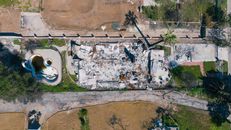
The Eaton and Palisades fires destroyed more than 16,000 structures. California requested approximately $28 million for disaster case management, but FEMA awarded about $13.2 million for a 24-month program, to be paid in installments. By August, FEMA had made only one of four scheduled payments, leaving California to cover costs while waiting for reimbursement.
FEMA later released outstanding funds, but the state said additional money needed to sustain the program through its planned term remained unresolved. California extended the program’s operating deadline from September 30 to October 31. The original planned end date was January 8, 2028.
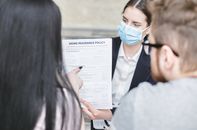
That gap matters because a case manager is not simply a person who provides encouragement after a traumatic event. The work is administrative, financial and often highly specific. Case managers help survivors assemble records, communicate with insurers, appeal decisions, identify financing, find temporary assistance and move through rebuilding systems that are difficult to coordinate even for people with time, money and stable internet access.
AP’s reporting described Mary Landau, a 78-year-old Altadena resident whose home was destroyed in the Eaton Fire. Landau still faced an insurance and rebuilding shortfall, owed money on her mortgage and was waiting for construction to begin. Her case manager helped her navigate forms, insurance and mortgage assistance.
When that relationship ends, the unresolved work does not end with it.
The numbers describe different problems
Public figures surrounding the program do not all measure the same thing. The county says the program had served approximately 1,990 Eaton survivors and carried an estimated 1,084 open Eaton cases as of August 31. AP reported that about 700 households remained on a waitlist for services.
The county’s proposed continuity planning also identifies an estimated 400 to 500 cases that may require continued case management after the current program ends.
Those figures should not be treated as interchangeable. A household served at some point is not necessarily an active case. An open case is not necessarily the same as a high-acuity case. A waitlisted household may not have received services at all. And the estimated 400 to 500 cases requiring continued assistance may represent the most complex portion of a larger population.
That uncertainty is itself a recovery problem. County officials and nonprofit providers need to know who is still receiving services, who is waiting, who is being transferred and who faces the greatest risk of losing housing or abandoning a rebuild. Without consistent categories, the public cannot easily determine whether a proposed bridge program is large enough or whether a transfer plan is working.
Los Angeles County is preparing a bridge, not replacing the program
Los Angeles County supervisors Kathryn Barger and Lindsey Horvath have moved toward a continuity plan that would examine how the county could sustain services during a funding interruption. The October 20 county agenda called for an assessment of the number of households at risk, their acuity levels, available funding sources, nonprofit capacity, case transfers and the creation of a centralized point of contact.
The proposal also directs county officials to evaluate whether $1.5 million in renter-protection and homelessness-prevention funds could be repurposed for case management, and whether some portion of a separate $2 million legal-services grant could support bridge programming. The county is also seeking a match from the Los Angeles County Affordable Housing Solutions Agency.
Those steps are important, but they are not the same as securing a durable replacement for the FEMA-funded program. A short-term bridge may preserve contact with the households at greatest risk, while leaving other survivors to navigate referrals, nonprofit capacity limits and a changing list of available services.
Nor is a centralized phone number equivalent to continuity of care. A single point of contact can reduce confusion, but it cannot by itself preserve the records, trust and case history developed between a survivor and a case manager.
The unfinished work will move somewhere
If the program ends without a full replacement, the remaining work will be distributed among survivors, county agencies, nonprofits, attorneys, insurers, lenders and family members. That distribution will not be equal.
A homeowner with savings, reliable transportation and the ability to hire an insurance advocate may be able to absorb the loss of a case manager. An older resident, a disabled survivor, a renter facing temporary-housing deadlines or a lower-income household with limited paperwork support may not.
The county’s own planning recognizes this concern by calling for priority to households facing homelessness or the end of temporary housing assistance. The more difficult question is what happens to everyone else whose recovery is delayed but not yet classified as an immediate crisis.
This is the same distinction that often disappears in disaster reporting. Power restoration does not prove that a community has resumed ordinary life. A reopened office does not prove that residents can obtain the service they need. And a rebuilding permit does not prove that a household has the insurance payment, financing or support required to complete construction.
In my recent reporting on Hurricane Isaias recovery, the central question was whether restored infrastructure had actually reconnected residents to health care, water, communications and work. Los Angeles presents the next stage of that problem: whether people can remain connected to the institutions helping them rebuild after the formal emergency system begins to close.
The deadline should produce evidence, not just promises
The immediate public test is straightforward. Before October 31, officials should identify which households will lose active case management, which cases will be transferred, what records will follow them, which services will remain available and who will pay for the work.
They should also report how many households remain in temporary housing, how many face unresolved insurance gaps, how many are at risk of homelessness and how many nonprofit providers have capacity to accept additional cases. If the county uses bridge funds, residents should be able to see the program’s duration, eligibility rules and service limits.
Los Angeles County’s September after-action review on recovery and repopulation treated recovery, housing, communications and support for higher-risk residents as separate areas requiring institutional improvement. The case-management dispute shows why those areas cannot remain separate for the people living through them.
Disaster assistance has an expiration date. Rebuilding does not. The people who remain in the middle need more than a final payment, a referral list or a new deadline. They need a recovery system that can follow the problem until the problem is actually resolved.