
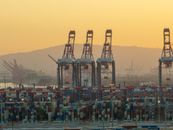
Washington is describing the latest tariff proposal as a response to foreign excess manufacturing capacity. The more immediate financial question is simpler: who pays while the promised American production is still only a policy objective?
On November 25, the Office of the U.S. Trade Representative determined that policies in 14 economies burden or restrict U.S. commerce. The list includes China, the European Union, India, Japan, South Korea, Taiwan, Vietnam and several Southeast Asian economies. USTR proposed additional tariffs ranging as high as 35 percent, depending on the economy and product, with exemptions and adjustments for existing trade arrangements.
These are proposals, not final tariffs. Written comments and requests to testify are due January 5, 2027, and hearings are scheduled to begin January 25. Product classifications, exemptions, existing duties and any later negotiations will determine what an importer actually pays.
The importer pays first
A tariff is not an invoice sent to a foreign government. At the border, the financial obligation begins with the U.S. importer of record. Customs and Border Protection explains that the importer of record is responsible for the duties and taxes due on an entry, even when a customs broker handles the paperwork.
That does not mean every tariff dollar will immediately appear in a retail price. The importer may absorb the charge through a lower margin, negotiate with a supplier, raise prices for a customer, change vendors, redesign a product, carry more inventory or stop selling an item altogether.
The important point is timing. The cost arrives when the shipment enters the country. The promised benefit—new factories, expanded domestic capacity and additional jobs—may take years to materialize, if it materializes at all.
American companies can be on both sides
The policy does not divide neatly between foreign losers and American winners. A U.S. manufacturer that imports specialized machinery, electronic components, medical inputs or industrial materials can be harmed by a tariff even if it competes with the foreign producer the tariff is meant to discipline.
That company has several choices, none costless. It can pay the duty, raise prices, accept lower profit, find another supplier, change the product or reduce production. A multinational corporation may have several sourcing options. A small distributor or manufacturer may have one supplier, one production line and limited cash.
This is why protection is not the same thing as production. Making imported goods more expensive can give domestic producers more pricing room. It does not automatically provide trained workers, specialized equipment, permits, reliable electricity, domestic raw materials or affordable financing.
The economy has limited room for another cost
The timing matters. The Bureau of Economic Analysis reported that personal income rose 0.7 percent in October and current-dollar consumer spending rose 0.3 percent. But real consumer spending was essentially unchanged, while the personal-consumption-expenditures price index increased 3.8 percent from a year earlier. Core PCE inflation was 3.3 percent.
Consumers are still spending, but nominal spending is not the same as expanding purchasing power. If the cost of imported goods rises, households may respond by buying less, switching products or accepting higher prices elsewhere in the budget.
The effect will depend on the product. A consumer may substitute among clothing brands or household goods. A hospital, contractor or manufacturer buying a specialized component may have no practical substitute in the short term.
Small businesses have the least room to wait
Small companies face a second problem: the tariff may arrive before the replacement supplier, new product design or higher customer price does.
The October NFIB Small Business Economic Trends report found that only 21 percent of owners planned capital outlays during the next six months. Thirty-six percent reported job openings they could not fill, while the share describing the economy as a good time to expand remained only 11 percent.
Credit is not an unlimited shock absorber. The Federal Reserve’s October lending survey found that banks tightened commercial and industrial lending standards for small firms. Banks also reported tighter collateral requirements and interest-rate floors for small-business borrowers, while demand for business loans weakened.
A tariff-related cost increase is easier to manage when a company can borrow cheaply, carry extra inventory and negotiate with several suppliers. Many smaller firms have none of those advantages. They may need to raise prices before customers are ready, reduce inventory before demand is satisfied or postpone equipment and hiring decisions.
Who may benefit
Some American manufacturers could gain. Domestic producers with unused capacity may receive new orders. Large companies with diversified supply chains may gain market share as smaller competitors struggle to adjust. Substitute suppliers may obtain more business, and the Treasury could collect additional customs revenue if the proposals become effective and imports continue.
But those benefits should be measured rather than assumed. A higher tariff can increase the price of a domestic producer’s competing product without increasing its output. A protected company may use the additional pricing room to strengthen its balance sheet, repay debt, increase capital spending or return money to shareholders. None of those outcomes is automatically bad, but none is the same as a factory expansion or a durable productivity gain.
The administration’s objective is to change foreign industrial behavior. The domestic financial result will depend on what businesses actually do with the new cost.
Who bears the risk
The burden can move through the supply chain in several directions:
- Importers may absorb the duty through lower margins or pass it to customers.
- Manufacturers may face higher costs for components, machinery and maintenance.
- Retailers may reduce promotions, substitute products or raise prices.
- Consumers may pay more or accept less variety.
- Workers may face delayed hiring or investment if employers cannot preserve margins.
- Exporters may face retaliation if affected trading partners respond against American goods.
The division will not be equal. Firms with cash, purchasing power and multiple suppliers can wait. Firms with thin margins and one source of supply cannot.
That is the financial distinction often lost in a tariff announcement: the policy may be aimed at foreign production, but the first operating decision is made by an American company looking at a purchase order, an inventory account and a cash balance.
What should be measured
If the tariffs are finalized, the useful scorecard will not be the number of notices issued or the amount of customs revenue collected. It should include:
- domestic production and capital spending in the affected sectors;
- employment and wage growth at protected manufacturers;
- price changes for imported and domestic substitutes;
- small-business margins, loan renewals and inventory levels;
- supplier changes and product withdrawals;
- retaliatory measures against American exports;
- the cost of exemptions, enforcement and compliance; and
- whether domestic capacity expands or companies mainly charge more for existing output.
Economic research on earlier tariff actions has found substantial pass-through into U.S. prices, although the precise share varies by product, timing, substitution and market structure. The Budget Lab’s tariff analysis likewise emphasizes that observed effects must be separated from other changes in energy, labor, exchange rates and supply chains.
The bill arrives before the factory
The administration may be correct that excess capacity and state-supported production abroad create problems for American manufacturers. That does not answer whether tariffs are the least expensive way to address them.
A tariff is a blunt instrument. It does not distinguish cleanly between a foreign producer selling below cost, a U.S. company importing a necessary component, a hospital purchasing specialized equipment, a small retailer with no substitute supplier and a household buying the finished product.
The policy’s success should therefore be judged by durable domestic capacity and productivity, not by the announcement itself. Until that evidence exists, the new tariff is best understood as an opening bid in a negotiation over who absorbs higher costs inside the American economy.
The bill begins with U.S. importers. It moves through contracts, inventory decisions, supplier negotiations and credit lines. It may eventually reach consumers, workers or small businesses that lack the power to pass it on.