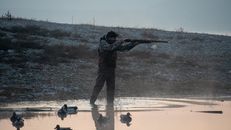
A duck hunt does not end when the bird is in the boat. It ends when the bird, the knife, the cooler, the dog and the hunter’s clothing have been handled well enough that the hunt does not create another problem somewhere else.
That is the practical lesson of highly pathogenic avian influenza, or HPAI, as waterfowl seasons continue across the country. Hunters are not being asked to treat every marsh as a biohazard. They are being asked to understand that field dressing, cleaning equipment and reporting unusual birds are now part of competent waterfowl hunting.
The virus remains active in wild birds and continues to affect domestic poultry and dairy cattle. The USDA Animal and Plant Health Inspection Service maintains separate surveillance systems for wild birds, poultry, livestock and other animals. Its current H5N1 page also lists a November 2, 2026, detection in an Indiana dairy herd and November 4 sequencing results from a Washington dairy herd.
That does not mean every harvested duck is dangerous, or that ordinary waterfowl hunting should stop. It means the old habit of treating the bird as the end of the job is no longer good enough.
A healthy-looking bird is not a clean bill of health
Wild birds can carry HPAI without showing obvious signs of illness. That makes visual inspection useful, but not sufficient. A bird that flies normally and looks healthy is not proof that it is free of infection.
The federal wild-bird surveillance record shows why hunter participation matters. Recent entries include hunter-harvested mallards, green-winged teal and cinnamon teal in Utah, along with detections from live-bird sampling and mortality investigations in Oregon and Michigan. The APHIS wild-bird database distinguishes those sampling methods for a reason. A positive hunter-harvested bird is evidence of detection, not proof that an entire marsh or migration corridor is unsafe.
It is also evidence that hunters are part of the surveillance system, whether anyone gives them that title or not. Hunters cover private ponds, isolated wetlands, agricultural edges and public marshes that agency personnel cannot watch continuously. They may be the first people to notice unusual mortality, birds behaving abnormally or a pattern that deserves investigation.
The right response is neither panic nor dismissal. It is accurate observation and ordinary discipline.
The risk does not stop with the bird
Wild birds and domestic poultry occupy the same landscape more often than a hunter may realize. A recent U.S. Geological Survey study of geese on the Delmarva Peninsula used GPS tracking to examine how wintering Canada geese and snow geese move near commercial poultry farms. The study found that bird activity, weather, land cover and proximity to water and other features helped identify farms with greater exposure to wild waterfowl.
That research does not establish that hunters are a primary cause of farm outbreaks. It does show that disease risk is geographic and behavioral. Contaminated material can move through water, soil, feathers, droppings, equipment, vehicles and clothing. A hunter who does not own chickens may still visit a farm, keep backyard birds later, use a shared processing area or bring dirty gear home where domestic animals can reach it.
Cooking addresses the food-safety part of the problem. It does not clean a knife, disinfect a cooler or prevent a dog from contacting contaminated material. That is why the U.S. Fish and Wildlife Service guidance for hunters covers the entire handling process, not just the kitchen.
A field standard that works in the real world
Before leaving home, carry disposable gloves, disinfectant, trash bags and a change of clothing if the hunt will be followed by contact with poultry or livestock. Know where birds will be dressed and stored. Check the current notices from the state wildlife agency or refuge you plan to use.
In the field, do not handle obviously sick or dead birds unless officials have given you specific instructions. Keep dogs from mouthing sick or dead wildlife. Avoid unnecessary contact with droppings and contaminated water, and keep harvested birds separate from food, drinking water and domestic animals.
After the shot, wear gloves while handling and cleaning birds. Dress them outdoors or in a well-ventilated area away from poultry. Wash your hands. Clean knives, tables, coolers, boots and vehicle surfaces that came into contact with the birds. Change or clean clothing and footwear before visiting a poultry operation, backyard flock or livestock facility.
The Fish and Wildlife Service recommends cooking game thoroughly to an internal temperature of 165 degrees Fahrenheit. It also advises hunters to report sick or dead wildlife to the relevant state wildlife agency, or to refuge staff when the observation occurs on Service-managed land.
None of that requires a hunter to become a laboratory technician. It requires a repeatable routine. Good fieldcraft is often less dramatic than people expect. It is knowing what to touch, what not to touch, what to clean and when to make the phone call.
Reporting is part of the hunt
A hunter should not diagnose HPAI from the tailgate. A dead bird may have been killed by disease, weather, predation, poor habitat or something else entirely. The useful action is to report the observation and let wildlife officials decide whether testing is warranted.
Hunters are often described as partners in wildlife management because they buy licenses, provide harvest information and help fund habitat work. Disease surveillance adds another responsibility. The person in the blind may also be the first field observer in a place that would otherwise go unexamined for days.
That role works only when reports are honest and specific. Note the location, species, number of birds involved and visible signs. Do not handle a carcass unnecessarily, and do not move it unless an agency instructs you to do so.
Do not confuse precaution with alarm
The available surveillance does not provide a national risk map for every hunter. Infection levels vary by species, location and time. Sampling is influenced by where agencies, hunters and members of the public collect birds. A positive wild-bird detection does not establish transmission to a particular person, dog, flock or farm.
It does establish that the system is active enough to deserve attention.
There is a bad habit in outdoor discussions of treating precautions as an admission that an activity has become unsafe. That is backwards. Hunters use seat belts, life jackets, blaze orange, gun locks and weather reports not because every trip is doomed, but because small failures can become serious when conditions turn against them.
HPAI hygiene belongs in the same category. Gloves and clean equipment are not a declaration that the season is reckless. They are a way to reduce avoidable exposure while preserving the hunt.
The shot is only one part of the job. A responsible waterfowl hunter identifies the bird, makes a clean shot, retrieves it, handles it properly, cleans the equipment and reports unusual conditions. That is not bureaucracy replacing outdoor knowledge. It is outdoor knowledge catching up with the conditions people are actually hunting in.