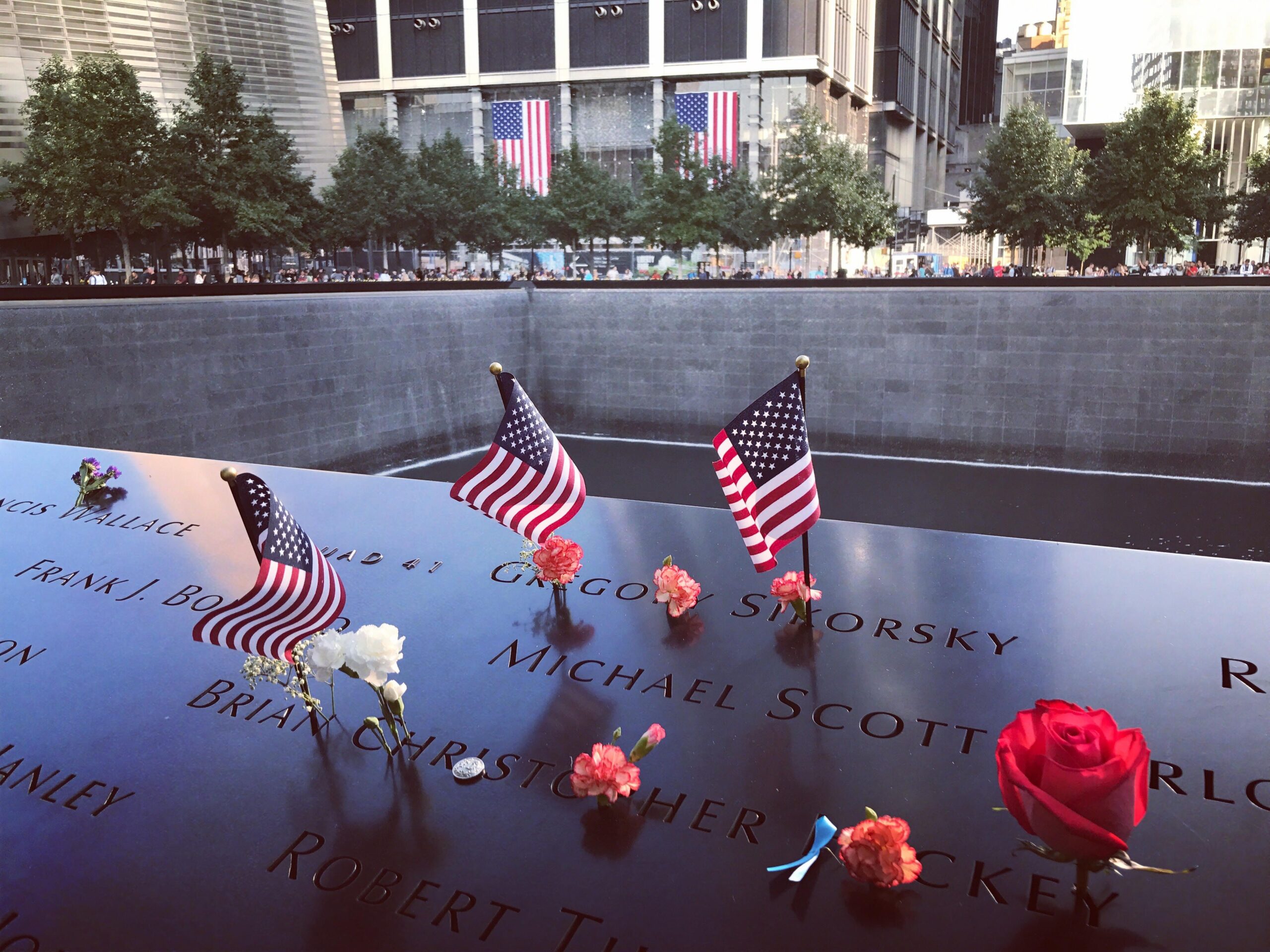
There is a subtle but consequential change in the way America is preparing to mark September 11 this year.
The ceremonies will be familiar: the reading of names, the moments of silence, the memorial lights, the wreaths, the solemn music that has become part of the national soundscape. But the institutions organizing the anniversary are increasingly speaking not only to survivors, relatives, first responders and veterans. They are speaking to students.
That is because September 11, 2001, has reached an awkward historical threshold. It remains within the adult memory of millions, but more than 100 million Americans were born after the attacks or were too young to remember them, according to the National September 11 Memorial & Museum.
The 25th anniversary, which falls on Friday, September 11, 2026, is therefore not merely a large anniversary. It is the moment when the country’s central language of remembrance begins to change. The question is no longer only how to remember what happened. It is how to explain it to people for whom it is already history.
That is a cultural development worth noticing.
From testimony to transmission
The Smithsonian’s National Museum of American History is marking the anniversary with a display of rarely seen objects connected to the attacks in New York, Washington and Pennsylvania. Its broader programming includes a performance of Steve Reich’s WTC 9/11, a composition that combines live music with recorded communications and interviews from the day. The Associated Press has reported on the programming.
At the National September 11 Memorial & Museum, a new exhibition, In Their Honor: 25 Years of 9/11-Inspired Service, will examine the lives of people whose response to the attacks took the form of public service. Another exhibition, Responding in Ink, considers how comic-book and graphic-novel artists addressed the attacks and their aftermath. The museum has described both exhibitions in its anniversary materials.
At Flight 93 National Memorial in Pennsylvania, this year’s programming explicitly emphasizes the transmission of memory to a younger generation. The National Park Service has organized events from September 9 through September 13, including the 25th-anniversary observance on September 11. The schedule is available from the National Park Service.
These are not simply additions to the anniversary calendar. They reveal a shift in the purpose of commemoration.
For much of the past quarter-century, the dominant form of September 11 remembrance was testimonial. People who were there told us what they saw, heard and lost. The authority of the account came from proximity: I was in Manhattan; I was at the Pentagon; I knew someone on the plane; I watched the buildings fall on television.
That kind of memory remains indispensable. But it cannot last indefinitely as the primary means of cultural transmission. A child born on September 11, 2001, is now twenty-five years old. A high-school student in 2026 encounters the attacks through archives, documentaries, museums, family stories, photographs, government records and the accumulated mythology of popular culture.
The memory is becoming mediated.
That does not make it less real. It makes the institutions responsible for it more important—and more vulnerable to the habits of the museum, where complexity is often organized into a sequence of carefully captioned objects.
The manageable version of history
The danger is not that the country will forget September 11. The danger is that it will remember only the most manageable version of it.
Every national commemoration has a tendency to sand down the rough edges of history. Grief becomes resilience. Confusion becomes unity. Individual acts of courage become a reassuring national narrative. The language is not false, exactly. It is simply incomplete.
The attacks produced extraordinary courage and generosity. They also produced fear, war, surveillance, xenophobia, political opportunism and a long series of consequences that remain difficult to discuss without falling into partisan reflex. A culture that remembers only heroism may be offering consolation at the expense of understanding.
This is why the current emphasis on objects, recordings, art and first-person testimony matters. Art can preserve contradiction better than a slogan can. A radio transmission can remind us how little people understood in the moment. A comic book can reveal how quickly catastrophe enters the symbolic imagination. A personal artifact can restore a human scale to an event that has otherwise become a date, a photograph and a chapter heading.
The Smithsonian’s decision to present objects that are not ordinarily on display is especially telling. Museums traditionally promise permanence, but anniversaries are governed by selection. What is brought out of storage communicates what the institution believes the public now needs to see. The rare object is not merely evidence; it is an argument about attention.
Memory in the digital age
The same is true of the anniversary’s educational initiatives. The 9/11 Memorial & Museum is preparing a digital learning experience built around the stories of a survivor, an NYPD first responder and family members who lost loved ones. The program is designed to be available on demand beginning September 11, 2026, according to the museum’s materials.
The format is unmistakably contemporary. Memory is no longer confined to the physical museum or the annual broadcast. It is portable, searchable and available whenever a teacher, student or curious stranger reaches for it.
That accessibility is valuable. It also creates a new problem: historical events now compete with everything else online. September 11 is not entering a quiet classroom. It is entering a digital environment in which tragedy, spectacle, misinformation and entertainment share the same screen.
The old phrase “never forget” was once a moral instruction. Increasingly, it is becoming a cultural production challenge.
How do you make an event intelligible without turning it into spectacle? How do you teach consequence without reducing history to a moral lesson? How do you allow younger people to encounter the dead as individuals rather than as symbols? And how do you explain that the meaning of an event can change even when the facts do not?
The strongest anniversary programming appears to understand that remembrance must become more than repetition. It must provide context, friction and room for questions.
A history that remains unsettled
There is an irony here. September 11 was once considered too recent to be treated as history. Now it may be in danger of becoming too familiar to be examined closely. The images have been replayed so often that they risk becoming visual shorthand, emptied of the terror and uncertainty they originally contained.
The cultural task of the 25th anniversary is therefore not to make the event feel immediate again through louder spectacle. It is to make it comprehensible without pretending that comprehension is the same thing as closure.
America has spent twenty-five years building memorials, producing films, writing books, composing music and arguing over the meaning of September 11. The next twenty-five will require something different: not less remembrance, but better transmission.
The people who remember the day firsthand will gradually become the custodians of someone else’s history. That is not a betrayal of memory. It is what memory has always been—an imperfect handoff from one generation to the next.
The question is whether we will pass along a history or merely an image.