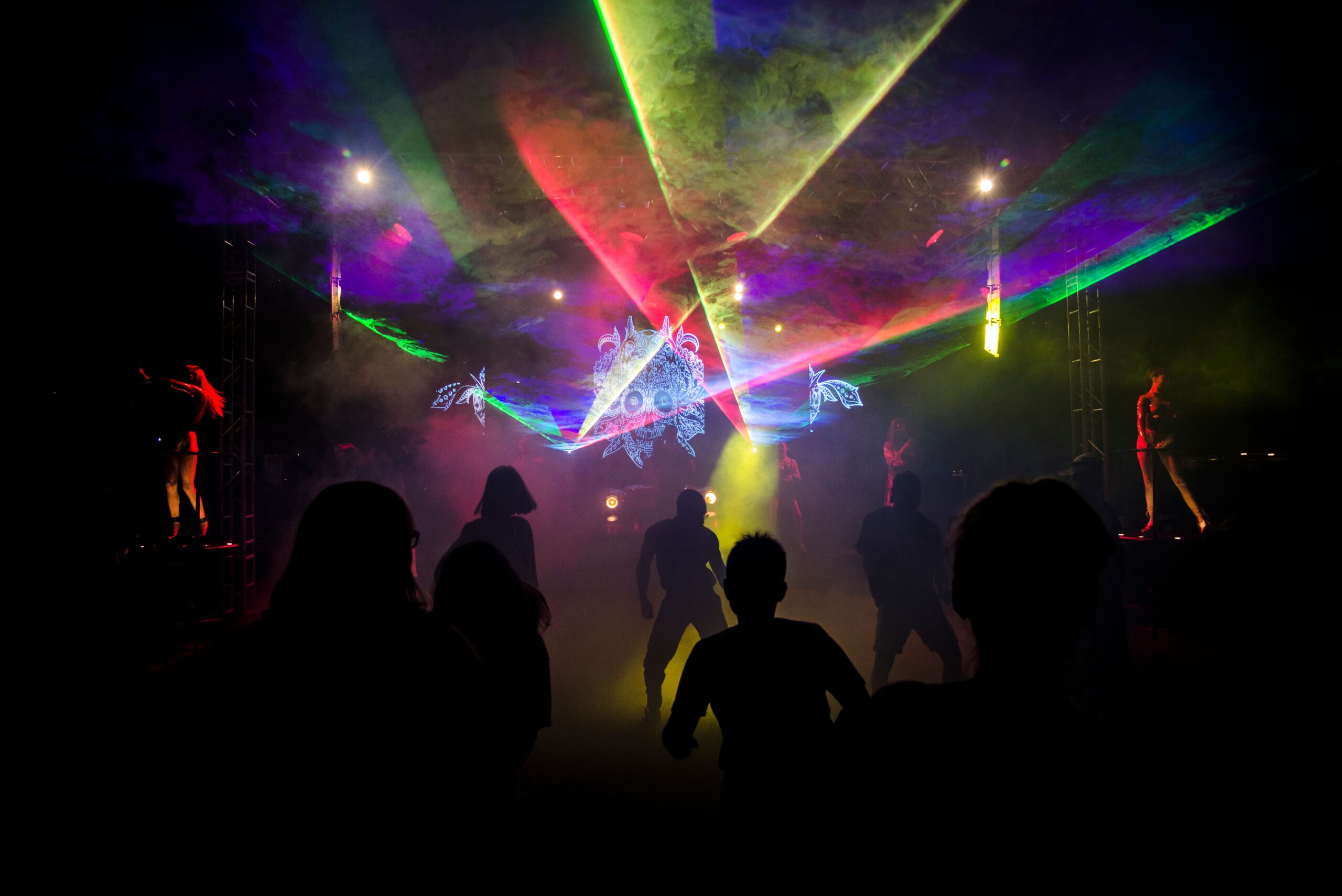
There is a moment at the new internet-themed rave when the joke stops being a joke.
Maybe it happens when a DJ drops a video-game soundtrack into a hard-dance set. Maybe it is when a crowd in cosplay screams along to an anime opening. Or maybe it is when several hundred people agree that SpongeBob, Final Fantasy, Kingdom Hearts and MPreg belong in the same event title—and then buy tickets.
Whatever the moment, the important thing is not that internet culture has finally entered physical space. It has been there for years. The more revealing development is that online references are becoming the organizing principle for in-person social life.
People are not simply attending a rave with anime imagery projected on the wall. They are using shared digital memories to decide where to go, whom to meet, what music belongs in the room and what kind of behavior feels socially safe.
That is why the supposedly embarrassing parts of internet culture are becoming nightlife infrastructure.
The joke is also a membership test
New York offers a particularly clear view of the phenomenon. In September, the Brooklyn bar and indie arcade Wonderville hosted a Weeb Adjacent event titled “SpongeBob AND ALSO Final Fantasy & Kingdom Hearts MPreg Rave.” The title sounds like an algorithm having a nervous breakdown. It was, in fact, a real event with real DJs, real attendees and a sold-out crowd, according to Aftermath’s report from the rave.
The event’s absurdity was not incidental decoration. It was the invitation. Attendees did not need a polished explanation of the evening’s cultural logic because they already understood the references, or at least understood the pleasure of recognizing them together.
That kind of recognition does practical social work. It gives strangers an immediate conversation. It tells people what sort of room they have entered. It permits enthusiasm without requiring anyone to translate it into respectable language. It can make a crowded club feel less like an audition.
Aftermath reported that several attendees came specifically because the combination of themes seemed too strange to ignore. The publication also described Weeb Adjacent co-founder Joe Panuncialman’s effort to build a space around anime remixes, J-core, J-pop, video-game soundtracks and internet humor. The result was not merely a novelty party. Attendees described meeting people with similar interests and senses of humor.
The difference between a novelty party and a scene is repetition. Weeb Adjacent has been producing recurring events, and Wonderville has listed the group among its regular DJ parties alongside gaming, electronic-music and community programming. Its own account of the venue describes a place where arcade games, developer events, livestreams, performances and nightlife occupy the same small cultural ecosystem. Wonderville’s community roundup makes the point more clearly than any trend piece could: this is not one event borrowing gamer aesthetics. It is a venue built around the refusal to keep those categories separate.
Fandom is doing the work of a genre
Traditional nightlife usually advertises itself through genre, celebrity or venue identity. You go to hear house music, see a touring artist or occupy a particular kind of room.
Internet-native nightlife often begins somewhere else. It starts with a shared archive of references: anime openings, fan edits, meme formats, game soundtracks, nightcore, hyperpop, cosplay, old forums and the particular visual language of people who spent their formative years online.
That archive can be musically incoherent by older standards. A set may move from a Final Fantasy theme to J-pop, from a sped-up pop song to a meme audio clip, from hard dance to a cartoon sample. But the audience is not hearing random noise. It is hearing a chain of associations.
The references function like a genre because they tell people how to behave. Dance badly. Dress up. Quote the source material. Bring your own excessive knowledge. Treat the room as a collaborative bit rather than a formal concert.
This is one reason institutions often misunderstand these events. They see a pile of disconnected intellectual properties where attendees see a common history.
The culture is not confused because it combines SpongeBob, anime, video games and electronic music. That combination is the culture.
The convention afterparty is becoming its own institution
Anime conventions have long included dances, karaoke and informal after-hours gatherings. What is changing is the degree to which those events are becoming independent nightlife institutions rather than accessories to a convention schedule.
Anime NYC’s 2026 programming included four official afterparties, with anime-opening and video-game-soundtrack DJs, cosplay, arcade games, consoles, live visuals and other activities. The convention explicitly presented the parties as events that did not require an Anime NYC badge. Anime NYC’s official afterparty listings show a culture moving beyond the convention floor and into the city’s nighttime economy.
That expansion matters because conventions provide an obvious audience, but they do not fully explain the appeal. The people attending these parties are not only looking for a place to continue the convention. They are looking for a room where their interests are already legible.
For many online-native adults, that is increasingly valuable. They are old enough to organize events, promote parties and pay for tickets, but they may still feel alienated by nightlife spaces organized around status, fashion or conventional music categories. A themed rave lowers the risk of showing up alone because the theme supplies an immediate social script.
It is not necessarily less awkward than ordinary nightlife. It is awkward in a more forgiving way.
There is nothing new about subcultural nightlife
None of this means that the internet invented community.
Raves have always created temporary social worlds through sound, dress, coded information and shared rules. Queer nightlife has long functioned as social infrastructure for people whose identities were not comfortably represented elsewhere. Goth, punk, emo and industrial scenes made music taste and visual presentation into invitations to belong. Fan conventions have always extended into dances, parties and informal gatherings.
The genuinely new element is the speed and density of online recombination. Earlier theme nights often centered on a stable genre, scene or franchise. Internet-native events can be built around a shifting mixture of memes, edits, characters, fan communities and half-remembered digital experiences.
The attendee is not simply being asked to admire a recognizable work. The attendee is being asked to recognize a reference and add something to it.
That is closer to live improvisation than to a tribute night. The crowd is participating in the joke, not merely observing it.
Of course, someone will try to sell it back to them
The commercial possibilities are obvious. Small venues can reach niche audiences without waiting for a mainstream booking. Independent DJs can build a following around music that does not fit neatly into club categories. Game bars, convention organizers, merchandise companies and beverage brands can all find reasons to participate.
The danger is that the culture’s specificity will become its product.
Once a promoter decides that “internet rave” is a marketable category, the references can become interchangeable branding. Anime, memes and game music may remain on the flyer while the actual social conditions that made the event appealing disappear. The room becomes a franchise party with a built-in audience, and the audience becomes another form of inventory.
This is the same tension that appears whenever a community becomes visible to institutions. Recognition can provide money, space and stability. It can also flatten the thing being recognized into an aesthetic package.
The question is not whether these events can make money. Some clearly do. The question is who controls the scene after the money arrives: the promoters and attendees who built it, or the companies that see a reliable way to convert fandom into tickets, merchandise and data.
What happens after the punchline?
The strongest version of this culture is not a national movement in waiting. There is no reliable attendance figure showing that anime raves or internet-themed club nights are about to replace mainstream dance music, anime conventions or ordinary nightlife.
What exists is smaller and more interesting: a visible, recurring and culturally coherent network of gatherings in which digital identity becomes a reason to share physical space.
Its future will depend on recurrence. Do people come back? Do they make friends? Do DJs get paid? Do independent venues benefit? Do attendees discover music, games and artists beyond the theme of one night? Can organizers keep the room specific enough to feel alive without turning it into a closed club for people with perfect reference knowledge?
The answer will determine whether these parties are spectacles or scenes.
A SpongeBob reference does not become profound merely because people dance to it. But if that reference helps strangers find one another, gives a small venue a reason to exist and turns private online embarrassment into collective pleasure, it is no longer merely a joke on a screen.
It is a place.