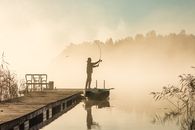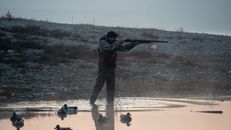
The U.S. Fish and Wildlife Service published a useful reminder this week: fall migration is moving through the country, and many of the wetlands carrying those birds were purchased, restored or maintained with money connected to hunting and shooting.
That is the good news. The less comfortable question begins after the conservation announcement.
Can a hunter reach the place? Is there enough water? Is the road open, the ramp usable and the map current? Does a reservation system leave a reasonable chance of getting in, or does the opportunity belong mostly to people who already understand the local system?
A wetland can be valuable to birds and still be a difficult place to hunt. Those facts are not contradictory. They are simply different measures of success.
The money is real
The conservation bargain behind American hunting is one of the better ones we have built. Federal excise taxes paid by manufacturers of firearms, ammunition and archery equipment are distributed through the Pittman-Robertson Wildlife Restoration Program. For fiscal year 2026, the Fish and Wildlife Service apportioned more than $1.2 billion through the broader Wildlife and Sport Fish Restoration system.
The amounts are substantial at the state level. The fiscal-year 2026 wildlife-restoration table lists approximately $19.2 million for Alabama, $14 million for Arkansas, $26.8 million for California and $17.7 million for New Mexico. The grants can support habitat, wildlife management, public use and access, but they are not a blank check for unlimited hunting land. They can also support surveys, hunter education, shooting ranges and other eligible work. The Fish and Wildlife Service’s explanation of apportionments and eligible activities is worth reading before anyone assumes what a particular dollar bought.
Duck Stamp money has a narrower purpose. The Service says 98 cents of each Federal Duck Stamp dollar goes toward acquiring or protecting wetland habitat for the National Wildlife Refuge System. Since 1934, sales have generated more than $1.3 billion and helped conserve more than 6 million acres. Hunters age 16 and older are required to purchase and carry the stamp when hunting migratory waterfowl. The Federal Duck Stamp program is not a decorative tradition. It is a working conservation account.
Wetlands grants often bring other money with them. The North American Wetlands Conservation Act’s small-grant program allows requests up to $250,000 and requires at least a one-to-one nonfederal match. That means a federal award may sit inside a larger partnership involving state agencies, local governments, conservation groups, farmers and private landowners. The NAWCA program also holds applicants accountable for the acres and matching contributions promised in the project.
Conservation is not the same as access
The Service’s October 28 migration feature names places such as California’s Yolo Bypass Wildlife Area, New Mexico’s Bernardo Waterfowl Area, Minnesota’s Lac qui Parle Wildlife Management Area and Arkansas’ Bayou Meto Wildlife Management Area. These are serious landscapes, not roadside ponds with a sign nailed to a post. Yolo Bypass covers nearly 17,000 acres. Bayou Meto covers more than 33,000 acres and depends on seasonal flooding. Lac qui Parle encompasses more than 24,000 acres of wetlands, grasslands, woodlands and open water.
But acreage does not tell a hunter how the morning will work.
At California’s Sacramento National Wildlife Refuge Complex, the daily quota is filled first by hunters with advance reservations. Hunters without reservations may enter a vacancy lottery at the check station. The refuge also says flood-up maps, weekly quotas and blind or pond results are available only at the hunter check stations. That is a legitimate management system, but it requires time, travel, preparation and a person’s ability to understand the rules before legal shooting time.
The refuge’s own hunting page shows the difference between a public opportunity and an easy opportunity. A person may be allowed to hunt and still need to arrive hours early, enter the right lottery, know which regulations apply and accept that the available area may not match the water conditions seen in last week’s photograph.
At Utah’s Bear River Migratory Bird Refuge, more than 77,000 acres are protected and as many as 500,000 ducks may use the refuge during fall migration. Hunters enter designated areas by foot or small boat. The refuge’s current conditions update says drought has limited water in parts of the area and may restrict boating access. That is not a failure of the Duck Stamp. It is the field reality that the stamp cannot control.
The Upper Mississippi River National Wildlife and Fish Refuge offers another example. Some areas are closed or restricted to protect resting birds or public safety. Potter’s Marsh hunt sites are allocated through an annual lottery. Other portions of the refuge are accessible mainly by boat, and the most restrictive applicable federal, state or local rule controls.
What should be measured?
Conservation agencies routinely have good reasons to limit hunting access. A wetland may need to remain undisturbed during a crucial migration period. Flooding may be timed for habitat rather than convenience. A road may be closed because it cannot safely carry traffic. A refuge may protect resting birds that hunters are not supposed to push from one pool to another.
None of that makes access irrelevant. It makes honest measurement more important.
The public is often shown three numbers as though they mean the same thing: acres conserved, birds using the habitat and hunting opportunity. They do not.
A wetland can be excellent habitat and poor hunting ground. A refuge can hold thousands of ducks and offer only a limited number of hunt sites. A project can improve water quality or migration survival without increasing harvest. Those outcomes may be exactly what managers intended. But hunters should be told whether a project was designed for habitat, public access, hunting opportunity or some combination of the three.
The most useful accounting would follow the money all the way through the system:
- What revenue entered the program?
- What federal or state grant supported the work?
- How much matching money was added?
- What habitat, water-control, road, ramp, blind or staffing work followed?
- How many people could legally use the site?
- How many could realistically reach it?
- What did bird numbers, hunter effort and harvest show afterward?
That last group of questions is where promotional language usually gets thin. Agencies often report completed acres more readily than closed ramps, unsuccessful lottery applicants, broken roads, delayed maps or the number of hunters who arrived and could not make the trip work.
The bargain deserves a complete receipt
Hunters are already paying into this system through stamps, licenses, ammunition and equipment. Many of them accept restrictions because they understand that a healthy marsh is worth more than one easy morning in the blind. They also deserve a clear account of what their money is doing.
The right criticism is not that every conserved acre should be optimized for harvest. That would be bad wildlife management and bad conservation. The right criticism is that habitat value, public access and hunting opportunity should not be presented as interchangeable.
The Fish and Wildlife Service advises visitors to check regulations, access information, weather and recent bird sightings before traveling. That is sound advice, and it is also an admission that a funded wildlife area does not guarantee a functioning hunt on a particular morning.
Before leaving home, a hunter still has to do the work: read the current regulations, check water levels, verify closures, understand the reservation or lottery system, inspect the road and ramp information, carry a backup map and be willing to turn around when conditions are wrong.
The Duck Stamp can buy habitat. Pittman-Robertson money can help maintain the machinery around it. Neither program can manufacture birds, water, safe access or local knowledge.
A wetland can be conserved on paper long before it becomes usable on the ground. The people who pay into the system deserve to know which kind of success they are being shown.