
The compact disc was supposed to disappear quietly.
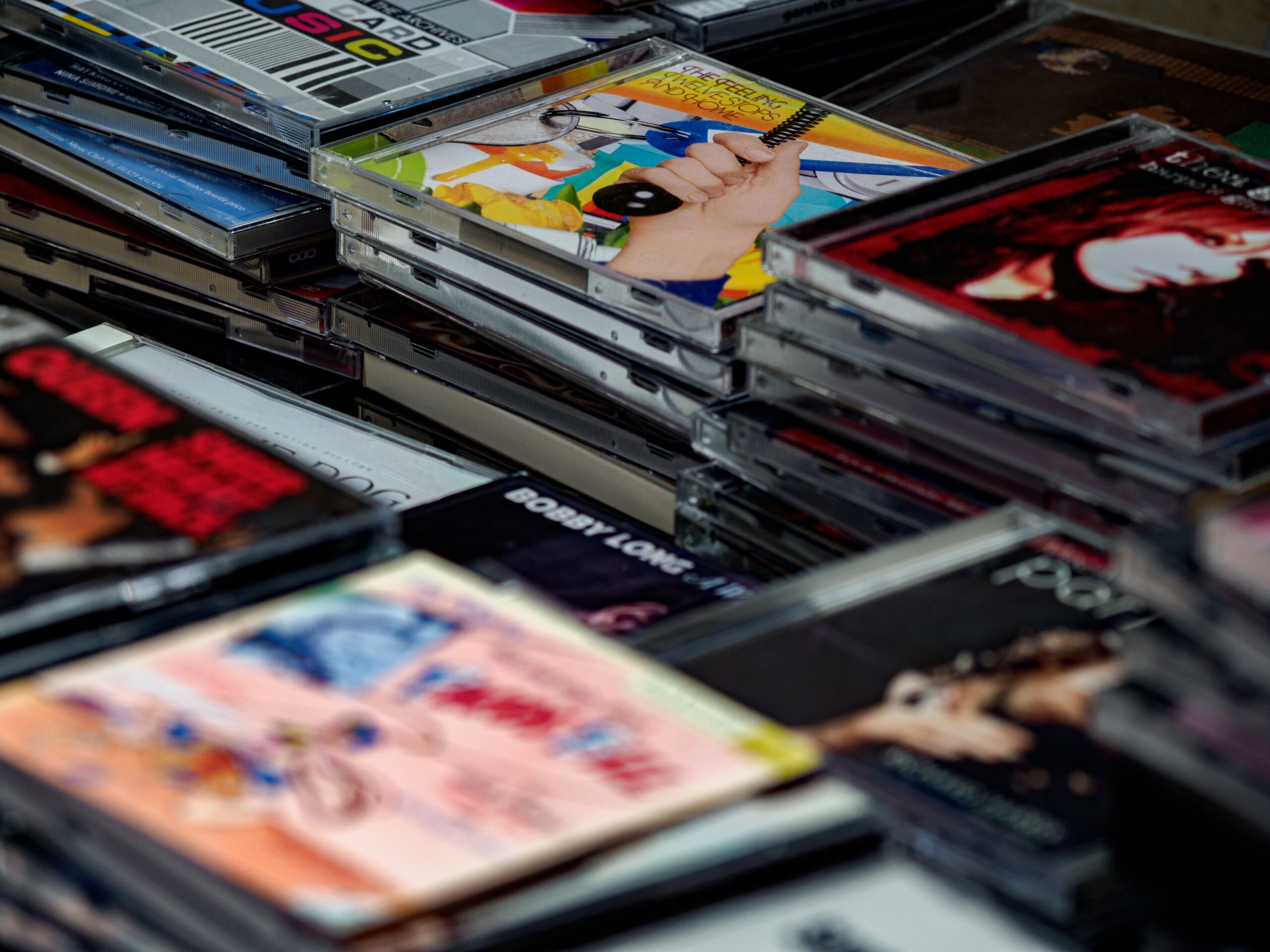
Instead, it has returned to the charts—not as a replacement for streaming, and certainly not as the dominant format it once was, but as an increasingly visible object of desire.
According to the Recording Industry Association of America’s first-half 2026 figures, CD revenue in the United States rose 58.6 percent year over year, reaching $171.1 million. Unit sales climbed to 17.5 million, up 45.7 percent. Vinyl also grew, though more slowly, with revenue up 17.7 percent. (TechCrunch)
That is a remarkable rebound for a format whose cultural obituary was written sometime around the arrival of the iPod.
It is also easy to misunderstand.
The CD is not winning against streaming. Streaming remains the central economic engine of recorded music, while physical formats represent a minority of the market. Nor do new-sales figures capture the used market, where young buyers are finding discs in thrift stores, resale shops, online marketplaces and record-store bargain bins. (Into HiFi)
What is happening is more interesting than a retro revival.
Listeners are building a parallel relationship with music—one that uses streaming for discovery and convenience, but physical objects for identity, memory, support and control.
The first mistake is calling this nostalgia
Older listeners may remember CDs as an irritating compromise: more expensive than cassettes, less tactile than vinyl, vulnerable to scratches and famous for taking up too much space.
For younger listeners, the CD is not a failed bridge between analog and digital. It is material culture from a time they never experienced firsthand.
A 2026 RTi Research analysis found that members of Gen Z are buying CDs from thrift stores and secondhand bins despite already having access to nearly limitless streaming catalogs. The appeal is not simply sound quality. Purchasing a particular album can be an act of selection in an environment where almost everything is available all the time. (RTi Research)
That distinction matters. The first vinyl revival was heavily organized around audiophile language, scarcity and the romance of the record store. The new CD audience is more mixed. Some buyers want collectibles. Some want inexpensive physical copies of albums they already love. Some want merchandise that happens to contain music. Others are responding to the unpleasant realization that a streaming subscription is not ownership at all.
As one young collector told WUSF, without a subscription or Wi-Fi, “you don’t have your music.” (WUSF)
That sentence explains more than a dozen think pieces about “digital fatigue.”
The format is useful precisely because it is limited
A streaming service is excellent at making music available and terrible at making it feel located.
An album on Spotify is part of a vast, shifting catalog. It can be removed, edited, relocated, buried in a recommendation system or surrounded by an endless succession of new releases. A CD, by contrast, is stubbornly finite. It has an artist, a title, a cover, a sequence and a place on a shelf.
The limitations are the point.
The disc does not update itself. It does not recommend something else after the final track. It does not convert listening into a series of behavioral signals for a platform. It is a small object that says: this is the thing I chose.
That does not make physical media morally superior. Manufacturing collectibles carries environmental and commercial costs, and possessing a disc does not guarantee that anyone will listen to the album all the way through. A shelf can become another form of content, photographed and displayed rather than used.
But the behavior is still meaningful. The object gives fans a way to make a relationship with an artist visible and durable.
This matters for musicians, too. Streaming has made music easier to hear while making the economic value of an individual listen difficult for most artists to feel. A CD bought directly from an artist, label or record store is a clearer transaction. It may also include photographs, liner notes, signed material, bonus tracks or other evidence that a listener is participating in an artist’s world rather than merely passing through it.
Record-store owners have noticed the change. Lolo Reskin of Miami’s Sweat Records told the Miami New Times that younger buyers often understand that artists make relatively little from streaming and choose physical formats as a more direct form of support. She also noted that CDs are more affordable than many vinyl releases. (Miami New Times)
The CD’s greatest advantage may be that it is still cheap enough to be a gift, a souvenir or an impulse purchase.
The numbers need skepticism
The latest figures are impressive, but they do not prove that the country has become a nation of CD collectors.
Different measurement companies are describing different parts of the market. RIAA’s wholesale-revenue figures show CD revenue up 58.6 percent in the first half of 2026. Luminate’s consumer-sales data, cited by industry coverage, counted 16.3 million CDs sold during the same period, a smaller increase of roughly 16 percent. The difference reflects methodology, timing, returns and the distinction between money received by the industry and units purchased by consumers. (ecoustics)
That discrepancy is not a reason to dismiss the trend. It is a reason not to turn it into mythology.
The CD is growing from a depressed base and remains far below its historical peak. Much of the visible enthusiasm is concentrated among particular fan communities, including pop, K-pop, country, regional music and collectors who treat multiple editions as merchandise. Used sales may be culturally important to independent shops, but they do not necessarily create new recorded-music revenue for labels.
This is a revival, but not a restoration.
Why games make the contrast clearer
The CD’s return is arriving as other entertainment industries move aggressively in the opposite direction.
Sony has said it plans to discontinue PlayStation physical-disc production in 2028, arguing that digital distribution already accounts for a substantial portion of content sales. (Sony) Microsoft, meanwhile, recently introduced a system allowing supported Xbox disc owners to claim digital entitlements while retaining their physical discs. Xbox presented the move as a preservation measure—an attempt to make existing libraries more portable across devices and services. (Xbox)
The contrast is revealing.
Games are becoming less physically legible at the same moment that music buyers are rediscovering the appeal of a physical library. These developments are not contradictory. They reflect two different ideas of what an object is for.
In games, the disc has increasingly become a delivery mechanism for software that requires patches, servers, accounts and continuing platform support. The object may not contain the complete experience. In music, a CD can still provide a relatively self-contained recording that remains playable decades later.
The game disc is being asked to preserve access to a service. The music disc is being used to create a personal archive.
That distinction may matter more than the format’s age.
Who benefits?
The obvious beneficiaries are major artists with devoted fan bases, labels capable of producing multiple editions and retailers that can turn a cheap disc into a broader shopping experience.
Independent culture benefits too—at least in theory.
A record store is not simply a place where old objects wait to be purchased. It is a recommendation system with human beings inside it. The current physical-media revival is bringing some younger listeners into stores that also sell used music, books, clothing, tickets and local knowledge.
The danger is that the industry will learn the wrong lesson. If labels respond by releasing seven collectible editions of every album, inflating prices and treating fans as extractable revenue, the format will become another premium merchandise channel. The buyer may still receive a disc, but the culture surrounding it will feel indistinguishable from a limited-edition sneaker drop.
The best physical releases give listeners something a platform cannot: context. The worst simply give them more packaging.
What institutions are missing
The music business spent years treating physical media as a declining category to be managed, then as a premium category to be monetized. It has been slower to understand physical media as a response to the emotional limits of platform culture.
Listeners are not only asking for better audio, more convenient access or more elaborate packaging. They are asking for boundaries.
They want some part of culture to stop moving.
That desire is not new. Earlier generations found it in record collections, bookshelves, mixtapes, posters and ticket stubs. The technology changes, but the basic impulse does not: people want evidence that their attention went somewhere.
The CD revival is therefore neither a revolution nor a joke. It will not reverse streaming, revive the old record-store economy or make every abandoned stereo system useful again. But it does reveal a growing dissatisfaction with culture consumed entirely through rented interfaces.
The future of music may not be analog or digital. It may be deliberately inconsistent: streaming for exploration, downloads for convenience, physical media for commitment and independent shops for interpretation.
The CD is not back because everyone suddenly misses 2004.
It is back because, in an economy built around access, possession has become a form of expression.