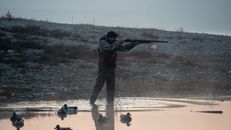
Texas’s early youth-only white-tailed deer season opens today, October 30, and runs through November 1. The statewide general season begins November 7. Only licensed hunters 16 or younger may participate in the youth-only deer season, which is open in 252 of Texas’s 254 counties.
That is a useful opportunity. It is not, by itself, a recruitment system.
A youth weekend can put a child in a blind before the general season gets crowded. It can give a parent, grandparent or mentor time to explain a rifle, a bow, a deer and the rules without trying to compete with a full field of experienced hunters. It can create a memory that lasts.
But the real test comes later. Does the child return next season? Can the family find legal and affordable access? Does the young hunter leave with enough safety, competence and confidence to want another morning in the woods?
That distinction matters because Texas Parks and Wildlife Department’s R3 program—recruitment, retention and reactivation—has a larger goal than filling a three-day calendar opening. TPWD says participation in hunting and fishing has not kept pace with population growth, and that participation supports conservation funding, habitat work, access projects and mentored programs.
The weekend is an opportunity, not a guarantee
The rules alone show why this is more complicated than “take a kid hunting.” Texas’s youth-only deer season may run alongside archery and other lawful seasons. County rules determine bag limits, tagging requirements, antler restrictions and the treatment of antlerless deer. In Collin, Dallas, Grayson and Rockwall counties, lawful archery equipment is required. In other counties, different provisions apply.
The TPWD youth-only regulations are not difficult because the agency wants to make a child’s first hunt unpleasant. They are difficult because wildlife management is local. A rule that makes sense in one county may not control in the next one.
The adult taking a child hunting has to know that before daylight. The license and tags have to be right. The hunter-education requirement has to be understood. The firearm or bow has to be tested. The child needs a clear standard for identifying legal game and a clear answer to the most important question in the field: when not to shoot.
For Texas hunters ages 9 through 16, TPWD says hunter education must be completed or the hunter must be accompanied by a qualified adult. The department’s hunter-education guidance describes accompaniment and certification requirements. Those details are not paperwork around the hunt. They are part of making the hunt safe.
Access is where the sentiment gets tested
A youth season gives a family a date. It does not give them a place.
Some families have land through relatives or long-standing relationships. Others lease acreage, pay for a guided hunt or apply for public opportunities. Some have a license but no dependable access at all. Public land may be legal and still be a poor first experience if the family does not understand the boundary, cannot reach the hunting area, faces heavy crowding or lacks a practical way to recover a deer.
TPWD’s own budget materials identify inadequate access to affordable hunting areas as one factor affecting participation. That is the part of recruitment conversations that often gets softened. Taking a child hunting requires land, transportation, time, equipment, adult supervision and enough knowledge to keep a difficult morning from becoming an unsafe or discouraging one.
A young hunter does not need a premium rifle, expensive camouflage or the newest optic. The child does need an adult who can control the pace, explain the rules, recognize when conditions are poor and accept a morning without a shot.
The shot is only one part of the lesson
The first harvest may be important. It is not the only measure of a successful hunt.
A child may learn patience, wildlife identification, food responsibility and respect for a place without seeing a deer. Another child may make a clean harvest and still decide that hunting is not for them. That is not necessarily failure. A person is not a conservation statistic just because he or she once sat in a blind.
At the same time, TPWD’s R3 goals make it reasonable to ask whether the state measures what happens after the youth season. How many participants return within two years? How many renew a license after aging out of youth eligibility? How many continue hunting without a parent or grandparent? How many gain access to affordable land? How many learn to process meat, understand wildlife funding and handle the responsibility of the hunt?
The current public record does not establish how many first-time hunters will participate this weekend, how many youth licenses were sold specifically for the season or what share of participants return later. It also does not provide a statewide picture of whether young hunters are using private land, leases, public land or organized mentored hunts.
Those missing numbers matter. A weekend can provide recruitment without producing retention.
What the adults owe the child
The adult is not just transportation. The adult is the safety officer, regulations clerk, range coach, guide, tracker and emotional interpreter.
Before the hunt, that means checking the county rules, confirming the license and tags, sighting in the firearm or testing the bow, practicing safe loading and unloading, and discussing what happens after a hit. It means carrying the equipment needed to tag, track and recover an animal. It means preparing for cold, wind, insects, fatigue and a long wait.
After the shot, it means accepting the consequences. A child should learn that hunting is not a photograph or a promise of success. It is an obligation to identify the animal correctly, make a responsible shot, recover what was wounded and handle the meat and carcass properly.
That is competence. It is also the part of hunting most likely to determine whether a child wants to come back.
Tradition has to survive the second hunt
Texas is right to provide a youth season. A controlled first opportunity is better than asking every beginner to enter the field during the busiest part of the general opener. But the state should be careful about treating the existence of that opportunity as proof that recruitment has been solved.
A useful R3 effort would report first-time participation, repeat participation, license renewal, hunter-education completion, access type, participation costs, safety incidents and retention after one, three and five years. It would show whether the program reaches young hunters across different regions and financial circumstances. It would measure whether the people who begin hunting can keep doing it.
A youth season can open the gate. It cannot provide the land, the adult, the instruction or the judgment required to walk through it.
The first deer may be memorable. The more important test comes later, when the child is old enough to hunt without the special weekend, when the lease costs too much, when the public tract is crowded and when there is no guarantee of seeing an animal.
That is where recruitment becomes retention. It is also where a tradition proves whether it is still alive.