
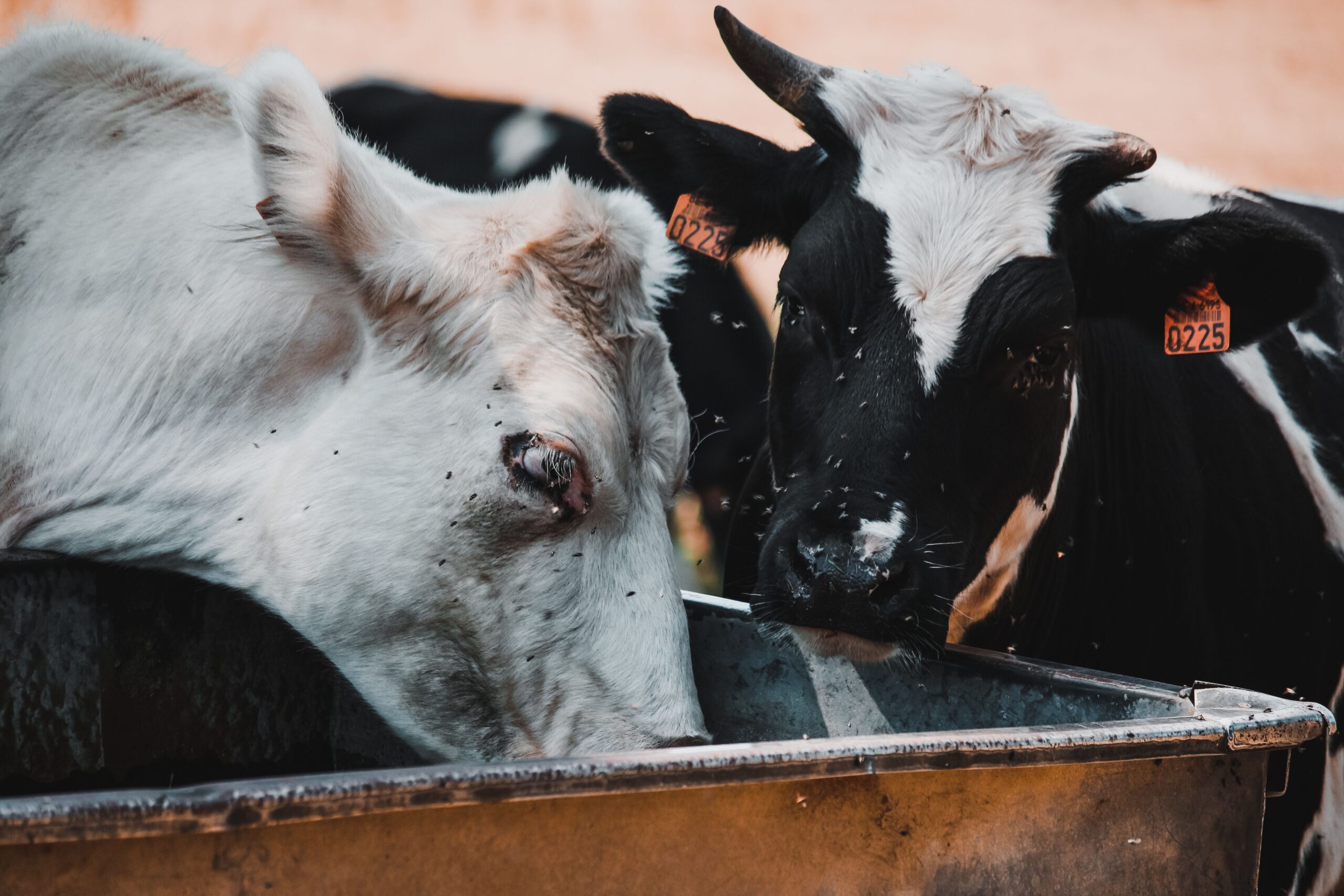
The New World screwworm is not a mysterious new pathogen. It is a fly whose larvae feed on the living tissue of warm-blooded animals. The biology has been understood for decades. So has the principal method for controlling it.
What has changed is the scale and geography of the problem.
A proven method with demanding requirements
In June, the U.S. Department of Agriculture confirmed the parasite in Texas for the first time since the species was declared eradicated from the United States in 1966. The initial case was found in a three-week-old calf in Zavala County. Within a week, federal officials had identified additional cases in Texas and reclassified a dog infestation as the first U.S. case in New Mexico. By June 9, USDA had reported six confirmed U.S. cases.
The history can make the current outbreak sound like a failure of science. It is more accurately a test of whether scientific tools can be deployed at the speed and scale required by a moving biological population.
The principal weapon is the sterile insect technique, or SIT. Male flies are raised in large numbers, sterilized—traditionally with radiation—and released into areas containing wild populations. Female screwworm flies generally mate only once. If that mating is with a sterile male, the resulting eggs do not hatch. Repeated releases can therefore drive a local population downward and, under the right conditions, eliminate it.
SIT helped eradicate screwworm from the United States in 1966 and later from Mexico and much of Central America. The program depended not on a single release, but on sustained production, surveillance, animal treatment, quarantine measures and cooperation across national borders.
That distinction matters. SIT is not a pesticide applied once to a landscape. It is an area-wide population-control program. It works only if enough sterile males are released, over enough territory, for long enough, while officials accurately measure the wild population.
A 2019 analysis of the historical eradication campaign concluded that climate, seasonal conditions and population dynamics were important to the outcome. Screwworm is sensitive to cold, but suitable conditions can permit survival and reproduction across parts of the southern United States and Mexico. The researchers also warned that eradication should not be understood as a permanent property of a landscape. It depended on continued barriers against reinvasion.
That is the first limitation on the official message that the United States can “beat” screwworm again: the statement is historically plausible, but it is not a prediction.
What the current evidence shows
The evidence establishes that New World screwworm has crossed into the United States and that the federal response has detected and contained at least some individual zones.
New Mexico’s only designated infested zone, created after the June detection in a dog, was released on August 30 after officials reported no additional cases since the original confirmation. USDA said the release followed animal inspections, movement controls, wildlife and fly surveillance, and strategic sterile-fly releases.
USDA has also approved the release of infested zones in Texas and modified zone requirements during September. Those administrative actions suggest that officials have been able to clear particular areas under the agency’s response criteria. They do not establish that the fly has been eliminated from the country or that transmission has ceased everywhere. USDA’s own detection dashboard distinguishes between individual animals whose infestations have been resolved and zones that may remain under controls.
The public data therefore support a narrower conclusion than either reassurance or alarm: the United States has confirmed incursions, some local responses appear to have succeeded, and the national status remains a surveillance question rather than a settled outcome.
The Centers for Disease Control and Prevention says the current risk to the U.S. public is very low and reports no locally acquired human infestations. That is consistent with the biology of the pest. Livestock, pets and wildlife are the principal concerns, while human cases are rare. But “low risk” does not mean “no risk,” particularly in regions where animals, wounds and flies are difficult to monitor.
The production bottleneck
The most consequential uncertainty may not be whether sterile insect technique works. It is whether enough sterile insects can be produced and delivered while the outbreak remains geographically limited.
USDA began funding a New World Screwworm Grand Challenge before the U.S. detections, awarding approximately $105 million to 40 projects selected from 226 applications. The projects include improved detection, alternative methods of sterilizing pupae and efforts to increase production efficiency.
The agency has also been developing domestic capacity in Texas while relying on sterile flies produced in facilities outside the United States. That arrangement reflects the international nature of the problem, but it creates a logistical vulnerability. A sterile-fly program depends on specialized facilities, transport, irradiation capacity, quality control and favorable release conditions. A shortage in any one of those steps can reduce the ratio of sterile to wild males—the ratio that determines whether the intervention suppresses the population.
A recent review of the outbreak and emerging control technologies argues that future management will probably require several layers: conventional SIT, surveillance, biosecurity, genetic tools and improved understanding of screwworm biology. The review discusses experimental approaches including genetic sexing and gene-drive systems, but those are prospective tools, not established emergency replacements for the current program.
A laboratory result showing that a genetic system can alter fertility or survival is not the same as a field-ready control method. Before such tools could be deployed widely, regulators and researchers would need evidence about ecological effects, mating competitiveness, persistence and reversibility.
Climate models are useful—and limited
Several recent studies have modeled where screwworm could survive under present and future climate conditions. One analysis found substantial climatic suitability in parts of Mexico and the southern United States. Another modeled reinvasion under different climate scenarios and concluded that warming could expand the areas in which the fly can establish.
Those studies do not forecast the exact route of spread. Climate suitability is not the same as establishment. The fly also requires hosts, wounds or openings in which females can lay eggs, appropriate humidity and enough population density for reproduction. Animal movement and surveillance quality may matter as much as temperature.
Models are best understood as planning instruments. They can identify areas where officials should intensify trapping and animal inspections. They cannot tell investigators whether a particular county contains a reproducing population without field evidence.
The U.S. Geological Survey is preparing a bibliography and planning resources focused on screwworm in wildlife and habitat suitability. That work reflects a crucial change in emphasis. Livestock surveillance alone may miss infections in deer, feral animals or other wildlife capable of carrying the parasite across jurisdictions.
What would count as success?
There are at least three different claims officials might make, and they should not be confused.
- An individual animal infestation has been treated. That is a clinical outcome.
- A local infested zone has met the criteria for release. That is an administrative and epidemiological outcome.
- The United States is again free of an established screwworm population. That is a much broader ecological claim, requiring sustained negative surveillance and confidence that undetected populations are unlikely.
The first two can occur without proving the third.
For now, the evidence permits cautious confidence in the tools and caution about the scale of the task. The United States knows how sterile insect technique works. It has used the method successfully. It has also demonstrated that eradication can be followed by reinvasion when regional control and barrier systems fail.
The current outbreak is therefore not a referendum on whether science has an answer. It is a test of whether institutions can maintain the laborious parts of that answer: production, monitoring, reporting, treatment, cross-border coordination and public trust.
The screwworm has returned to the United States. That fact is established. Whether it has returned as a transient incursion or as the beginning of a durable population is not yet known. The difference will be determined less by the confidence of official statements than by what the traps, animals and surveillance records show over the months ahead.