The Arctic’s summer sea ice did not set a record low in 2026. It still reached one of the lowest levels ever measured.
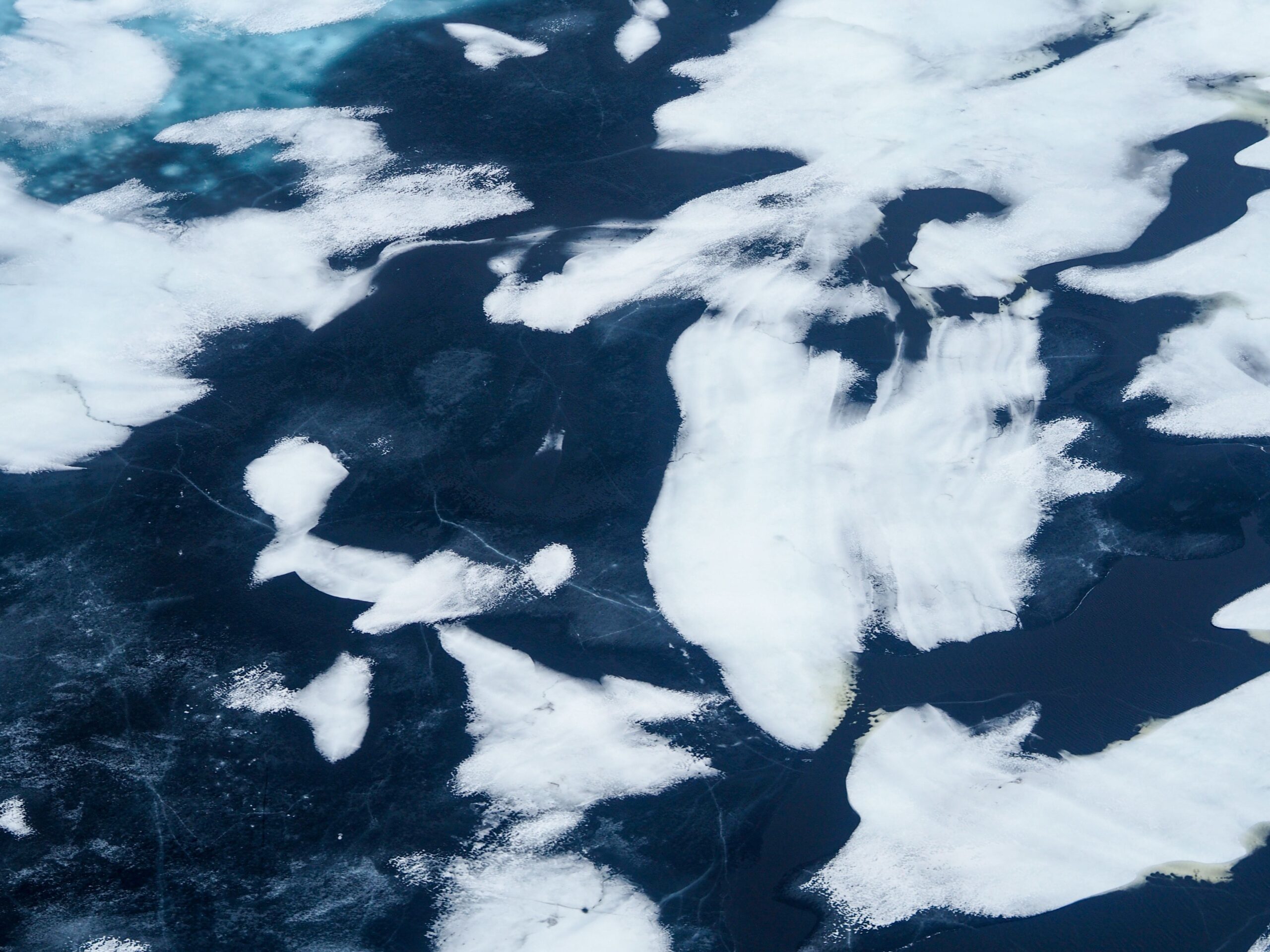
The National Snow and Ice Data Center and NASA reported on September 23 that Arctic sea ice likely reached its annual minimum on September 12, at approximately 4.60 million square kilometers, or 1.78 million square miles. That result ties 2008, 2010 and 2025 for the tenth-lowest minimum in the nearly 48-year satellite record.
The number is preliminary. Wind-driven compaction or later data revisions could alter the final extent and ranking slightly. But the broader interpretation is already clear: 2026 was another very low year in an Arctic that has been operating at a substantially reduced sea-ice baseline for nearly two decades.
What “tenth lowest” actually means
Annual rankings can obscure more than they reveal when they are treated as isolated events. The 2026 minimum was not as low as the record set in 2012, and it did not establish a new summer benchmark. That does not make it normal.
The past 20 years, from 2007 through 2026, contain the 20 lowest annual Arctic minimum extents in the satellite record, according to NASA and NSIDC. A year that ranks tenth lowest is therefore not evidence that the system has returned to an earlier condition. It is evidence that a historically diminished state has become persistent.
This distinction matters because climate trends are not required to produce a new record every year. Weather can change the ranking from one summer to the next without reversing the underlying trend.
Extent is not the whole ice pack
Sea-ice extent is an important measurement, but it is not synonymous with the amount or physical condition of ice. NSIDC calculates extent by counting ocean grid cells that contain at least 15 percent ice. The measurement does not directly tell us the thickness, volume, age or structural strength of the ice within those cells.
A broad area of thin, broken first-year ice is not equivalent to the same area covered by thick, multiyear ice. The two conditions can differ in their ecological effects, their mobility and their implications for navigation and operations.
That is why a relatively moderate change in the annual extent ranking should not be mistaken for evidence that the Arctic ice pack has regained its former resilience. The satellite record, other observations and recent research describe a thinner and more mobile system than the one common during the earlier decades of satellite monitoring.
The September 2026 study in Geophysical Research Letters is useful in this respect. Analyzing sea-ice extent from 1979 through 2025, the researchers identified abrupt changes around 2001, 2007, 2012 and 2020. They also found partial rebounds after sharp declines. The study describes a continuing long-term loss but does not interpret individual extreme years as proof that the system has crossed an irreversible tipping point.
Variability is not recovery
Natural variability remains important. Winds, clouds, ocean temperatures and atmospheric circulation can influence how much ice melts, moves or remains concentrated near the end of summer. Those factors can make one year look less severe than another.
NASA’s account of the 2026 minimum notes that increased cloud cover has limited incoming solar radiation in recent years, contributing to relatively stable September extent compared with the sharp declines of some earlier periods. That may help explain why the latest years have not produced a steady succession of new summer records.
But a pause in the pace of decline, or a year that ranks below the record, is not the same as restoration. The relevant comparison is not only between 2026 and 2012. It is between 2026 and the Arctic of the 1980s, 1990s and early 2000s.
On that comparison, the change is substantial. NASA’s summary of the 2026 result places the year within a sequence in which the 20 lowest annual minimums have all occurred since 2007. That is not the statistical signature of a single anomalous summer.
What the result does not prove
The 2026 minimum does not prove that Arctic sea ice has stabilized. It does not establish that the climate trend has paused permanently, and it does not demonstrate that the Arctic has crossed an irreversible tipping point.
It also does not justify confident claims that a particular winter, storm, drought or cold spell in the United States was caused by this year’s sea-ice minimum. The connections between Arctic change and weather farther south are scientifically important, but the mechanisms remain difficult to isolate.
NOAA’s Arctic strategy identifies interactions among Arctic warming, the jet stream and the polar vortex as an area requiring continued research. That is a reason for careful attribution, not a reason to dismiss the broader evidence of Arctic change.
Nor does the September minimum provide a precise timetable for when the Arctic will experience a practically ice-free summer. Climate models broadly project continued decline, but the timing and frequency of such conditions depend on emissions, natural variability and the definition being used. The uncertainty concerns when and how often those conditions will occur, not whether the long-term decline is real.
A changed baseline
The most defensible description of 2026 is therefore neither catastrophe nor reprieve. The Arctic did not experience its worst recorded September minimum. It also did not recover.
The year was another low minimum within a changed system—one in which the recent floor is far below the conditions observed during the first decades of satellite monitoring. The March 2026 maximum was also tied with the lowest winter maximum in the satellite record, indicating that the summer melt season began from an unusually low starting point.
That seasonal context matters. Sea ice grows and retreats every year, but the condition of the ice entering summer influences how vulnerable it is to weather and ocean conditions later in the season. A lower and thinner baseline can make individual years look different without restoring the system that existed before the long decline.
The practical implications extend beyond a number on a map. Changes in sea-ice extent and condition affect marine operations, wildlife habitat, coastal communities, fisheries, forecasting and emergency planning. For Alaska Native and other Arctic communities, these are not abstract indicators. They describe a physical environment in which travel, hunting, infrastructure and coastal conditions are changing.
For the rest of the United States, the appropriate lesson is more limited but still important. Arctic change complicates forecasting and planning, but it does not provide a simple explanation for every event at lower latitudes. The evidence supports sustained observation and preparation, not confident claims that outrun the measurements.
The value of the record
The achievement represented by the satellite record is not merely the production of an annual headline. It is the ability to distinguish a single unusual season from a multidecadal change.
That is why the 2026 result matters. It shows how misleading annual climate storytelling can become when the absence of a new record is presented as good news without context. The year was less extreme than 2012. The Arctic is still profoundly different from the Arctic observed before the recent sequence of low-ice years.
A tenth-lowest minimum does not tell us that the system has crossed a point of no return. It tells us something more precise: natural variability remains capable of moving the annual ranking, while the long-term baseline remains far below its earlier level.