On Monday, October 5, the Supreme Court will hear a case about whether Boulder’s climate-liability lawsuit against ExxonMobil and Suncor Energy can proceed. In Louisville, Colorado, the question is arriving after the community has already started paying for the future.
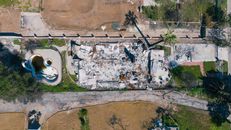
Louisville lost approximately 550 homes in the 2021 Marshall Fire. The city is now changing construction standards, landscaping rules, public-land management and homeowner-assistance programs in response to a risk its officials describe as widespread.
That makes Louisville a useful place to understand what the Supreme Court case can—and cannot—change.
The justices are not being asked to calculate the cost of Louisville’s wildfire mitigation or order oil companies to finance local rebuilding. The case, Suncor Energy (U.S.A.) Inc. v. County Commissioners of Boulder County, concerns whether federal law preempts Boulder’s state-law claims and whether the Supreme Court can review the dispute before a trial or judgment. The Supreme Court docket lists oral argument for October 5, 2026.
But whatever the Court decides, Louisville residents still have to determine which homes to harden, which plants to remove, which rules to follow and which costs they can afford.
Adaptation has become a local obligation
Louisville’s 2026 wildfire-risk assessment does not describe wildfire as a problem limited to a remote edge of town. It identifies widespread structure-loss risk and emphasizes that wind can rapidly change fire behavior. The assessment also says that home-ignition-zone work, defensible space and participation by homeowners and businesses are central to reducing risk.
The city’s response has moved from general preparedness toward permanent regulation. In January, Louisville adopted updated fire-hardening requirements involving building materials and junipers. In February, it adopted defensible-space landscaping standards for properties in Marshall Fire rebuild areas, including requirements affecting the first five feet around homes.
The city’s wildfire-mitigation program also includes vegetation management, targeted mowing, noxious-weed control, public education and fire-resistant construction requirements.
These measures may be reasonable responses to a dangerous landscape. They also turn wildfire resilience into a series of private decisions and public expenses. A homeowner may need different materials, different landscaping, additional inspections or more work around a property. The city must manage public land and maintain mitigation programs. Builders must interpret changing standards. Insurers determine what rebuilding is financially possible.
The rules create a practical question that is more immediate than the lawsuit: What happens when a community requires protection that some residents cannot afford?
Recovery assistance does not reach everyone equally
Louisville has created assistance mechanisms, but the available numbers show why recovery cannot be measured only by the existence of a program.
A Colorado State Auditor review found that 315 Louisville homes destroyed in the Marshall Fire had received the state’s wildfire-rebuild sales-and-use-tax refund through the review period. That represented approximately 57 percent of the 550 homes destroyed in Louisville, according to the state’s data. The auditor also noted that Louisville’s separate city refund program had reached 438 homeowners, partly because its eligibility rules differed from the state program.
Those figures are not a complete count of homes rebuilt, and they should not be treated as a measure of the city’s entire recovery. They do show that assistance depends on eligibility, timing, ownership and the ability to navigate a complicated rebuilding process.
The auditor’s report also identified a larger problem: underinsured homeowners are more likely to sell damaged properties rather than rebuild. That means a recovery program can be available without being equally usable. A city may rebuild structures while losing some of the residents who made the neighborhood what it was.
Louisville’s Wildfire Mitigation Fund, established by the City Council in July 2026, is intended to support programs such as home hardening and defensible space in the Marshall Fire rebuild area. Its value will depend on more than its creation. Residents will need to know how much money is available, who qualifies, what work is covered and whether the program reaches people who are underinsured, older or unable to finance improvements upfront.
The lawsuit is about responsibility, not an automatic check
Boulder County and the city of Boulder sued ExxonMobil and Suncor in 2018. Their claims allege that the companies concealed or misrepresented risks associated with fossil-fuel products and should help pay for climate-related damages and adaptation. The companies argue that federal law preempts the claims and that local governments cannot use state law to address a global emissions problem.
The case summary describes the legal dispute as one involving state-law claims for alleged climate harms and questions of federal preemption, standing and Supreme Court jurisdiction. It is not a direct proceeding over Louisville’s rebuilding rules.
Even if Boulder ultimately wins, a judgment would not automatically send money to Louisville. Nor would a ruling for the energy companies erase the costs Louisville has already assumed. The city would still have to maintain public land, enforce its codes and decide how much assistance it can provide.
That distinction matters because climate-liability litigation is often discussed as though it will produce a single answer to the question of who pays. In practice, communities usually pay first. They pay through local budgets, permit systems, insurance premiums, rebuilding delays, private construction costs and the opportunity cost of directing money toward mitigation instead of other needs.
Protection can also create pressure
Louisville’s approach reflects a difficult but increasingly common pattern. After a disaster, officials adopt stricter standards because rebuilding the old way appears irresponsible. Those standards may reduce vulnerability, but they also raise the threshold for returning.
The burden is not distributed evenly. A well-insured homeowner may be able to replace siding, remove vegetation and meet new construction requirements. Another resident may be choosing between a larger deductible, a delayed rebuild and leaving the community. A renter may have no control over hardening a building but may still face displacement if housing becomes more expensive or scarce.
The city’s own risk assessment emphasizes broad participation rather than perfect work by a small number of property owners. That is an important principle: wildfire does not respect property lines, and one hardened home cannot protect an entire neighborhood if surrounding structures and vegetation remain highly vulnerable.
But broad participation requires broad capacity. If the city expects residents to comply, it must explain the costs, provide practical assistance and identify what happens when a household cannot complete the work. Otherwise, resilience becomes a standard that is formally universal but realistically available only to people with money, time and insurance.
Louisville’s next test is measurable
The city now has an opportunity to evaluate whether its adaptation system is protecting residents or merely adding requirements.
That evaluation should include the number of rebuilt homes, the time required to complete permits, the cost of fire-hardening measures, participation in defensible-space programs and the distribution of mitigation assistance. It should also include insurance renewals, property sales, housing prices and the number of displaced residents who return.
Officials should be able to explain which public-land projects remain unfunded, how enforcement will work and whether insurers recognize Louisville’s standards when setting premiums or renewal conditions. Residents should be able to see whether the Wildfire Mitigation Fund is reaching the households facing the greatest barriers.
Those facts will not resolve the Supreme Court’s legal questions. They will answer a more local one: whether Louisville’s adaptation policies are preserving a community or gradually making it harder for some residents to remain part of it.
The Court’s decision, likely sometime after the October 5 argument, may shape the future of climate-liability lawsuits around the country. It will not tell Louisville how to price a fire-resistant roof, maintain vegetation on public land or help an underinsured homeowner rebuild.
Those decisions are already being made. The real test is whether the people asked to carry them can do so—and whether the costs of protection are assigned openly rather than left to households one emergency at a time.