Pennsylvania’s first early firearms elk season runs from October 3 through October 11, 2026. The nine-day segment is new, and the Game Commission says it was added to create more opportunity and reduce crowding across hunt zones.
That is a reasonable management goal. It is also the kind of sentence that sounds simpler from an office than it feels in elk country.
Adding days to the calendar does not add elk to the herd. It does not guarantee an open route through the mountains, improve cell coverage, move a downed animal to the road or make a limited license available to everyone who wants one. It creates a legal opportunity. Whether that opportunity is usable depends on everything that happens afterward.
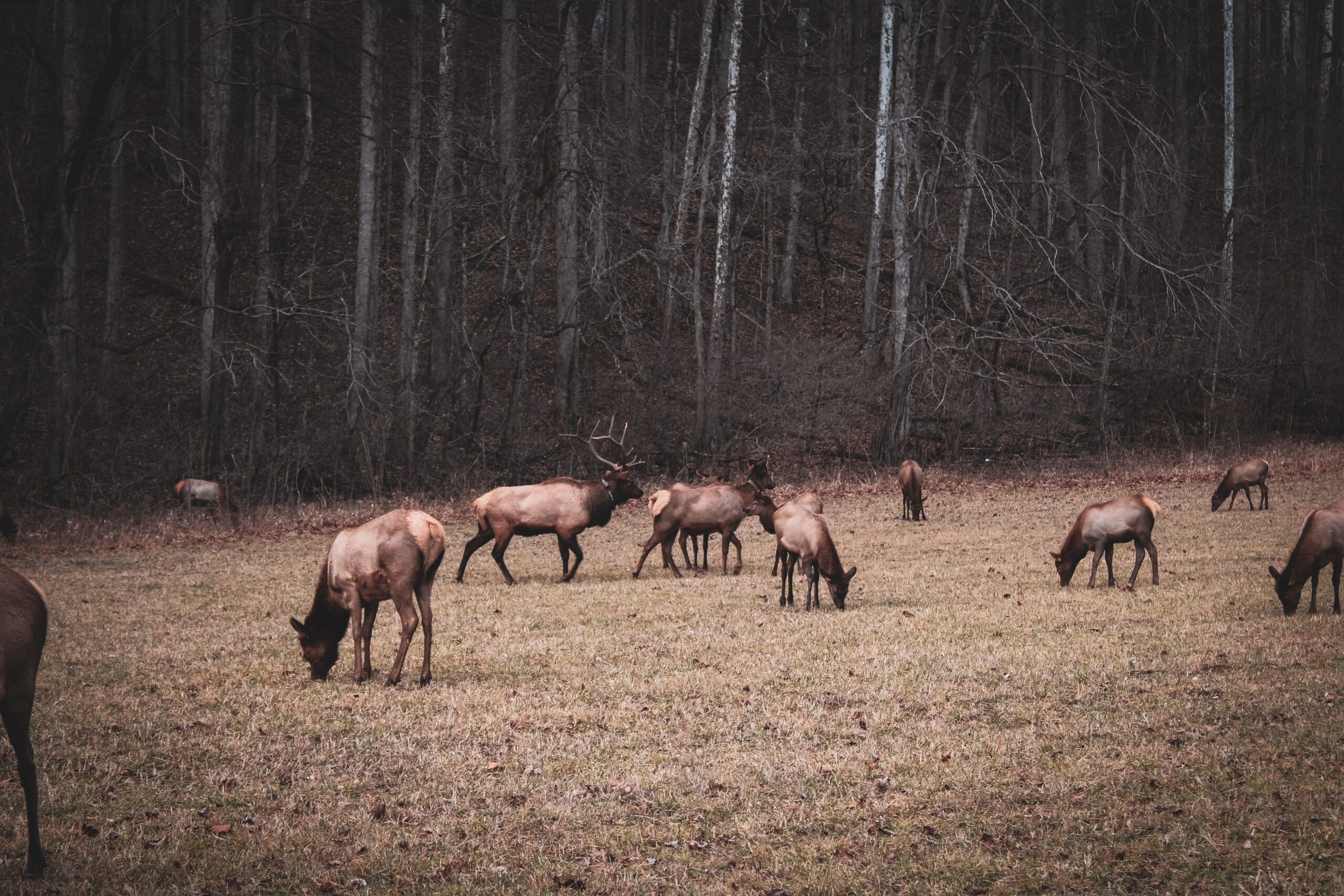
That distinction matters in Pennsylvania, where the elk population is estimated at roughly 1,300 to 1,400 animals. The state allocated 155 elk licenses across the 2026-27 seasons, including 15 antlered and 15 antlerless licenses for the new early firearms segment. The annual harvest has been measured in the low hundreds: 118 elk in 2023, 131 in 2022 and 145 in 2021, according to the Pennsylvania Game Commission’s harvest data.
This is not a broad, over-the-counter hunt. It is a tightly controlled opportunity around a relatively small herd.
A new season is also a test of management
The early firearms season is one part of a larger change. Pennsylvania has reorganized its elk hunt zones using GPS-collared elk and landscape data. The revised zones use clearer boundaries, including named roads and streams, and the commission says the average proportion of public land in a zone increased from 51 percent to 61 percent.
That is useful work. A boundary that a hunter can recognize on a map and find in the field is better than one that makes sense only inside a regulation book. The new zones also attempt to follow how elk actually move across the landscape rather than treating old administrative lines as permanent facts.
The state has changed the license process as well. Applicants now need a Pennsylvania general hunting license, may select up to five combinations of season, sex and hunt zone, and face an $11.97 application fee. No more than 10 percent of available elk licenses may go to nonresidents. Beginning with the 2026-27 season, a hunter drawn for an antlered elk license cannot apply for another antlered license in the future.
Those changes may improve the drawing and make the hunt zones easier to understand. They do not change the basic arithmetic. There are still more interested hunters than licenses, and more hunters than the landscape can comfortably hold in the places where elk are easiest to reach.
Public land is not the same as easy land
Hunters often talk about access as though it is a yes-or-no question. Is the ground public? Is hunting legal? Is the road open?
In the field, access has more parts than that. A public parcel may require a long walk, a steep climb or careful navigation around private property. Hunters may concentrate near roads, parking areas, known elk movement corridors and boundaries because those are the places people can realistically use. Two hunt zones with the same number of licenses can produce very different experiences.
The Game Commission’s revised zones may distribute opportunity more intelligently. They do not remove the terrain, the private-land boundaries or the pressure created when many hunters are trying to reach the same workable ground.
That is why the useful question is not simply whether Pennsylvania added public land to the average hunt zone. It is whether a licensed hunter can reach legal hunting ground, move safely through it, understand the boundaries and get a harvested elk out without creating a second problem.
The hunt does not end when the elk falls
The physical difference between an elk and a deer is not a detail. It is the part of the hunt that exposes poor preparation fastest.
The Game Commission warns that adult bulls may weigh 600 to 1,000 pounds and cows 400 to 600 pounds. It tells hunters to plan for field dressing and moving the animal to a vehicle and check station. Motorized vehicles, including ATVs, are generally prohibited on state-owned property, with limited exceptions. Depending on the location, an elk may need to be skinned, quartered and packed out with horses, mules or pack boards.
A person can be fit enough to carry a rifle into the woods and still be unprepared to recover an elk. Those are different jobs. The first requires getting in. The second may require several people, the right equipment, enough daylight and a recovery plan that was made before the shot.
Hunters must bring harvested elk to a check station within 24 hours. The commission also warns that cell coverage on the elk range is sparse. A phone is not a recovery plan, and a digital map is not a substitute for knowing where the roads, boundaries and check station are before service disappears.
Before entering the field, a drawn hunter should know the specific zone, carry reliable offline or paper maps, arrange enough help, plan the route to the check station and account for weather, darkness, steep terrain and meat handling. These are not glamorous preparations. They are what separates a controlled harvest from an avoidable emergency.
Opportunity should be measured after the announcement
The Game Commission is right to consider crowding and elk movement when it designs seasons and zones. But the success of the new season should not be measured only by the number of licenses issued or elk harvested.
After the 2026-27 seasons, the commission should be able to answer more practical questions. Did the early segment reduce crowding during the later firearms season, or did it simply spread the same pressure across more dates? Did hunters distribute themselves more evenly among zones? Were there fewer boundary and trespass complaints? How far did successful hunters have to move their animals? How often did they need horses, pack animals, guides or large recovery crews?
Those measures would tell the public more than a statement that the season created additional opportunity. They would show whether the opportunity worked on the ground.
Local communities deserve the same kind of accounting. Elk hunters bring business to lodging operations, restaurants, fuel stations, outfitters, meat processors and equipment shops. That economic activity is real, but it is not automatically distributed evenly. Residents may also see more traffic, parking pressure, trespass complaints and demands on local services. A longer season should be evaluated by both its income and its costs.
The elk hunt is managed, not manufactured
Pennsylvania’s elk are descendants of animals released by the Game Commission between 1913 and 1926. The herd is wild, but the modern hunt depends on deliberate restoration and continuing management: radio collars, population estimates, habitat work, drawings, zones, harvest limits and check stations.
That does not make the experience artificial. It explains why the experience is possible.
The same principle applies to the national argument over hunting access. A policy can direct agencies to look for more opportunities. It can encourage better maps, roads and facilities. It cannot create wildlife capacity, repair every bridge, settle every boundary or make an inexperienced hunter ready to recover a large animal in rough country.
Regulation can open a door. It cannot make the room larger.
Pennsylvania’s new elk season may prove to be a sound management adjustment. It should not be dismissed because the hunt remains difficult or selective. But neither should nine additional calendar days be mistaken for a solution to every access problem.
The herd is still limited. The tags are still scarce. The hills are still steep. The cell service is still poor. And if a hunter does everything right, the last part of the hunt may require more planning, help and physical work than the first part.
Opportunity is what the regulation provides. Competence is what allows a person to finish the job.