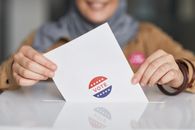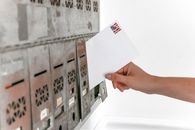
The Justice Department is asking a federal court to stop California from counting mail ballots associated with more than 20,000 people whom federal agencies describe as likely noncitizens. The lawsuit was filed on October 15, less than three weeks before California’s November 3 general election and after county officials had begun mailing ballots to registered voters.
The administration’s underlying principle is not in dispute: federal law prohibits noncitizens from voting in federal elections. The difficult question is what may be done when the government identifies people as “likely” noncitizens but has not publicly established that each person is ineligible, voted, or even returned a ballot.
That distinction is the center of the case. The federal government has produced an allegation and seeks an immediate counting restriction. California’s election system, meanwhile, is already operating under established registration, ballot-mailing and verification procedures.
What the Justice Department is asking for
In its announcement of the lawsuit and the accompanying federal complaint, the Justice Department says the Department of Homeland Security and its agencies reviewed voter-registration information alongside federal immigration records. The government says that process identified more than 20,000 people it believes are likely noncitizens and who were sent, or would be sent, California vote-by-mail ballots.
The complaint asks the court to require California to set aside ballots associated with those individuals and to verify their citizenship before counting them. The federal government bases its claim on the Supremacy Clause and 18 U.S.C. § 611, the federal prohibition on voting by noncitizens in federal elections.
But the complaint does not establish that all 20,000 people are noncitizens. It does not establish that all voted, that any particular ballot was cast in a federal contest, or that every record was matched through reliable and unique identifiers. The government’s own public description uses qualified language: the people are considered “likely” noncitizens, and the review remains ongoing.
That is not a technicality. It is the difference between investigating possible ineligibility and imposing a legal consequence on an identified voter.
California already has an eligibility process
California requires voter-registration applicants to attest that they are United States citizens. The state’s published materials also describe identity checks involving driver’s-license or identification numbers, Social Security information and other records. Those procedures are not a guarantee that no error can occur, but they are the existing system through which voter eligibility is established and questioned.
The state began mailing ballots for the November 3 election by October 5, and the regular registration deadline is October 19. Conditional registration and provisional voting begin October 20. Those dates matter because election administration is not an abstract database exercise. It is a process already moving through deadlines, notices, ballot custody, signature review and counting procedures. The California Secretary of State’s election calendar makes clear how compressed that process has become.
California Secretary of State Shirley Weber said on September 25 that the state would not use the expanded federal SAVE database in the 2026 general election. Her office said the Supreme Court’s ruling allowing the federal database’s expansion did not change California’s election rules for this election. The new lawsuit is therefore not simply a continuation of the database dispute. It is an attempt to use a federal classification to affect the treatment of ballots already entering the state’s election system.
The missing evidence is more important than the political language
The Justice Department says California was given an opportunity to cooperate and declined. California officials, according to reporting by The Associated Press, say they received approximately 20,000 names with insufficient supporting evidence and were given roughly 48 hours to review them.
The public record does not yet resolve that dispute. It does not show what documentation accompanied the list, how many records were matched through exact identifiers, how naturalized citizens were distinguished from current noncitizens, or how the government accounted for name similarities, outdated records and changes in immigration status.
Nor does it explain the operational meaning of “likely noncitizen.” Is that a confirmed current status? An unresolved immigration record? A match based on several independent records? A preliminary investigative judgment? Courts can evaluate an agency’s evidence, but affected voters and state administrators cannot meaningfully challenge a classification that remains undefined.
The same problem applies to the ballots themselves. How many were mailed? How many were returned? How many include federal contests? Were any voters notified? What procedure would apply if a listed person presents proof of citizenship? Would a ballot be held separately, challenged individually or excluded as part of a group?
A system that cannot answer those questions is not yet demonstrating a reliable method for protecting eligible voters. It is demonstrating that one government has obtained enough information to demand control over another government’s process.
Ballot mailing is not ballot counting
The lawsuit treats the mailing of ballots to people on the federal list as evidence that California is facilitating unlawful voting. That argument collapses several separate events:
- whether someone was properly registered;
- whether the person was a citizen at the relevant time;
- whether the person returned a ballot;
- whether the ballot contained a vote in a federal contest; and
- whether the ballot satisfied California’s signature and envelope requirements.
Those questions may ultimately lead to the same conclusion in an individual case. They do not become the same question merely because an election is approaching.
The administration may argue that waiting for ordinary state review risks allowing unlawful votes to be counted. That concern deserves to be taken seriously. Election officials should investigate credible evidence of ineligible voting, and federal authorities have a legitimate role in enforcing federal election law.
But urgency does not eliminate the need for evidence. In fact, urgency increases the need for a procedure that can identify mistakes before they become exclusions.
The institutional issue is larger than California
The central question is not whether noncitizens may vote. They may not vote in federal elections. The question is who has authority to convert a federal investigative suspicion into a ballot-counting decision.
States administer elections and maintain voter-registration systems. The federal government regulates federal elections and enforces federal criminal law. Those responsibilities overlap, but overlap is not the same as federal command authority.
If federal agencies can send a state a list of people they describe as likely ineligible, demand that ballots be quarantined and obtain judicial intervention before the listed voters receive notice or an opportunity to correct the record, the practical balance of authority will have shifted. Voter eligibility would no longer be determined primarily through an established state process. It would be determined first by an executive classification, with review occurring afterward—if time permits.
That may eventually be upheld. Congress may have granted the federal government broader authority than California recognizes. The courts may conclude that the federal interest in preventing unlawful voting justifies the requested remedy. But those conclusions cannot be assumed from the proposition that noncitizen voting is illegal.
Election integrity requires more than excluding unlawful votes. It requires demonstrating, before exclusion, who is ineligible and why. It requires notice, individualized review and a realistic opportunity to correct a government error. Otherwise, a measure intended to protect the legitimacy of an election may itself weaken confidence in the process by making an accusation sufficient to delay or suppress a ballot.
As of October 18, no final ruling on the merits has been identified. The immediate proceedings may address emergency relief, standing, jurisdiction, evidence and the practical consequences of intervening in ballot processing so close to Election Day.
The most important fact remains the simplest: the government has identified more than 20,000 people it says are likely noncitizens. The public record does not yet establish how many actually are, how many voted or how many ballots are at issue. Until those questions are answered, the California lawsuit is less a settled case of voter fraud than a test of whether executive power can outrun the procedures designed to distinguish a real violation from a mistaken classification.