
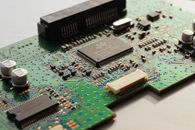
A dashboard camera and a wireless video transmitter have become the first visible test of the Federal Communications Commission’s new component-level supply-chain rules.
On October 22, the FCC said it had blocked the two devices after determining that they contained chips produced by HiSilicon, a Huawei subsidiary identified on the agency’s Covered List. The action matters because neither product needed to carry Huawei’s name on the outside. The relevant evidence was inside the device.
The FCC’s new rule took effect on October 13. It generally prohibits new equipment authorization for devices containing certain logic-bearing hardware components produced by Covered List entities. The rule applies to new authorizations rather than automatically recalling every previously approved device. The FCC’s order describes the change as a way to close a component loophole in the communications-equipment approval system.
The policy is a meaningful change. It is also an unusually direct test of whether manufacturers and regulators can maintain reliable knowledge about what is physically inside a product after that product has passed through a modern supply chain.
The logo was never the whole device
A communications product may have one company’s logo, another company’s circuit-board design, a third company’s wireless module and a processor designed or manufactured somewhere else. Contract manufacturers can assemble the final unit. Distributors can substitute parts when inventories change. A later production run can look identical to the first while containing a different component.
That means “Who made this device?” and “Who produced the important hardware inside it?” are separate questions.
The FCC’s definition of a logic-bearing hardware component is broad. It can include digital devices, modules, subassemblies and integrated circuits used for processing, storing, retrieving, transforming or transferring data. The category is about what a component does, not merely whether it has a recognizable brand or transmits a radio signal.
The rule therefore turns component provenance into a condition of market access. A manufacturer seeking authorization must know enough about the parts inside its product to determine whether one of them was produced by an entity that triggers the restriction.
That sounds like a paperwork problem. It is really an inventory problem.
Supply chains change faster than certifications
A simplified hardware chain might begin with a product company selecting a communications module. That module supplier may purchase a processor or system-on-chip from another company. The chip may be designed by one entity, fabricated by another and assembled into a module by a third. A contract manufacturer then installs it in the finished product.
Later, a shortage forces a substitution. An engineering-change notice remains in a supplier’s internal system. An acquired subsidiary continues operating under an older vendor list. A regional product version receives a different radio module. The device’s name and external appearance remain unchanged.
The certification record may not.
The FCC’s rule does not impose a universal public hardware bill of materials. The agency is separately considering broader hardware- and software-inventory requirements. Its current framework instead relies on authorization representations and related documentation. The distinction matters: a company may need detailed internal knowledge to make a correct filing even though consumers and outside researchers cannot see a complete list of the device’s internal parts.
Industry groups have warned that universal component-disclosure requirements could be difficult to administer across complex supply chains. That concern is legitimate. A small manufacturer may rely on supplier attestations without having the resources to inspect every module or trace every corporate relationship behind it.
But the opposite problem is equally real. A certification system based on records that are incomplete, stale or too dependent on supplier assurances cannot reliably establish provenance. The FCC is asking companies to prove something that many organizations may not have been structured to track at the required level of detail.
What the first enforcement action shows
The HiSilicon action demonstrates that the FCC is willing to examine internal components rather than relying only on the name of the finished-product manufacturer. It also shows that an ordinary-looking camera or video transmitter can become subject to a national-security restriction because of a chip inside it.
It does not show that the two devices were proven to be spying on users. It does not establish that every product containing a HiSilicon chip is prohibited. It does not create a general recall of previously authorized equipment. And it does not demonstrate that the FCC now has a complete, publicly auditable inventory of every relevant component in every communications product.
The agency’s national-security determination and the technical question of whether a particular device is malicious are not the same thing. The rule is a market-access restriction based on the identity of the component producer and the status of the finished equipment. It is not, by itself, a forensic finding that a chip contains a backdoor or that a device has been compromised.
This distinction is important for consumers. A foreign-made component does not automatically prove that a device is malicious. An FCC authorization, however, does not prove that a device is secure.
Authorization is not a security certification
The FCC’s equipment-authorization system can prevent certain products from entering the market under the applicable rules. It can force manufacturers to account for component substitutions and complicated supplier relationships. It gives the agency an opportunity to intervene before a product is widely deployed.
It cannot guarantee that an approved device has secure firmware, strong default credentials, safe cloud connections or an update system that will remain trustworthy. It cannot prove that the manufacturer’s records are complete. It cannot determine whether a previously approved device was compromised after authorization.
Component origin, hardware design, firmware security, configuration and evidence of exploitation are related questions. They are not interchangeable.
This is a distinction Robert Callahan made before in WBC’s earlier analysis of the FCC’s component rule. The new enforcement action moves the question forward. The issue is no longer only whether the FCC should regulate the part inside the device. It is whether the records beneath that regulation are accurate enough to support enforcement.
The hidden cost of proving provenance
The first effects of the rule are unlikely to be dramatic consumer recalls. They are more likely to appear as certification delays, supplier audits, redesigned bills of materials, engineering changes and disputes over whether a component qualifies under the FCC’s definition.
Manufacturers may need to answer questions such as:
- Who designed the component?
- Who physically produced it?
- Which corporate entity controls that producer?
- Which part number and hardware revision are installed?
- Did a later production batch use a substitute?
- Was the substitution reflected in the certification record?
- Does the component qualify as logic-bearing hardware?
- Is the producer listed directly, through an affiliate or through a parent entity?
Those questions are difficult even when nobody is deliberately hiding anything. Ordinary acquisitions, shortages, regional variants and contract-manufacturing changes can make an accurate record obsolete.
The FCC’s future marketplace requirements may improve the information displayed when covered devices are sold online. Some marketplace obligations are scheduled to begin in 2027. But an FCC ID identifies an authorized product; it does not provide consumers with a complete internal component inventory or guarantee that a marketplace listing matches every hardware revision being sold.
A new kind of concentration risk
The rule may reduce dependence on suppliers the federal government considers unacceptable. It may also create new dependencies.
If manufacturers cannot verify components from a wide range of suppliers, they may consolidate around a smaller group of approved vendors. That could reduce one category of geopolitical exposure while increasing prices, certification delays, repair-part shortages and single-source risk. Smaller manufacturers may face a larger compliance burden than companies with dedicated procurement and regulatory teams.
Supply-chain traceability is not the same as domestic self-sufficiency. A product can become easier to trace while still depending on foreign design, fabrication, assembly and logistics. Those are separate policy goals, and progress on one should not be presented as proof of progress on the other.
The real test is administrative
The FCC is right to look past the label on the box. Modern communications equipment is a system of components and supplier relationships, not a single object made by the company whose name appears on the housing.
But the rule will be useful only if it produces more than another declaration in a certification file. The agency should eventually provide enough information to show how products are identified, what evidence is sufficient to establish component provenance and how often incomplete or inaccurate records lead to enforcement.
The market should also measure the practical consequences. How many applications are rejected or withdrawn? How many manufacturers discover that their internal inventories are incomplete? How many products require redesign? Do equipment prices, delivery times or replacement-part availability change? Does the FCC identify unauthorized substitutions after authorization?
The FCC has made an invisible supply-chain relationship visible enough to regulate. That is the correct direction. The unresolved question is whether manufacturers, laboratories and regulators possess the records and testing systems needed to make the rule reliable.
A certification record is useful evidence. It is not the same thing as a verified hardware inventory, and neither one is a complete security assessment. The government can block a device because of the part nobody sees. To make that authority credible, it must also explain how it knows what is inside.