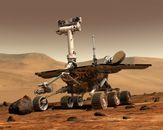

On December 1, NASA’s Terra satellite will stop collecting new science data. The spacecraft will not disappear, and Earth observation will not end. But a 27-year observing record will stop getting longer, and the consequences will depend on how carefully researchers and operational users cross the boundary between Terra’s measurements and those of its successors.
That distinction matters because a long scientific record is not simply a large pile of images. It is a sequence of measurements made with known instruments, viewing conditions, calibration procedures and orbital characteristics. When one part of that system changes, researchers must determine which comparisons remain valid and which require adjustment.
A retirement caused by engineering limits
Terra launched in December 1999 with a design life of six years. It has operated for more than four times that period. NASA says the spacecraft’s systems are aging, its orbit is drifting and its available power has narrowed. The mission team has already shut down or reduced some instrument functions to preserve the spacecraft’s remaining margins.
NASA plans to use Terra’s remaining fuel to lower its orbit before powering down the spacecraft in January 2027. The immediate operational fact is therefore clear: the satellite is reaching the practical limits of an unusually successful extended mission, not being retired because its historical data have suddenly become useless.
Terra has carried five major instruments: ASTER, CERES, MISR, MOPITT and MODIS. Together, they have contributed observations of land-cover change, wildfire behavior, dust and smoke, atmospheric pollution, clouds, ice and Earth’s radiant energy. NASA says those data have supported research and operational work involving public safety, agriculture, water resources and environmental monitoring. NASA’s announcement of Terra’s retirement describes the mission as a central part of the Earth Observing System.
Historical data will remain. New observations will change.
The most important distinction for users is between the archive and the observing stream. Terra’s existing records will remain freely available through NASA’s Earthdata system and its distributed archives. Researchers will still be able to reprocess those data, compare them with other records and extract scientific findings from observations collected years ago.
Users who depend on new observations, however, must transition to other systems. A NASA data notice hosted by the National Snow and Ice Data Center says historical Terra data will remain available even as new deliveries cease on December 1. That is a manageable transition only if users understand what the replacement products measure and where they differ.
“Continuity” can mean several different things. It may mean that another instrument observes the same broad physical phenomenon. It may mean that researchers can construct a comparable data product. It does not necessarily mean that the new instrument sees the same location at the same time, through the same spectral bands, at the same resolution, with the same calibration history.
MODIS has a successor. It does not have a clone.
The clearest transition concerns Terra’s MODIS instrument and the newer VIIRS instruments aboard Suomi NPP, NOAA-20 and NOAA-21. NASA and its partners have developed continuity products that apply common or approximately common spectral channels and algorithms across MODIS and VIIRS observations.
That work is substantial. It gives researchers a practical way to extend several atmospheric and land-observation records beyond the MODIS era. NASA’s MODIS-to-VIIRS transition documentation identifies comparable products and explains how the continuity effort is being constructed.
But comparable is not identical. Terra’s MODIS operated in a morning orbit, with an equatorial crossing time near 10:30 a.m. local time. VIIRS instruments operate on different spacecraft and may observe locations at different times, angles and conditions. Those differences can affect cloud screening, fire detection, snow and ice observations, atmospheric retrievals and the interpretation of gradual trends.
The transition is therefore less like replacing a broken camera with the same model and more like joining two carefully documented measuring systems. The overlap, calibration and algorithmic adjustments determine how confidently the resulting record can be treated as continuous.
The morning observation problem
For some users, Terra’s value was not merely that it observed Earth, but when it observed Earth. NASA’s Fire Information for Resource Management System, or FIRMS, has used Terra and other satellites to support near-real-time fire monitoring. NASA has said it is examining alternatives for maintaining morning-orbit fire detections after Terra reaches the end of operations.
That matters operationally. A researcher studying long-term fire trends may tolerate differences in overpass time if they can be modeled and documented. A wildfire-management system may care about how quickly a new observation arrives, how much cloud obscures the scene and whether the product is stable enough to guide an immediate decision.
The same distinction applies across Terra’s users. A climate researcher, a farmer, an air-quality analyst and an emergency manager may all use satellite data, but they do not require the same combination of speed, resolution, calibration and historical comparability.
Long records are institutional achievements
Terra’s most important legacy is not any single image. It is the accumulation of observations across seasons, disasters, land-use changes and climate variability. That accumulation allows scientists to ask whether a change is unusual, persistent or part of a recurring pattern.
Such records depend on more than a spacecraft. They require mission engineers, calibration teams, ground stations, software, archive managers, documentation and users who understand the limits of the products. The satellite is the visible object. The scientific record is the institutional achievement surrounding it.
This is why the end of Terra should not be described either as a routine handoff or as the collapse of Earth science. NASA has successor instruments, archives and transition products. Those systems can preserve much of Terra’s scientific value. But they cannot recreate observations that were never collected, and they cannot make every instrument change disappear through administrative language.
What should happen next?
The most useful test will come over the next several years. Researchers and agencies should identify which products have genuine successors, which require recalibration and which lose important timing or viewing characteristics. They should publish known discontinuities rather than allowing users to discover them after a trend has been calculated or an operational decision has been made.
That work should include instrument-specific assessments of MODIS, CERES, MISR, ASTER and MOPITT—not a single general assurance that Terra’s legacy is covered. It should also include users outside NASA. A transition plan is more credible when wildfire agencies, weather and climate researchers, land managers, agricultural users and commercial operators have tested the replacement products in the settings where they actually work.
Terra’s retirement is therefore a test of scientific infrastructure. The question is not whether Earth observation continues after December 1. It will. The question is whether the United States can preserve enough overlap, documentation and independent validation to know when a new measurement is genuinely comparable to an old one.
Earth science rarely fails because one satellite stops transmitting. It becomes less reliable when the break between observing systems is treated as invisible. Terra’s record will remain valuable. Keeping that record scientifically useful will require admitting, precisely and publicly, where continuity holds—and where it does not.