
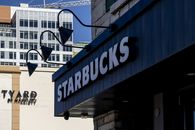
Starbucks has produced a real operational recovery. In the fourth quarter of fiscal 2026, North American comparable coffeehouse sales rose 7.9%, comparable transactions increased 2.7% and North American operating income climbed to $898.4 million from $308.5 million a year earlier. Those are not cosmetic numbers. Customers returned, and the company converted more of that traffic into operating profit.
But a turnaround is not a single number. It is a chain of decisions about which stores remain open, where labor is added, how costs are classified and when shareholders receive cash. Starbucks’ improvement is genuine. The less settled question is how much of it comes from a healthier store system and how much comes from closing weaker locations, reducing the company’s physical footprint and excluding substantial restructuring costs from the cleaner version of the story.
That distinction matters because Starbucks is not merely selling coffee. It is managing a large network of leases, employees, suppliers and neighborhood locations. The company can improve its averages while some of the people and communities connected to the weaker parts of that network absorb the adjustment.
The recovery is visible in the continuing stores
Starbucks’ strongest evidence is the improvement in customer activity at stores that remain in the comparable-sales base. The company reported that U.S. comparable transactions increased 2.4% in the quarter, while the average ticket rose 5.2%. Higher prices and product mix helped, but the transaction increase indicates that the recovery was not simply a price increase imposed on a shrinking customer base.
The company also reported North American operating margin of 12.3%, compared with 4.5% a year earlier. Part of that improvement came from sales leverage. In plain terms, stores have fixed expenses—rent, equipment, management and a baseline level of labor—that do not rise one-for-one with every additional transaction. When more customers use the existing system, a greater share of each additional dollar can reach operating profit.
That is a meaningful improvement. It is also why store-level analysis matters. A company can have strong continuing locations and still carry a weak portfolio around them. Higher sales at viable stores do not establish that every market, format or labor model is working.
The company’s fiscal 2026 results show both sides of that equation. Starbucks ended the year with 18,176 North American coffeehouses, compared with 18,311 a year earlier, after closing approximately 250 company-operated North American locations in September.
Closing stores improves the average—but changes the business
Closing an unprofitable store can be a sensible financial decision. If a location cannot cover occupancy, labor and operating costs, continuing to fund it may destroy value. A closure can also allow the company to concentrate labor, renovation spending and management attention on stores with better prospects.
But closing stores changes the denominator behind the performance figures. The remaining portfolio may look stronger partly because weaker locations have been removed. That does not make the sales improvement false. It means readers should separate several different effects:
- sales growth at stores that remain open;
- profit recovered through better execution;
- costs avoided through closures;
- revenue and employment lost at closed locations; and
- customers transferred to nearby Starbucks, competitors or other forms of consumption.
Starbucks says the closed locations failed to deliver the customer experience and financial performance expected of the brand. That may be correct. The public results do not show the average profitability of those stores, how many workers were affected, how many employees transferred or whether closures strengthened nearby stores. Those are not minor details. They determine whether the company is repairing the store system or mainly pruning it.
“One-time” costs still have economic consequences
Starbucks recorded approximately $688.6 million in fiscal 2026 restructuring and impairment costs, including $489.8 million in North America. The company reported GAAP operating income of approximately $3.69 billion and non-GAAP operating income of approximately $4.51 billion after excluding restructuring, transaction, transformation and related items.
Management is entitled to present adjusted results, and investors are entitled to examine them. The problem arises when excluded costs become invisible in the public discussion. A restructuring charge may be finite in accounting terms, but the underlying consequences can last much longer.
Lease exits, asset write-downs and severance payments may happen once. Lost jobs, displaced workers, empty retail space, reduced neighborhood foot traffic and broken customer habits are not necessarily one-time effects. The cash expense may disappear from next year’s income statement while the operating consequences remain in the communities affected.
This is the difference between an accounting adjustment and an economic non-event. Starbucks can reasonably exclude a restructuring charge from an adjusted measure without pretending that the decision carried no cost.
The next decision is capital allocation
Starbucks has said it plans to resume share repurchases in fiscal 2027 and has increased its dividend. Management projects approximately 4% North American comparable-sales growth, a non-GAAP operating margin of 13.5% to 14.0% and adjusted earnings per share of $3.15 to $3.25.
Those plans create a useful test. Share repurchases reduce the number of shares outstanding, which can increase earnings per share even when total earnings grow more slowly. That gives investors a direct financial reward while the more difficult work of improving staffing, service, retention and customer loyalty continues.
The issue is not whether Starbucks should ever return capital to shareholders. A profitable company should be able to do so. The issue is sequencing. Will repurchases be funded by durable free cash flow after labor investment, capital spending and restructuring payments? Or will shareholder distributions resume while the company is still relying on portfolio reductions and adjusted earnings to demonstrate progress?
A buyback is not evidence that the operating model has been proven. It is a decision about how management chooses to use available cash.
Who benefits, and who carries the risk?
Shareholders benefit if stronger margins and comparable sales continue. Strong stores may receive more labor, renovations and management attention. Customers at those stores may experience shorter waits, better product availability and a more consistent service model.
Management benefits if “Back to Starbucks” becomes a credible growth strategy rather than a temporary restructuring program. That would improve the company’s reputation with investors and expand its ability to raise capital or pursue new stores and partnerships.
The costs are distributed less visibly. Workers at closed stores may face transfers, severance or lost employment. Remaining employees may have to absorb higher demand if traffic concentrates in fewer locations faster than staffing improves. Landlords and nearby businesses may lose a tenant or a source of foot traffic. Communities may lose a convenient gathering place, particularly where the next Starbucks or comparable coffeehouse is not close by.
Customers can also bear costs through reduced geographic coverage or higher prices. A stronger store may offer better service, but that does not guarantee that the overall network remains as convenient or affordable.
A smaller network may still be a better business—if it works
There is nothing inherently wrong with Starbucks becoming smaller in North America if the remaining stores are more productive and the company can serve customers better. Mature businesses routinely concentrate resources where returns are strongest.
But portfolio concentration is not the same as broad growth. Starbucks’ fiscal 2027 guidance calls for consolidated revenue to decline approximately 1%, partly because the company converted its China retail operations to a licensed joint-venture model, even as North American comparable sales are expected to grow. A stronger North American segment can therefore coexist with lower consolidated revenue and a different global risk profile.
The company will need to show that the remaining stores can support higher labor investment, reliable service and sustainable cash generation. It will also need to demonstrate that customers are returning because the experience improved, not simply because prices rose or competitors became less attractive.
The financial test is still ahead
Starbucks has already made money from the turnaround. Sales improved. Margins expanded. Restructuring reduced the burden of weaker locations. The company is preparing to increase shareholder distributions.
What has not yet been established is whether the recovery survives after the easiest financial explanations run out. The important measures will include store-level profitability, labor hours, staffing stability, employee turnover, customer wait times, capital spending, free cash flow and the performance of stores near closed locations.
Investors should also compare GAAP earnings with adjusted earnings and cash flow after restructuring payments. Consumers should watch whether promised improvements appear in service and product availability. Workers and communities should ask what happens to employment and local commercial activity when stores close.
Starbucks can close weak stores and report better averages. It can classify restructuring costs as nonrecurring. It can resume repurchases and signal confidence. None of those actions, by themselves, proves that the company has rebuilt a durable operating model.
The real test is whether better performance at a smaller and more selectively funded store base becomes sustainable growth without turning labor displacement, community loss and shareholder distributions into substitutes for operating proof.