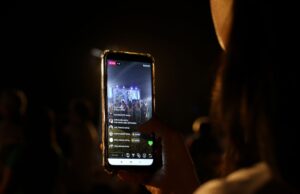


There was a time when playing a game and watching someone play a game were considered separate activities.
That distinction has been eroding for years. Twitch’s State of Gaming 2026 report suggests it may finally be obsolete.
Between January 1 and September 1, viewers watched more than 8.6 billion hours of gaming content on Twitch. The platform’s five most-watched games—League of Legends, Counter-Strike, Grand Theft Auto V, Valorant and World of Warcraft—accounted for nearly 1.7 billion hours combined.
Twitch’s figures are global and platform-generated, so they should not be treated as a census of all gaming. But they are large enough to establish something important: game watching is no longer a side activity attached to play. It is a major form of entertainment in its own right. (Twitch)
That conclusion is not especially new. What is new is the shape of the audience.
Twitch’s report is not simply a list of the year’s most popular games. It is an argument—part corporate self-promotion, part useful cultural evidence—that gaming audiences are gathering around communities, formats and personalities as much as individual titles.
The most revealing numbers are not the expected ones.
Sandbox games including Minecraft and Tomodachi Life generated 831 million hours watched. Horror games produced 287 million hours. Channels tagged for indie content grew 51 percent year over year, reaching more than 348 million hours watched.
Those figures suggest that viewers are not using Twitch only to follow competitive esports or the latest blockbuster release. They are also watching people improvise, investigate, build, fail, react and spend time together inside games that function less like products than social environments.
This is actually interesting.
The game is becoming a gathering place
The conventional games industry still tends to describe its audience in the language of sales: units moved, players acquired, retention rates, downloadable content and subscriptions. Twitch reveals a parallel economy of attention in which the central question is not merely whether a game is purchased, but whether it gives people something to gather around.
A game can succeed on Twitch because it is competitive. It can also succeed because it is frightening, expressive, funny, unpredictable or sufficiently open-ended to let creators turn it into a recurring show.
That puts streaming closer to live entertainment than to conventional game advertising. The streamer is not merely demonstrating a product. The streamer is interpreting it.
The distinction matters because interpretation is where communities form. Viewers may arrive for a game, but they often stay for the channel’s running jokes, the streamer’s personality, the audience’s responses or the shared feeling that something might happen live.
The indie discovery problem
The 51 percent increase in indie-tagged viewing is tempting to treat as evidence that small games are breaking through. It is evidence of something narrower and more defensible: Twitch viewers are spending more time with content identified as independent, and certain indie titles have found substantial audiences on the platform.
That is meaningful, but it is not the same as saying Twitch has solved game discovery.
Twitch Chief Product Officer Mike Minton told GamesBeat that the platform has an interesting role in an increasingly saturated games market because streamers can help audiences find the strongest work among thousands of new releases. That is a reasonable description of what Twitch can do. It is not proof that the best games reliably rise to the top. (GamesBeat)
Platforms do not discover culture neutrally. They reward what can be made legible quickly, what produces strong reactions and what gives a creator a reason to return tomorrow. A quiet strategy game, an experimental narrative work or a game that takes ten hours to reveal its pleasures may be artistically valuable and nearly invisible in a livestream economy.
The streamer becomes a kind of editor, but the platform remains the distributor. That distinction matters.
Twitch can help a small game escape obscurity. It can also encourage developers to design for watchability: clear visual hooks, dramatic moments, repeatable challenges and mechanics that create useful reactions on camera. The resulting games may be better suited to communal play—or simply better suited to being content.
The difference will not always be obvious.
Watching becomes participation
The most revealing business numbers concern Twitch Drops.
Streams using the DropsEnabled tag generated 1.6 billion hours watched during the period covered by the report, up 46 percent from the previous year. Twitch hosted more than 7,500 Drops campaigns, while 40 million users claimed rewards. Twitch says participation across channels rose 40 percent. (Twitch)
Drops are often presented as a friendly bridge between developers, streamers and viewers: watch a stream, receive an in-game item, perhaps discover a game along the way.
But Drops also clarify what Twitch is becoming commercially: a place where attention can be converted into measurable player behavior.
A viewer is not just watching. The viewer may be keeping a stream open for a reward, linking a game account, claiming an item, joining a community and eventually downloading or purchasing the game. The boundary between audience and customer becomes pleasantly vague for everyone except the marketing department, which can now count the clicks.
This is not entirely different from older forms of promotion. Radio stations once gave away concert tickets. Record stores hosted midnight releases. Television networks turned premieres into events. The difference is that Twitch can track the entire chain from attention to action, often in real time.
That makes the audience more valuable—and more managed.
Twitch has steadily expanded its sponsorship and promotional systems. In June, it offered Minecraft streamers sponsored campaigns with payments, featured placement and viewer Drops. In May, the company said that Drops requiring subscriptions had put an additional $11 million into streamers’ pockets. These arrangements can provide real income to creators, particularly smaller affiliates, while giving publishers a direct promotional channel that looks and feels more organic than an advertisement. (Twitch)
The advantage is obvious. So is the risk.
When every viewing behavior can become a campaign, community begins to resemble inventory.
The old precedent is live television
It would be easy to describe this as unprecedented because the technology is new. The behavior is older.
People have always gathered around performances, competitions and shared rituals. Sports bars, arcade cabinets, radio call-in shows, wrestling broadcasts and televised award ceremonies all created communities around things that many participants were not personally doing.
What Twitch changes is the scale and intimacy. The audience can speak back constantly. The performer can change course in response. The game provides a shared setting, but the community supplies much of the meaning.
This is why the platform’s most important unit is not the game. It is the channel.
A popular streamer can move between games without losing the entire audience because viewers are often following the person, the social atmosphere or the ongoing story of the community. Twitch says it has not observed a broad shift toward only the largest creators, and Minton told GamesBeat that the platform is not currently more top-heavy than before. That claim should be treated cautiously, since Twitch is reporting on its own ecosystem, but it points toward an important feature of live platforms: smaller creators can remain culturally useful even when they are not dominant in raw viewership. (GamesBeat)
A creator with a modest but committed audience may generate more discovery, conversation and trust than a massive channel where viewers arrive only for a major event.
That is the difference between reach and community. Advertisers often want both and understand neither.
What the numbers miss
Twitch’s report is valuable, but it is also a company report. Its categories are platform categories. Its numbers measure watching, not necessarily enjoyment, influence or long-term sales. The indie figure depends on tagging. The Drops figure measures claimed rewards, not whether players remained active after receiving them.
There is also a danger in treating hours watched as the universal cultural currency. Eight billion hours is impressive. It does not tell us whether viewers were engaged, distracted, multitasking or simply leaving a tab open to collect a digital item.
Still, the scale matters. So does the direction.
Twitch is showing a games culture that is more social, more personality-driven and more event-oriented than the old model of a player buying a box and disappearing into a private campaign. It is also showing an industry learning how to monetize the space between watching and doing.
The platform’s future may not be determined by the next blockbuster game. It may be determined by whether Twitch can preserve the messy, participatory quality that made its communities valuable after publishers and advertisers learned how to purchase access to them.
The old television industry eventually discovered that audiences could be measured, segmented and sold. Twitch is discovering the same thing in public, one reward campaign at a time.
The difference is that Twitch viewers do not merely consume the program. They help produce the atmosphere, the jokes, the discoveries and sometimes the game’s entire cultural life.
That is what the 8.6 billion hours really reveal. Gaming is no longer only something people play, or even something people watch.
It is increasingly something people do together while watching—which may be the most durable form of entertainment the internet has invented yet.