The first cool weekend of fall usually feels like an invitation.
People pull trailers from the weeds, light fire pits, clear fields, attend football games and begin thinking about deer season. After an Alabama summer, cooler air feels like permission to get outside again.
This year, it should come with a little more caution.
Alabama is entering the historically dry part of the year without its usual moisture cushion. WBRC reported on September 17 that severe and moderate drought were expanding across western counties, while much of the rest of the state was classified as abnormally dry. Statewide rainfall was more than 1.5 inches below normal since January, according to that report.
That does not mean Alabama was under a statewide burn ban. It was not at the time of the report. It does mean that people should stop treating the absence of a ban as proof that every outdoor fire is a good idea.
Those are different questions.
Legal is not the same as well-timed
The Alabama Forestry Commission separates several levels of response to fire danger. A Fire Danger Advisory urges people to delay outdoor burning when dry weather and low humidity make wildfire more likely. A Fire Alert can restrict the issuance of burning permits in affected counties. A Drought Emergency, commonly called a no-burn order, prohibits outdoor burning, including campfires, trash fires and prescribed burns.
That system matters because people like simple categories: allowed or forbidden. Land does not work that way.
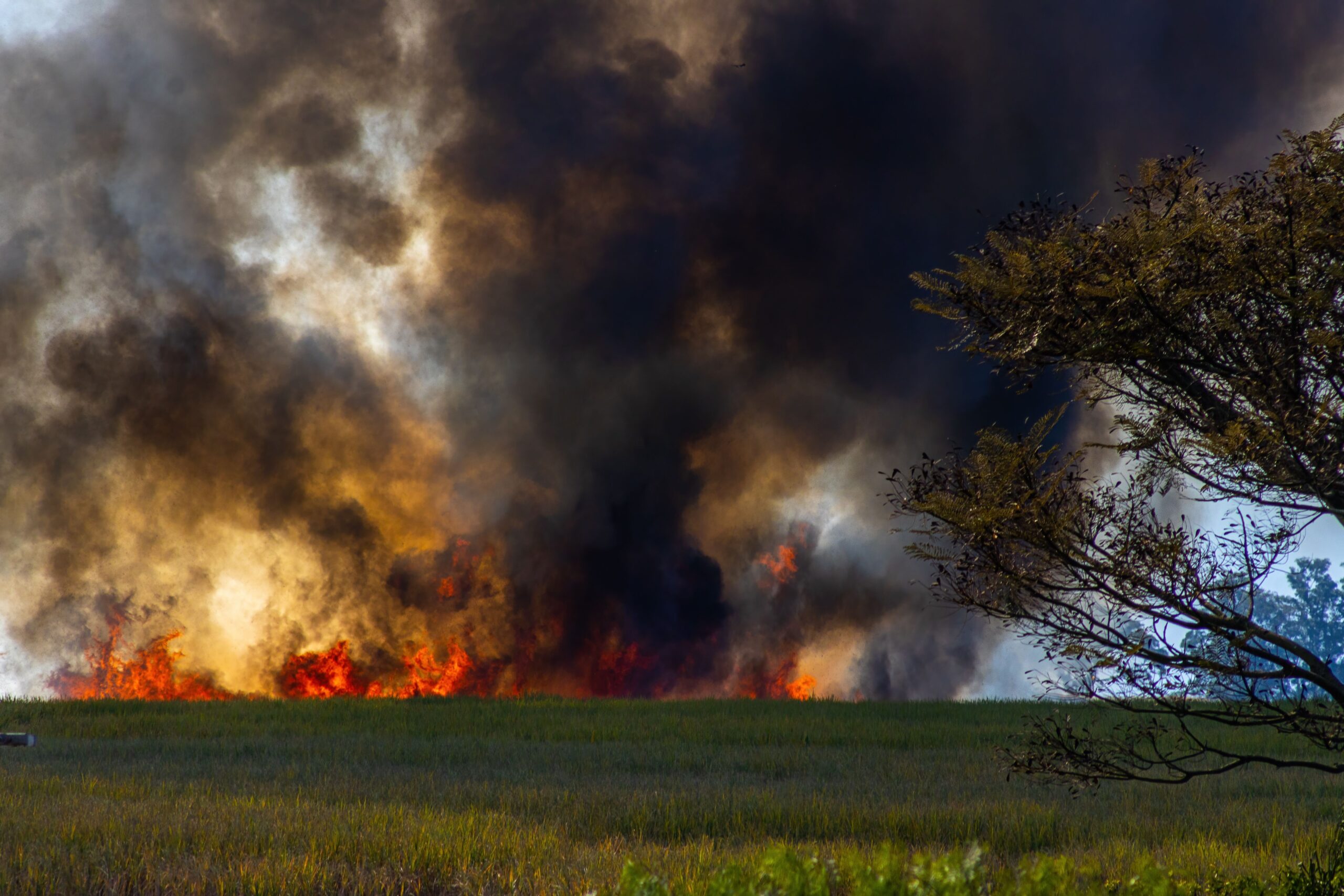
A fire can be legal and still be poorly timed. A permitted burn pile can escape. A hot vehicle exhaust can ignite grass. A recreational fire can throw sparks beyond the area that looked safe when the fire was started.
The commission’s guidance identifies dry fuels, low humidity and sustained wind as conditions associated with red-flag warnings. Public-land restrictions may also limit access when fire danger becomes high.
The conditions do not have to look dramatic from the porch. Dry grass does not need to be burning already to be a serious part of the problem.
Cooler air can hide the risk
Alabama Forestry Commission prescribed-fire coordinator Ricky Fields told WBRC that October and November are normally among the state’s driest months. He urged caution as temperatures cool, because people spend more time outside and may become careless, particularly on windy days.
That is a familiar pattern to anyone who has worked land.
Heat makes people cautious because heat is unpleasant. A hot afternoon keeps some people from starting a project. Cooler mornings remove that warning. The work feels easier. The ground may still be dry, the grass may still carry fire and the wind may still move an ember into the next patch of fuel, but the person holding the match feels better.
That is how judgment gets replaced by enthusiasm.
A fire ring is not a magic boundary. Neither is a metal barrel. If the surrounding grass is cured and the wind is moving, a small fire can become a property problem before somebody finds the hose.
Rain does not automatically settle the matter, either. A brief shower may wet the surface while deeper fuels remain dry. One damp morning does not erase several weeks of drying.
Outdoor recreation requires more attention
This affects hunters, campers, farmers, football fans and anybody operating equipment across a field.
Hunters should already be paying attention to field conditions for another reason. State officials continue to monitor for New World screwworm, although no cases have been found in Alabama or surrounding states. WBRC reported that officials have tested hundreds of larval samples without finding a case in Alabama.
That is a separate problem from wildfire, but the practical lesson is similar: Outdoor activity depends on noticing what is actually in front of you instead of assuming conditions are normal.
A hunter who sees an animal with an unusual open wound should not handle or transport it. Officials ask hunters to contact a game warden or the state veterinarian’s office so samples can be collected properly.
A landowner who sees dry grass beneath a hot exhaust system should move the vehicle. Someone lighting a fire should look beyond the fire ring and consider where sparks will go if the wind shifts. A football fan using a grill should keep it away from grass, vehicles and anything else that can carry flame, with water close at hand.
None of that is complicated. It is preparation. Experience helps, but experience does not make a person immune to wind, dry fuel or a bad decision.
The margin for error is the real warning
There is no need to panic over a dry spell that is not yet the worst Alabama has seen. State officials had not declared a statewide drought emergency, and that remains an important fact.
But “not prohibited” is a low standard for anyone responsible for land, equipment or other people.
Competent outdoor behavior is more conservative than the law requires. It leaves more space between a fire and nearby fuel. It waits for calmer weather. It keeps water and tools close. It does not leave a burn because the flames appear to be out. It checks again later, because buried heat can outlast the person who started the fire.
The Alabama Forestry Commission lists 800-392-5679 for reporting wildfires. Its guidance also emphasizes that a drought emergency would prohibit most outdoor burning, while ordinary restrictions and advisories may vary by location and conditions.
Anyone heading outdoors should check the local situation rather than rely on what happened last weekend or what a neighbor says is allowed.
Fall is coming. Football games, hunting seasons and campfires will come with it.
The smart move is not to stay indoors until winter. It is to understand that dry ground changes the margin for error. In wet conditions, carelessness may leave a mess. In dry conditions, it can leave a fire behind.