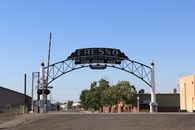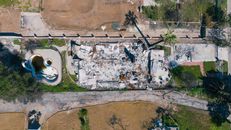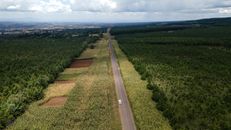
Fresno County is asking voters to approve a 12% tax on short-term lodging in unincorporated areas. The proposal is being presented as a visitor-paid measure that could generate approximately $4.5 million a year for public safety, emergency response, wildfire preparedness, roads, water protection, behavioral health and other county services.
That makes Measure A more than a hotel-tax question. It is a test of how local governments pay for permanent public systems when residents, state agencies and federal programs cannot fully cover the bill.
Fresno County voters will decide the measure on November 3, 2026. The measure requires a simple majority to pass, according to the Fresno County election page.
A tax on lodging, not a dedicated infrastructure charge
Measure A would apply to paid stays of 30 days or less at hotels, motels, short-term rentals and other qualifying accommodations in unincorporated Fresno County. It would not apply inside Fresno, Clovis or other incorporated cities.
The county currently does not impose a transient-occupancy tax in its unincorporated areas. The proposed rate would put those areas closer to cities in the county that already charge lodging taxes. On a $150 room, a 12% tax would add $18 before other taxes and fees.
The county’s official Measure A explanation says visitors and guests would pay the tax, while lodging operators would collect and remit it. That is accurate as a description of the transaction. It does not answer the more practical question of how much of the cost operators will pass through to guests, absorb themselves or manage through changes in rates, occupancy and bookings.
That distinction matters most for small motels, campgrounds, RV facilities and short-term-rental owners. A large hotel may be able to add the tax to a reservation with little visible change in demand. A small operator competing on price may have less room to do so.
The money would be flexible—and therefore harder to track
Measure A is a general tax. The estimated $4.5 million would enter the county’s general fund rather than a legally dedicated account for roads, fire protection or wildfire preparation. The Board of Supervisors would decide how to use the money through the annual budget process.
That flexibility may be the county’s strongest fiscal argument. Public services do not arrive in separate categories. A rural community may need a road repaired so an ambulance can reach a home, communications equipment upgraded so emergency personnel can coordinate, or water infrastructure protected during a fire or drought. A general fund can respond to those changing needs.
It is also the measure’s central accountability problem. Voters are being asked to approve a permanent revenue source while the ballot language does not promise that a specific share will go to a particular service or project. The county says revenues and expenditures will remain publicly available and subject to annual independent audits. Those safeguards are useful, but an audit can show where money went without proving that the original public-service claims were achieved.
If Measure A passes, residents should be able to see more than the annual collection total. They should be able to track how much came from hotels, short-term rentals and other lodging; which services received funding; whether the money replaced existing county dollars; and whether response times, road conditions, preparedness or other measurable outcomes changed.
The visitor-paid argument has limits
The county’s framing reflects a familiar political logic: visitors use local roads, emergency systems, parks and public services, so visitors should contribute to their upkeep. That argument is strongest in places where tourism creates demands that would not otherwise exist.
But visitors are not the only people affected by lodging prices. Local residents may use hotels during family events, emergencies, home repairs or temporary displacement. Businesses may book rooms for workers. Families may use short-term lodging for medical visits, youth tournaments or other obligations. Lodging operators may also face administrative costs in collecting and remitting the tax.
More important, the measure would support broad county responsibilities rather than only tourism-related services. The ballot language identifies public safety, wildfire and disaster response, 911, roads, behavioral and public health, water infrastructure, parks and other public services.
That does not make the proposal improper. It makes the fiscal tradeoff clearer. Fresno County is asking a narrow group of transactions to support a wide range of permanent responsibilities.
A local vote with a wider pattern
Fresno is not alone in considering lodging taxes as local budgets tighten. Other California jurisdictions are also asking voters to raise or establish hotel and short-term-rental taxes, with proposals framed around city services, public safety, infrastructure or operating deficits.
That pattern is not yet proof of a national shift. It is, however, evidence that lodging taxes are increasingly being discussed as general fiscal tools rather than only as mechanisms for tourism promotion or destination improvements.
The appeal is obvious. Lodging taxes can reach visitors, are collected at the point of purchase and do not require a countywide property-tax increase. They can also be politically easier to explain than a tax paid directly by residents.
The limitation is just as clear: visitor spending is variable. Occupancy changes. Travel patterns change. Wildfire, weather, recession or a new competing destination can reduce lodging activity. A county that uses the revenue for recurring services should therefore disclose how much of its budget depends on a tourism-sensitive stream and what happens if collections fall short.
What voters should ask next
Before Election Day, the most useful unanswered questions are not whether $4.5 million sounds large or small. They are questions about the assumptions behind the estimate and the obligations that would follow.
- How many taxable lodging units are located outside city limits?
- What occupancy and room-rate assumptions produced the $4.5 million estimate?
- How much revenue would come from hotels, short-term rentals, campgrounds and RV facilities?
- What administrative costs would the county and lodging operators incur?
- Would the first proceeds preserve existing services, fund new work or replace other county dollars?
- Will the county publish an annual Measure A report showing collections, allocations and measurable results?
- What contingency plan exists if lodging revenue falls below projections?
Measure A may give Fresno County another useful source of local revenue. It will not, by itself, solve the county’s infrastructure backlog, emergency-response demands or rural service challenges.
The larger test is whether the county treats the tax as a transparent contribution to public capacity—or as a flexible answer that allows difficult budget choices to remain invisible. Visitors may help pay for the system. Fresno County residents will still be responsible for deciding whether that system is being maintained well.