Texas is adding people while, in some of the places receiving them, public schools are running out of room.
That sounds like a contradiction only if school enrollment is treated as a simple measure of population. The state’s latest numbers show a more uneven reality: Texas public schools lost 76,613 students during the 2025–26 school year, the first non-pandemic decline in nearly four decades. Yet rural districts added students over the longer term, particularly in communities absorbing families priced out of larger metropolitan areas.
The result is an enrollment map that is moving in several directions at once. Large urban districts are shrinking. Some rural and exurban districts are expanding. Charter schools are growing in parts of the same territory. And the traditional public schools required to accept every student may have to add teachers, buses, classrooms and services before the state’s funding system fully catches up.
That is the central problem: Texas is treating growth as if it arrives gradually and predictably, while families often arrive faster than buildings, staffing plans and operating budgets can adjust.
Growth is not the same as capacity
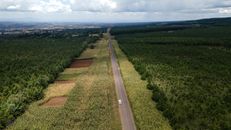
The most useful example is Liberty County, northeast of Houston, where new housing has brought families into communities that were once primarily agricultural. Reporting by The Texas Tribune found that rural Texas districts added 156,204 students since 2021, a 13% increase, while urban districts lost 89,707 students over the same period.
Those figures describe enrollment movement. They do not mean every rural district is growing, or that every new subdivision produces permanent student enrollment. But they show why the statewide headline—fewer students overall—can obscure the conditions facing individual districts.
A district can be losing students over the long term and still need a new classroom this year. It can be surrounded by population growth without receiving enough operating revenue to hire teachers before the first day of school. It can plan a campus that will not open for years while buses, temporary rooms and staff are needed immediately.
That difference matters because schools are not only buildings. They are transportation systems, meal providers, special-education networks, language-support programs and daily infrastructure for working families. When growth arrives before those systems are ready, the shortage appears in ordinary ways: longer bus routes, crowded hallways, midyear hiring and portable classrooms.
The funding formula has a ceiling
Texas does have a fast-growth allotment intended to help districts absorb enrollment increases. But Section 48.111 of the Texas Education Code caps the statewide amount at $320 million. If eligible districts’ calculated entitlements exceed that amount, the law requires the Texas Education Agency to reduce each district’s allotment proportionally.
That is more than a technical detail. It means a district can qualify for an entitlement without receiving the full amount implied by its growth. The state recognizes the growth, calculates a need and then applies a statewide limit that may distribute less money than the formula initially suggests.
The Texas Tribune reported that Cleveland Independent School District was entitled to approximately $17 million from the fast-growth allotment during the 2023–24 school year but received about $13 million. Over six years, the district’s reported entitlement-received gap reached roughly $14.6 million.
The problem is timing as much as total funding. Districts cannot wait until every new student is counted before adding a bus route, hiring a teacher or planning a classroom. Construction takes years. Bond elections can fail. Operating costs begin as soon as students arrive.
Texas Education Agency materials describe the fast-growth allotment as being calculated from enrollment growth over a six-year period, with the statewide $320 million limit still in place. That structure may provide useful assistance, but it does not guarantee that funding arrives when a district’s costs do.
Charters can move faster—but that changes the system
In Liberty County, charter schools have expanded alongside population growth. The Tribune reported that charter operators opened six new schools and added 3,379 students in the county since 2021–22, while independent school districts added 2,080 students.
Charters can sometimes respond more quickly because they do not depend on the same local bond process or attendance boundaries as traditional districts. That flexibility can give families another option when a district is crowded or slow to build.
But the shift also changes who carries the obligation to absorb growth. Traditional districts must generally enroll students who live within their boundaries. Charter schools can add seats, choose locations and operate with attendance caps. A charter may relieve pressure for some families without becoming a complete substitute for the district responsible for the broader community.
This is not an argument against charter schools. It is an argument against treating student movement between public sectors as if it solves the underlying capacity problem. A child who moves from a district to a charter still needs transportation, instruction, meals, language support and, when necessary, special-education services. The question is which institution is expected to provide them, with what resources and on what timetable.
The statewide decline is coming, too
The same districts experiencing rapid growth may eventually face the problem now confronting larger urban systems. The Texas 2036 enrollment report says major urban districts lost 17.3% of their enrollment over the past decade while rural districts grew 13.4%. It projects that statewide public-school enrollment could decline by roughly 100,000 students by 2030, depending on migration and other assumptions.
That possibility creates a difficult planning problem. A district may need to build for families arriving today while preparing for a smaller student population tomorrow. If it builds too little, children experience overcrowding and families absorb the consequences. If it builds too much, taxpayers may be left paying for underused facilities after a temporary population surge fades.
Fast growth can therefore be a short-term emergency and a long-term uncertainty at the same time. The state’s funding system has to account for both. A formula that rewards attendance but does not adequately cover the timing of facilities, transportation and staffing can leave districts financially exposed at either end of the cycle.
What Texas should measure next
The next year of reporting should move beyond population projections and district headlines. Texas needs to show which districts are growing, how many students they actually received, when funding became available and what capacity was added in response.
That means publishing district-level information on fast-growth entitlements and payments, portable classrooms, teacher vacancies, bus-route expansion, special-education staffing, bilingual personnel and construction schedules. It also means distinguishing a planned school from an operating school, a housing permit from a completed home and an enrollment forecast from a student who has actually arrived.
The Texas Education Agency’s enrollment-trends system currently provides annual public data through the 2025–26 school year. Preliminary 2026–27 figures will matter because districts may be confronting capacity problems before the state has a complete picture of the year’s enrollment redistribution.
Local governments should be part of that accounting. New subdivisions, roads and utility expansions can create school demand, but the school district may be the first institution expected to serve the resulting population. Housing approvals and school-capacity planning should not be treated as separate conversations when one produces the need for the other.
Growth should strengthen institutions, not outrun them
Texas is not simply growing or shrinking. It is redistributing families, students and institutional pressure.
For families, the practical question is not whether a county’s population is rising. It is whether a child can reach a school on a reasonable bus ride, enter a classroom with an available teacher, receive needed services and attend a campus that was built for the community that now exists.
For districts, the question is whether state funding recognizes the cost of being required to grow before the money and buildings arrive. For lawmakers, it is whether a capped program can meet a problem that may be expanding in precisely the places where local tax bases and bond capacity are limited.
Texas’s new rural growth is often presented as evidence of opportunity. It may be. But opportunity becomes durable only when public institutions can absorb the people who arrive. If schools are forced to build ahead of funding, the state is asking local communities to finance population growth first and hope reimbursement catches up later.
The next enrollment report will tell Texas where students went. The more important public question is whether the state was ready to serve them when they got there.