
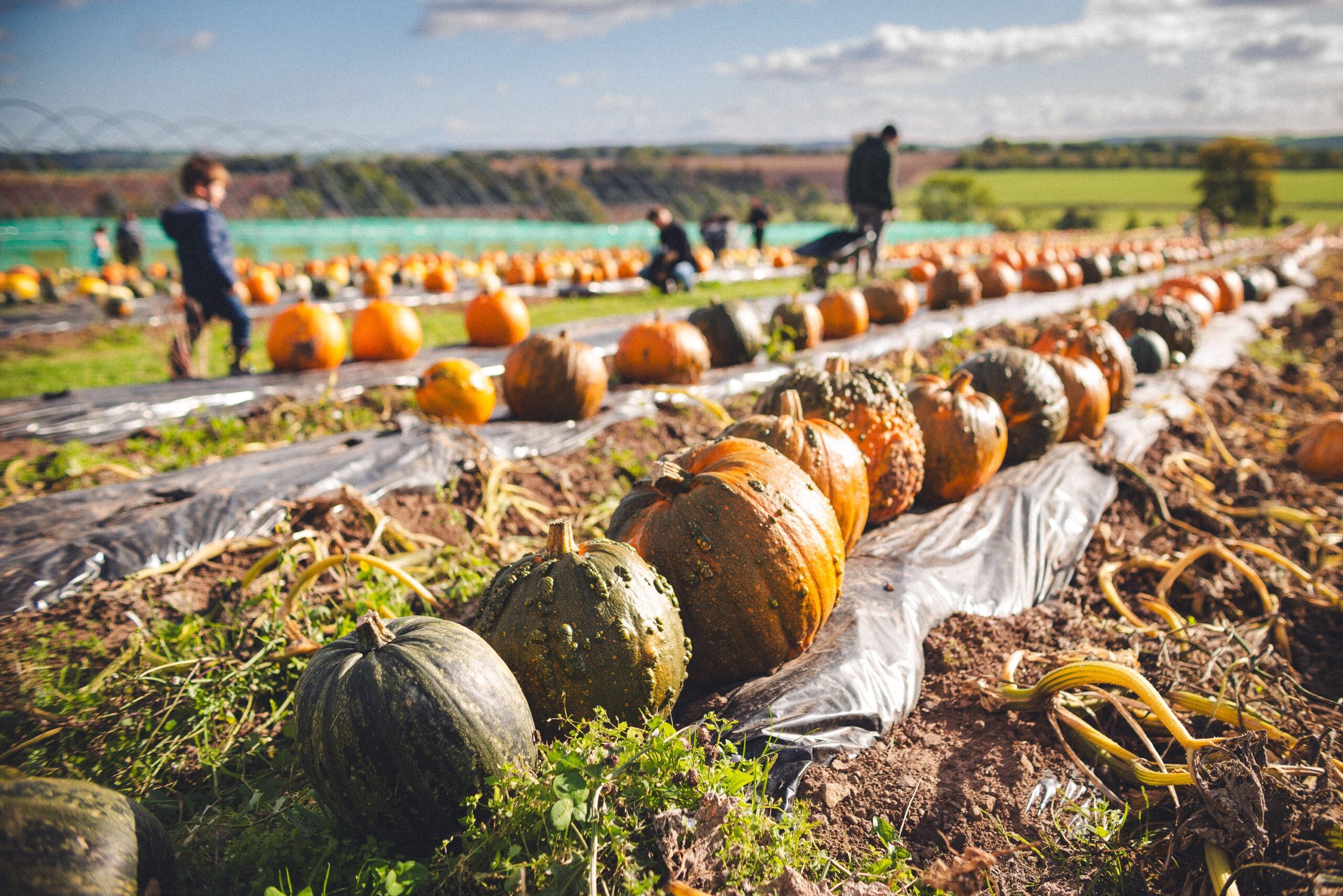
A pumpkin patch looks simple from the customer’s side of the fence.
You park, climb onto a wagon, take a few pictures, pick out a pumpkin and go home with something orange under your arm. The whole operation is designed to feel easy. That is part of the appeal.
For the farmers, there is nothing easy about it.
Growers in Chilton County are preparing for pumpkin season while diesel prices have risen sharply. WBRC reported that diesel in Alabama was approaching $6 a gallon, and farmers say the increase is affecting the tractors, trucks and other equipment required to bring the crop in. Penton Farms in Verbena is harvesting about 200 acres of pumpkins and employs 33 people during the season. WBRC reported on the pressure facing Chilton County growers.
That matters because the pumpkin patch is often treated as a seasonal entertainment business with a little agriculture attached.
The practical reality is the reverse. It is an agricultural operation that has learned how to sell an experience around the crop.
The distinction becomes important when costs rise. A farmer cannot simply use fewer tractor hours because diesel is expensive. Fields still have to be prepared. Crops still have to be harvested. Pumpkins still have to be moved, sorted and delivered. Customers still expect the gates to open on time, the roads to be passable and the attractions to function.
A pumpkin patch does not run on atmosphere.
The crop has to make it to the weekend
Pumpkins are not decorations until they have survived the growing season.
Guidance from the Alabama Cooperative Extension System emphasizes drainage, crop rotation, soil fertility, weed control, insect management and disease scouting. Pumpkins belong to the same plant family as squash, cucumbers, watermelons and cantaloupes, so diseases and soilborne problems can follow a field from one crop to the next. Extension specialists recommend rotation where possible and regular field monitoring. Alabama Extension guidance outlines those production challenges.
Water is another part of the job that visitors rarely see.
Extension guidance recommends drip irrigation for pumpkins because it delivers water efficiently and keeps foliage drier than overhead irrigation. That can reduce disease pressure while allowing growers to irrigate and continue working in the field. Even in a generally humid state, drought pockets can create soil-moisture deficits that require supplemental irrigation.
This year, Alabama farmers are working against a dry backdrop. WBRC reported that moderate and severe drought conditions were expanding across western Alabama, with much of the rest of the state abnormally dry. Statewide rainfall was more than 1.5 inches below normal since January, and forestry officials warned that the usual moisture cushion before the dry season was missing. The report also described rising wildfire concerns.
That does not prove that every pumpkin field is in trouble. It does mean the margin for error is narrower.
Dry conditions can reduce disease in some circumstances, but they can also stress plants, increase irrigation demands and affect fruit development. Alabama Extension notes that drought can alter pest pressure and create favorable conditions for certain insects in vegetable and fruit systems. Extension specialists have described those changing risks.
The farmer is not trying to grow an attractive photograph. The farmer is trying to produce a mature, sound pumpkin that can survive handling and remain marketable after harvest.
Those are different standards.
Harvest is not the end of the job
A pumpkin can look ready before it is ready.
Alabama Extension warns that dead vines do not necessarily mean pumpkins have reached maturity. Vines may die early because of disease or drought, leaving fruit that will not store well. Mature pumpkins should be harvested carefully, with a long stem left attached, then cured under controlled conditions to improve durability and storage life. Alabama Extension’s horticulture guidance explains why those details matter.
That is one of the less glamorous facts behind the fall display.
The pumpkin sitting in a farm market or on a porch has already passed several tests. It had to survive planting and weather. It had to reach maturity. It had to be harvested without damage. It had to be moved without excessive bruising or decay. If the farm sells directly to visitors, it also has to be placed where customers can handle it without turning the crop into a pile of losses.
The work is repetitive, physical and time-sensitive. That combination is expensive.
The U.S. Department of Agriculture reported that national pumpkin production totaled about 1.44 billion pounds in 2024, below the average of the previous four years. Pumpkin production is concentrated in a handful of leading states, but farms across the country grow for fresh markets, processing and seasonal sales. USDA background statistics place the crop in a broader agricultural context.
National production figures do not tell us what a particular Chilton County farm will earn this year. They do show that pumpkins are part of a real agricultural market, not merely a prop for fall tourism.
Fuel changes the arithmetic
The diesel problem is not limited to the fuel tank.
Higher fuel costs affect every machine hour and every mile. They enter the cost of field preparation, harvest, hauling, deliveries, maintenance and visitor operations. The U.S. Energy Information Administration identifies crude oil, refining, distribution, taxes and retail operations as components of the final diesel price. EIA explains those cost components.
A grower may absorb some of the increase, raise prices, reduce other expenses or hope for a strong season. None of those choices is painless.
Cutting labor can slow harvest or reduce the quality of customer service. Cutting maintenance can turn a manageable equipment problem into a breakdown during the busiest part of the season. Raising prices may be necessary, but families also have limits. The farmer is balancing a crop that cannot be postponed against customers who may already regard a pumpkin patch as an optional expense.
That is why the phrase “support local farms” is more practical than sentimental.
When customers buy from a local grower, they are not only buying a pumpkin. They are helping keep money moving through a local operation that employs people, hires service providers, buys fuel and maintains land. Penton told WBRC that the value of supporting local farms extends beyond the individual purchase because the money remains in the community.
That does not mean every local business is automatically efficient or every price is automatically justified. It means the transaction has more parts than the customer sees at the register.
The part customers should remember
There is nothing wrong with a pumpkin patch being fun. Farmers understand that the photographs, hayrides and family outings are part of the business.
But the attraction exists because someone first managed the difficult part: growing something in uncertain weather, moving it with expensive equipment and getting it ready during a short selling season.
The public sees the orange pumpkins arranged in rows.
The farmer sees fuel burned, tires worn, workers scheduled, irrigation checked, fields scouted, fruit sorted and weather watched. The difference between those two views is the difference between treating agriculture as scenery and understanding it as work.
This fall, the pumpkin patch will still look easy.
That is usually how you know somebody competent has been running it.