
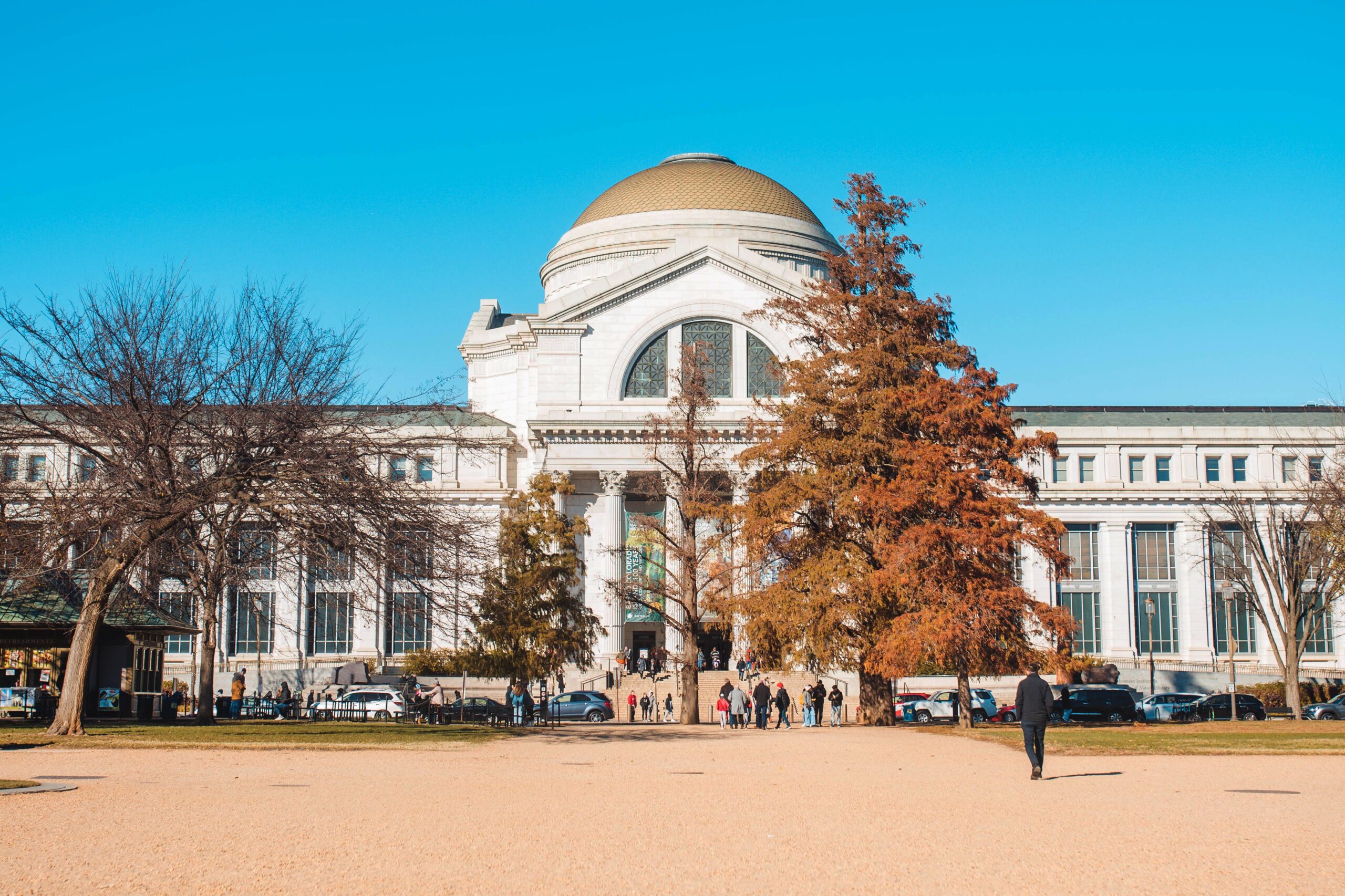
Lonnie G. Bunch III’s decision to retire as secretary of the Smithsonian is an administrative event with unusually large cultural consequences. Bunch, who led the institution from 2019 until his retirement announcement on September 8, 2026, departs during the nation’s 250th-anniversary year and amid an explicit White House campaign to reshape how the Smithsonian presents American history.
The question facing his successor is not simply whether the Smithsonian can avoid political controversy. It cannot. The institution is a congressional creation, a keeper of national collections and a network of museums that necessarily makes choices about what Americans should see, remember and debate.
The more consequential question is whether those choices will remain the work of scholarship, curatorial argument and public interpretation—or whether the institution will increasingly be expected to deliver an officially preferred emotional conclusion about the country.
That distinction matters because museums do not merely preserve memory. They organize it.
A national museum has never been neutral
The White House’s July 24 executive order, “Restoring Trust in the Smithsonian Institution,” accused Smithsonian leadership of presenting American history through an ideological framework rather than as a shared national inheritance. The order directed federal officials to pursue corrective measures, including temporary signage and exhibits outside the National Museum of American History.
The administration’s accompanying report, Saving America’s Story, argues that the Smithsonian should emphasize achievement, pride and continuity. That argument deserves to be taken seriously. A museum can become so committed to exposing injustice that it forgets to explain achievement, courage, invention and civic aspiration. It can mistake moral intensity for clarity, and complexity for completeness.
But the administration’s argument also rests on a historical fiction: that there was once a neutral, uncomplicated national story from which the Smithsonian has recently departed. There was not.
Every museum makes interpretive decisions. It selects objects, arranges sequences, writes labels, establishes emphasis and determines which conflicts are placed at the center of a gallery rather than in its margins. Even a celebratory exhibition is an argument about what deserves celebration.
“Neutrality” often means that those choices have become familiar enough to disappear.
The Smithsonian’s own history makes the point. The 1991 exhibition The West as America: Reinterpreting Images of the Frontier, 1820–1920 provoked a major backlash over its critical interpretation of western expansion. The Smithsonian Archives records the controversy as a dispute over the exhibition’s “negative interpretation of history.” Its significance now is not that one side possessed politics while the other possessed facts. It is that both sides were arguing about which interpretation should appear natural.
That is the recurring museum quarrel: not whether history will be interpreted, but whose interpretation will be permitted to present itself as common sense.
What Bunch represented
Bunch’s importance to the Smithsonian is institutional rather than merely biographical. Before becoming secretary, he was the founding director of the National Museum of African American History and Culture, an undertaking that required the institution to treat African American history not as a specialized supplement to the national story but as one of its constitutive histories.
That work involved architecture, collecting, testimony, trauma, celebration and sequence. It required decisions about how to place slavery beside resistance, oppression beside achievement and personal memory beside official documentation. The museum’s existence made an argument before a single visitor entered it: the national story becomes more representative without becoming less American.
As secretary, Bunch embodied a similar proposition at the level of the institution. The Smithsonian could broaden the American story without abandoning the idea of a shared country.
His retirement announcement does not establish that he left because of White House pressure, and it would be irresponsible to claim otherwise without direct evidence. But the timing gives the succession unmistakable significance. The next secretary will arrive while the institution is being asked to defend not only individual exhibitions but the legitimacy of its interpretive habits.
Will the Board of Regents choose a museum professional, a political manager or a candidate expected to perform both roles? Will the new secretary defend curatorial independence when political officials demand predetermined conclusions? Will the institution explain its methods more clearly to visitors, or will it retreat into the language of institutional self-protection?
These are not small matters of management. They concern what a national museum believes public trust actually requires.
Commemoration is not the same as history
The timing is especially consequential because the Smithsonian is conducting a broad program for the nation’s 250th anniversary. Its Our Shared Future: 250 initiative explicitly combines celebration with reflection on the consequences of American history and the ideals that remain unfinished.
That combination is more demanding than patriotic pageantry, but also more honest. Commemoration asks visitors to feel attachment. History asks them to understand how that attachment was produced, contested and sometimes denied.
A museum that offers only commemoration becomes ceremonial. A museum that offers only critique becomes unreadable, or worse, self-satisfied. The challenge is to make complexity public rather than merely academic—to show why a country can be admirable without being innocent, and flawed without being beyond repair.
The Smithsonian’s recent decision to designate the Arts and Industries Building as the permanent home of the National Museum of the American Latino makes that challenge concrete. The August 31 announcement concluded a site-selection process for a museum Congress authorized in 2020. The decision expands the physical and symbolic architecture of the national story at precisely the moment when political pressure is urging the institution to make that story more unified and reassuring.
Those aims are not automatically incompatible. A national museum can tell a more inclusive story and a more affirmative one. But inclusion is not achieved by adding familiar faces to an unchanged narrative, any more than patriotism is achieved by removing every subject that might complicate national pride.
The administration’s strongest argument—and its limit
The administration is right about one thing: publicly supported institutions should be accountable. The Smithsonian should be pressed on accuracy, accessibility, clarity, evidence and whether its exhibitions speak to visitors beyond the professional class that often produces them. Critics should be able to ask whether curatorial language is comprehensible, whether historical claims are adequately supported and whether the institution has mistaken its own preferred vocabulary for public understanding.
But accountability is not the same as obedience. A government may challenge an exhibition, request documentation or demand administrative transparency. It crosses a different line when it insists that scholarship produce a prescribed emotional effect before it can be considered legitimate.
The White House order’s language about restoring trust is revealing. Trust in a museum cannot mean that visitors leave feeling reassured about the nation. It must mean that visitors believe the institution is willing to show evidence, acknowledge uncertainty, explain disagreement and resist the temptation to turn difficult history into either a national alibi or a national indictment.
Even pressure short of formal censorship can alter an institution’s behavior. If access to federal collections, expertise or cooperation becomes a bargaining instrument, curators may begin anticipating political retaliation before they make exhibition decisions. The result need not be a dramatic purge. It may be something quieter: fewer risks, narrower labels, more euphemism and a gradual retreat from subjects that cannot be made comfortable.
That is how cultural institutions lose independence in practice—not always through a single order, but through the accumulation of warnings.
The succession will reveal what independence means
The Smithsonian has survived political battles before. The present conflict is different in scale because the pressure is directed at the institution’s governing assumptions rather than at one disputed gallery. It arrives during a leadership transition, an anniversary year and the development of new museums intended to enlarge the public record.
The next secretary will therefore inherit more than a collection of controversies. The secretary will inherit a definition of the Smithsonian’s national role.
That definition should not be “the museum that flatters America,” any more than it should be “the museum that scolds America.” The institution’s proper task is more difficult and more useful: to make the country’s contradictions visible without treating contradiction as the whole story.
America does not become less admirable when its museums describe slavery, conquest, exclusion, protest and failure. It becomes less intelligible when those subjects are removed from the account. Nor does historical honesty require the suppression of achievement. The mature national story contains both, and refuses to pretend that one cancels the other.
The Smithsonian’s succession will be judged by whether it can preserve that tension. If the next secretary can defend evidence, disagreement and curatorial independence while making the institution clearer and more accessible, the Smithsonian may emerge stronger from the present dispute.
If instead it is required to resolve history in advance—to make complexity appear disloyal and reassurance synonymous with truth—the country will lose something more valuable than an exhibition. It will lose one of the few public places where America is allowed to argue with its own memory.