A person can spend money on fuel, bait, food, lodging, licenses and equipment and still come home without getting the outdoor experience he paid for.
The ramp may be closed. The road may have washed out. The river may be too warm. The refuge lottery may be full. The map may be outdated. The water may simply not be there.
That person has contributed to the outdoor economy. He has not necessarily received a functioning outdoor opportunity.
That distinction matters after the Bureau of Economic Analysis released its 2025 Outdoor Recreation Economic Statistics on November 18. The numbers are large enough to command attention: outdoor recreation generated $704.2 billion in current-dollar value added, equal to 2.3 percent of national GDP, and supported roughly 5.3 million jobs.
Those figures make outdoor recreation a major American economic sector. They do not make it a report card on whether ordinary people can reach the water, find a legal hunt or afford a weekend outside.
The spreadsheet measures money, not the whole trip
BEA’s account is useful because it measures more than equipment sales. It includes direct activities, manufacturing, retail, transportation, lodging, food services, travel, tourism and government expenditures. In 2025, supporting activities accounted for 51.5 percent of outdoor-recreation value added. Conventional activities such as boating, fishing, hiking, bicycling and hunting accounted for 29.2 percent.
That is not a flaw in the data. It is what the data are designed to measure. Value added tells us how much economic production is connected to outdoor recreation. It does not tell us whether the road to a wildlife area is maintained, whether a boat ramp is usable or whether a fishery can absorb another season of pressure.
BEA also counts activity by place of production. A boat can be manufactured in one state, sold through a retailer in another and used on a lake somewhere else. The economic benefit may appear in one place while the maintenance, rescue, habitat and crowding costs show up somewhere different.
That is why a state can have a strong outdoor economy without every resident having strong outdoor access.
Growth can hide a narrowing margin
The national outdoor economy grew in 2025, but real outdoor-recreation GDP increased 1.9 percent, slower than the overall U.S. economy’s 2.3 percent. Employment rose 1.7 percent nationally, yet outdoor-recreation employment declined 1.1 percent in Alabama and 0.3 percent in Texas.
Neither number tells the whole story by itself. But both are reminders that a large value-added figure does not automatically mean more stable work, lower prices or better local opportunity.
Boating and fishing produced $39.1 billion in national value added and were the largest conventional activity in 35 states and the District of Columbia. Hunting, shooting and trapping produced $15.1 billion, with Texas contributing approximately $1.8 billion.
Those activities support guides, marinas, sporting-goods stores, outfitters, processors, lodging businesses and rural communities. They also depend on roads, water-control structures, public land, wildlife management, emergency services and people with enough time and money to use them.
The economic activity is real. So are the physical limits.
Open season does not mean normal conditions
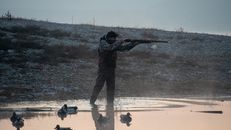
Arkansas offers a clear example. The state’s regular duck season opened November 21, but the Arkansas Game and Fish Commission reported that only 42 percent of the moist-soil units it manages had adequate water to flood at the beginning of October. The agency also reported that Arkansas was more than 20 inches below normal cumulative rainfall in many areas after 14 months of drought.
Hunters can buy licenses, fuel and ammunition under those conditions. Guides and local businesses can still prepare for customers. But the usable opportunity is concentrated in fewer places, and those places carry more pressure.
That is not an argument against hunting. It is an argument for being honest about what the calendar means. A season date is a legal framework. It is not a promise that habitat, access and wildlife conditions will cooperate.
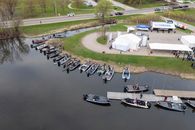
The same principle applies to fishing. A waterway may be open while low flows, warm temperatures, poor boat access or submerged hazards make the trip unsafe or biologically irresponsible. A public parcel may be legally accessible while roads, bridges, boundaries, staffing or easements make it impractical to use.
Who pays for the opportunity?
Outdoor recreation is increasingly discussed as economic infrastructure. That is reasonable. A fishing guide, bait shop, campground or rural motel is part of a local economy, and visitors can support jobs that would not otherwise exist.
But the physical outdoors also needs to be treated as infrastructure. Roads, ramps, trails, bridges, restrooms, water-control structures, signs and emergency systems do not maintain themselves. Wildlife populations and fisheries do not expand simply because more people want to use them.
The hard questions are practical:
- Who maintains the access road after the ribbon-cutting?
- Who pays when a bridge, ramp or trail needs replacement?
- How many seasonal positions are vacant?
- Do agencies measure failed access attempts, not only successful visits?
- What happens when tourism increases traffic, waste, fire and rescue demands?
- Does a conservation project create usable access, or only add acreage to a report?
The Fish and Wildlife Service’s Rooted in Purpose review identified field operations, habitat management, infrastructure and public access as central parts of refuge performance. That diagnosis is important. Recommendations, however, are not the same thing as filled positions, repaired ramps or open roads.
The premium outdoors is not the public outdoors
Commercialization has brought real benefits. Guides and outfitters can provide knowledge, equipment and safer access. Manufacturers create useful tools. Rural businesses can build livelihoods around visitors.
But the sector can grow while ordinary access narrows. Higher-priced guided trips, premium equipment, destination travel, expensive leases, permit systems and specialized vehicles may increase the value of the market without increasing the number of people who can participate.
That is the distinction worth keeping in view. A boat sale is not a day on the water. A conserved acre is not a hunt. A hotel room is not a fish caught. A permit is not a road, and a road is not much good if the ramp at the end of it is closed.
The BEA numbers deserve attention because they establish that outdoor recreation is not a side business. It is a substantial part of the economy. The next step is to ask whether the public systems supporting that economy are keeping pace with the money moving through it.
The real measure is simpler than the spreadsheet: whether a person with reasonable preparation, reasonable money and a reasonable expectation can still get outside and do the thing he came to do.