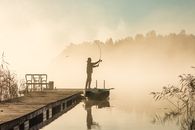
The fishing season may be printed in a regulation book. The river does not care.
As of September 29, drought covered 59.38 percent of the Lower 48 states, according to Drought.gov’s national drought report. Conditions worsened across parts of Texas, Oklahoma, the Lower Mississippi Valley and the Southeast. That does not mean every river is closed or every lake is in trouble. It does mean an angler needs to stop treating the calendar as a complete description of the opportunity.
Low water changes more than the number on a gauge. It can alter fish habitat, water temperature, migration, boat access, exposed hazards and the amount of stress a hooked fish can withstand. A waterway can remain legally open while becoming a poor place to launch, a bad place to fight a trout or a different river from the one an angler remembers.
Open water is not necessarily healthy water
California makes the conservation logic plain. Its low-flow fishing regulations close or restrict certain waters when reduced streamflow can restrict migration or increase stress and mortality for salmon and steelhead. Each listed stream has a minimum flow threshold, and some waters close when officials determine that low flows are impeding fish passage.
That kind of restriction is not paperwork for its own sake. It is an attempt to avoid adding angling pressure while fish are already dealing with difficult conditions. The point is not that every closure is automatically correct. Agencies still owe anglers a clear explanation of the biological threshold, the supporting data, the expected duration and the conditions for reopening. But the alternative to a short closure is not always business as usual. Sometimes it is a more damaged fishery later.
Oregon’s fall decisions show why the reason behind a closure matters. On the North Umpqua River, the Oregon Department of Fish and Wildlife closed steelhead angling from August 10 through November 30 after fewer than 1,000 wild summer steelhead had passed Winchester Dam. Biologists projected that the run would not meet the state’s critical-abundance level of 1,200 fish. Low flows and water temperatures approaching 80 degrees also made the fish more vulnerable to disease and mortality, according to the agency’s closure notice.
The Umatilla River is a different case. Oregon closed fall Chinook fishing below Threemile Dam from September 22 through November 30 after in-season forecasts reduced the expected return. The closure was intended to help managers meet hatchery broodstock goals. Above the dam, retention remained open. The Umatilla notice is a useful reminder that a closed section may reflect projected returns and hatchery needs rather than low water alone.
The same low water can create different problems
New Jersey adjusted its fall trout-stocking plans before anglers arrived, removing sections of the Big Flat Brook and Wallkill River because of low flows. That is a different management decision again: not necessarily a total fishing closure, but a recognition that stocking fish into unsuitable water is not a serious plan.
On a lake or broad river, the immediate problem may be under the boat rather than in the fishery. The Wisconsin Department of Natural Resources warned boaters that drought was making some public ramps difficult to use and exposing stumps, rocks, holes, sandbars and other obstructions. Its advice is basic and worth following: inspect the end of the ramp, use a spotter, confirm water depth before lowering the motor, use idle speed and do not back a trailer farther into the water than necessary.
That is not overcautious. A familiar ramp can become unfamiliar when the water drops. A shallow channel can shift. A boat that launched easily in June may drag on the bottom in October. The safest equipment in that situation is not a more expensive motor. It is current information and enough sense to change plans.
Before the truck leaves the driveway
A statewide fishing report or license tells you only part of what you need to know. Before making a long fall trip, check the specific water and access point.
- Flow and water level: Look at the most recent gauge reading, not last week’s report.
- Water temperature: This matters especially for trout, salmon and steelhead. Warm water can turn a long fight into unnecessary mortality.
- Emergency rules: Look for temporary closures, time-of-day restrictions, changed harvest rules and species-specific limits.
- Access conditions: Check whether the ramp, parking area, bridge or bank access is usable at current levels.
- Fish presence: A river can be open even when projected returns are poor or stocking has been changed.
- Hazards: Expect exposed rocks, shallow bars, altered channels and obstacles that were hidden at normal water levels.
- Equipment: Carry a map, wear a personal flotation device when appropriate and do not assume a familiar route remains safe.
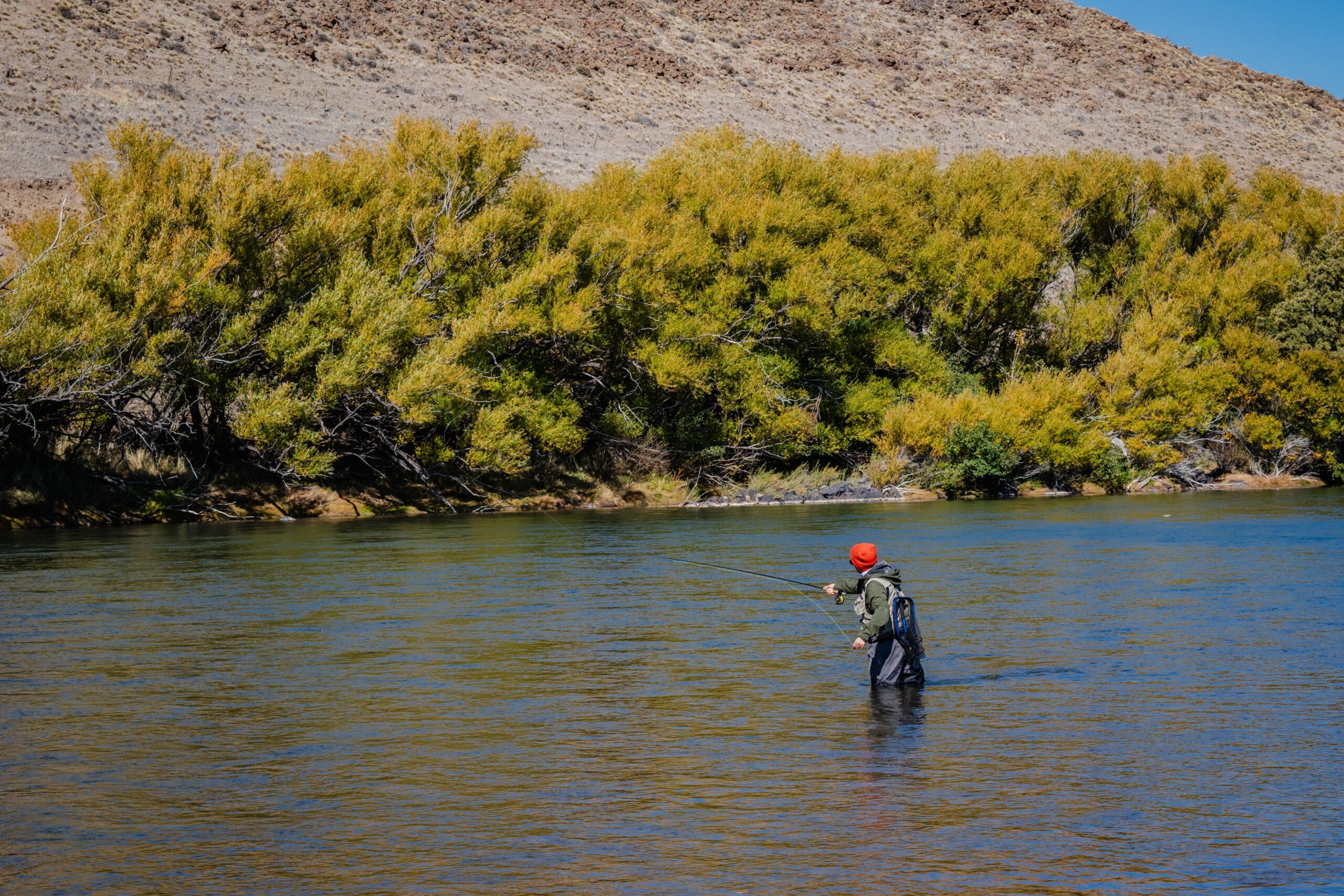
For moving water, an angler should also know what a responsible release looks like under current conditions. Use appropriate tackle, shorten the fight, keep the fish in the water when possible and avoid handling it repeatedly. If the water is warm enough that a fish cannot recover, the right decision may be to stop fishing that stretch even if the law still allows it.
Local conditions beat statewide optimism
One of the easiest mistakes is treating a broad fishing report as a guarantee about a particular access point. Water is local. A state may report usable conditions overall while one tributary is too warm, one ramp is out of service or one river section is under a temporary closure.
The experienced angler’s advantage is not simply knowing a river. It is knowing when the river has stopped behaving like the river remembered.
That matters for lakes, too. Lower water can concentrate fish or expose vegetation that improves habitat in one area while making navigation worse in another. The Florida Fish and Wildlife Conservation Commission’s Lake Okeechobee information illustrates the larger point: a condition that helps one part of the fishing experience can make boating more hazardous.
Do not confuse caution with panic
There is a tendency to turn every fishing restriction into an argument about lost opportunity. Sometimes that criticism is warranted. Managers should show their work, explain their thresholds and communicate with anglers, guides, bait shops and other businesses that depend on predictable access.
But anglers also need to accept that a restriction may be protecting the future opportunity rather than attacking the present one. A river closed because fish are too few, too warm or unable to move is not being managed according to the calendar. It is being managed according to what the fish and water can handle.
The broader drought picture is important, but it does not explain every local closure. One decision may be driven by low flow, another by temperature, another by projected returns, hatchery requirements or navigation safety. Those causes should not be lumped together. The useful question is what condition changed, what evidence supports the response and what would have to improve before the rule changes again.
The fall fishing season is still on the calendar. That is the easy part.
The harder part is learning to read the water before deciding what the calendar means. If the river is too warm, too shallow or too dangerous, the trip has changed even when the regulation book has not. The responsible angler recognizes that before the first cast—not after the fish, boat or river has paid for the mistake.