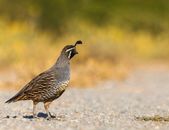
Texas Parks and Wildlife Department says quail hunters have another fair-to-good season ahead. That is useful news. It is not, by itself, a hunting plan.
Texas quail season opens statewide on November 1, 2026, and runs through February 28, 2027. The daily bag limit is 15 birds, the possession limit is 45, and hunters need an Upland Game Bird Endorsement. TPWD’s quail regulations also make clear that there is no open season for Montezuma quail. ([tpwd.texas.gov](https://tpwd.texas.gov/regulations/outdoor-annual/regs/animals/quail?utm_source=openai))
The encouraging part of the forecast is real. TPWD biologists surveyed more than 3,300 roadside miles in early August, and most ecoregions recorded above-average bobwhite observations compared with their 15-year means. Cross Timbers, Edwards Plateau, Gulf Coast Prairies, Rolling Plains and South Texas were above those long-term comparisons. High Plains bobwhite observations improved from 2025 but remained just below the 15-year mean. ([tpwd.texas.gov](https://tpwd.texas.gov/huntwild/hunt/planning/quail_forecast/forecast/?utm_source=openai))
Scaled quail produced the biggest headline. In the Edwards Plateau, the average was 29.88 birds per route, compared with 14.00 in 2025 and a 15-year mean of 8.38. That is a substantial regional improvement, and hunters have a good reason to pay attention to the country west of the Hill Country. But a big number on a survey route still does not tell you what is happening behind the next gate.
A survey is an index, not a census
TPWD has been conducting its statewide quail survey since 1978. The department uses randomly selected 20-mile roadside routes to compare the average number of birds observed in each ecological region with that region’s 15-year average. That makes the survey valuable for identifying broad trends and comparing areas. It does not measure every ranch, pasture, wildlife-management area or brush line in Texas. TPWD describes the survey as a regional population index and warns that local conditions may vary considerably. ([tpwd.texas.gov](https://tpwd.texas.gov/huntwild/hunt/planning/quail_forecast/forecast/?utm_source=openai))
That is not a failure of the survey. It is the normal limit of population monitoring. A regional count can tell you that conditions are improving across a basin. It cannot tell you whether the road into a particular tract is passable, whether water is available, or whether the birds are using the cover you intend to hunt.
The farther the survey date is from opening day, the more important that distinction becomes. The 2026 survey reflects conditions observed in early August. Heat, rain, grazing, mowing, fire and new disturbance can change the ground before November arrives.
The habitat matters more than the headline
Quail do not distribute themselves evenly across a map because an ecoregion is having a good year. They respond to the small-scale arrangement of cover, food, water and escape routes.
For a hunter, that means looking for more than birds during a scouting trip. Look for nesting cover, brood-rearing cover, seed-producing plants, brush lines, draws, usable water and grass interrupted by bare ground. A property can receive good rain and still lack the structure quail need. Another tract, smaller and less impressive on a map, may hold birds because its habitat is arranged correctly.
TPWD’s forecast reflects that uneven story. Late spring and summer rain helped nesting and brood production in parts of the Edwards Plateau and Trans-Pecos, while extended late-summer heat and dry conditions remain a concern. In the Rolling Plains, early drought appeared to delay nesting before mid-summer rain eased some of the pressure. Good weather is not one thing everywhere, and neither is good habitat. ([tpwd.texas.gov](https://tpwd.texas.gov/newsmedia/releases/?req=20261014a&utm_source=openai))
Use the forecast to choose a region, not a covey
The forecast can help a hunter decide where to begin asking questions. It cannot replace local scouting, a conversation with a landowner, a call to a regional biologist or a careful look at the access conditions.
That is particularly important on public land. TPWD identifies opportunities through areas including Matador, Gene Howe, Teacup Mountain, Chaparral, James E. Daughtrey, Black Gap and Elephant Mountain, along with opportunities available through the Annual Public Hunting Permit system. Public designation establishes legal opportunity. It does not guarantee easy roads, good cover, low pressure, abundant birds or a comfortable walk. The department’s forecast pages repeatedly recommend scouting and contacting local biologists before hunting. ([tpwd.texas.gov](https://tpwd.texas.gov/huntwild/hunt/planning/quail_forecast/forecast/?utm_source=openai))
That distinction is worth keeping straight:
- Legal access means you are allowed to hunt there.
- Physical access means you can reach the area safely and reasonably.
- Usable habitat means the ground provides what quail need.
- Bird abundance means birds are present in meaningful numbers.
- Hunting quality also includes crowding, cover, weather, dogs, walking distance and recovery conditions.
Those are related questions, but they are not the same question.
The work starts after the forecast
A strong season can create its own problem: expectations. Hunters hear “above average” and imagine birds spread evenly across every pasture. That is how people arrive unprepared.
Quail hunting still requires safe spacing, fast identification, clean shooting, dependable dogs or careful footwork, water, navigation and a plan for recovering downed birds. Rough cover will expose poor preparation quickly. So will heat, fatigue and a property larger than it looked from the road.
The bag limit is a legal ceiling, not a recommended harvest target. A responsible hunt includes knowing the difference between a bird seen and a bird recovered, keeping shots within a hunter’s ability and leaving enough birds and habitat to support future seasons. A good forecast should encourage preparation, not hurried shooting.
There is also no shame in changing plans. If the cover is poor, the water is gone, the roads are unsafe or the birds are too scattered to hunt responsibly, another tract or another day may be the better decision. Persistence is useful in the field. So is knowing when the ground is telling you no.
A forecast is a map, not a covey
TPWD’s 2026 survey gives hunters a useful starting point. The Edwards Plateau scaled-quail numbers are noteworthy. South Texas remains an important region for bobwhites. The Trans-Pecos and selected public areas deserve attention. Other regions are more uneven, and the High Plains comparison shows why “improving” and “above average” are not interchangeable terms.
But the last decision belongs to the hunter standing at the gate, looking at the cover and deciding whether the country is ready to hold birds.
A forecast can point toward promising ground. It cannot tell you which pasture received the right rain, which brush line still has food, how far the covey has moved or how much walking the day will require. That part is earned the old way: by scouting closely, preparing honestly and paying attention to what the ground is saying instead of what the headline promised.