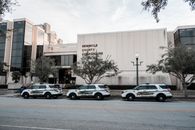
The Kennedy Center is being asked to close for two years, and the administration now wants a federal judge to let that happen.
On November 19, the Trump administration urged Judge Christopher Cooper to lift an order blocking the proposed shutdown, describing a complete closure as the most efficient and cost-effective way to carry out major renovations. The request came amid a lawsuit brought by Rep. Joyce Beatty, a Kennedy Center trustee, over the center’s governance, the closure plan and the administration’s effort to place President Trump’s name on the building. Associated Press reporting and The Washington Post’s account of the hearing make clear that the immediate dispute is judicial. Its larger meaning is cultural.
The Kennedy Center is increasingly being treated not as a performing-arts institution with a political problem attached to it, but as a political instrument whose programming, physical structure, leadership and public identity may all be rearranged by the administration controlling its board.
That is why the renovation argument requires a distinction that has been largely absent from the public conversation: repairing a cultural institution is not the same as politically reconstituting it while calling the process repair.
The closure is not merely construction
The Kennedy Center almost certainly has real infrastructure needs. Its own fiscal-year 2025 budget justification describes modernization work involving mechanical, electrical and plumbing systems, as well as technical stage systems and aging equipment.
A complex building may indeed be easier to renovate while empty. A full shutdown could reduce construction conflicts, simplify scheduling and permit work that would be difficult to perform around a busy calendar. The administration is entitled to make that argument.
But the claim that a two-year closure is the only responsible or economical option remains a contested institutional judgment, not an established fact. The public record, as summarized in the current litigation, leaves important questions unresolved: What alternatives were considered? What happens to staff and resident companies? Which education programs disappear or move elsewhere? How will donors, subscribers and audiences be retained? What will restarting operations cost? And what guarantees that a temporary closure remains temporary?
Those are not administrative footnotes. They are the practical substance of cultural stewardship.
A national institution with an unusual financial structure
The Kennedy Center occupies an awkward but important position in American public life. Congress established the National Cultural Center in 1958 and designated it as a living memorial to President John F. Kennedy in 1964. The building opened in 1971. It is publicly supported, but it is not a conventional federal agency; its artistic and operating life depends heavily on ticket sales, private contributions, investment income and other non-appropriated revenue.
Congressional budget material describes approximately 87 percent of the center’s annual operating budget as coming from non-appropriated sources, while recommending more than $32 million for operations and maintenance. The center is therefore public enough to attract political intervention and financially exposed enough to suffer when performances, attendance, donations or confidence decline. Congressional appropriations material and a Congressional Research Service background report describe an institution that is neither wholly governmental nor simply private.
That hybrid structure creates vulnerability. A president can present the center as a national symbol while also exerting pressure through its board, its funding environment and its public identity. The institution can invoke the nation while carrying the financial risks of a nonprofit arts organization.
Prestige is not accountability. Political capture is not reform.
The Kennedy Center’s defenders should not pretend that prestige settles every question. A national arts institution should be able to explain whom it serves, how it spends public money and how its artistic decisions are made. Its programs should be accessible enough to be understood beyond the professional class that often produces them. Its leadership should be prepared to answer serious questions about cost, audience and public value.
But the answer to institutional elitism is not political capture.
The danger is that the center could become more accessible in rhetoric while becoming narrower in practice: more aggressively branded, more directly supervised and less capable of sustaining the complicated ecosystem of artists, technicians, educators, administrators, donors and audiences that makes a national performing-arts institution worthwhile.
A court’s concern about incomplete information is therefore central. An institution cannot ask the public to trust a two-year transformation while treating the public explanation of that transformation as a privilege distributed selectively. The question is not whether every internal document must become public. It is whether trustees had enough information to make an independent decision and whether the public can evaluate the consequences of that decision.
The building is a symbol, but not only a symbol
Political arguments about the Kennedy Center have understandably focused on the attempted renaming and the president’s personal relationship to the building. Yet the institution’s meaning is larger than its facade.
The center is a memorial, a performance venue, an employer, an educational provider, a donor-supported nonprofit and a gathering place for people who may never attend the most expensive performances in its halls. It represents formal culture, but it also sustains the less visible labor that allows culture to exist: stagehands, musicians, ushers, teachers, technicians, administrators and community partners.
A prolonged closure would interrupt those relationships. Some resident companies may relocate. Some artists may find other venues. Some audiences may follow. Others will simply disappear from the institution’s orbit. Education programs may be rebuilt elsewhere, or they may be quietly reduced. None of these consequences can be inferred from a renovation price tag.
This is the difference between a building project and an institutional project. A building can be closed on a calendar. A cultural network cannot be paused so neatly.
What the Kennedy Center owes the public
The center’s governing board should disclose, as fully as legally possible:
- the complete renovation scope and schedule;
- the alternatives considered instead of a full closure;
- the expected cost of staff, artists and resident companies during the shutdown;
- the effect on education and community programs;
- the financial assumptions involving attendance, donations and presidential fundraising;
- the cost and timetable for reopening; and
- the safeguards that would prevent a temporary closure from becoming an indefinite political reorientation.
That is not an argument against renovation. It is an argument for making renovation accountable to the institution’s actual purpose.
Arthur’s recent examination of the Smithsonian’s succession and curatorial independence asked whether a national cultural institution can remain intellectually independent while under political pressure. The Kennedy Center presents a related but more physical question: can a national performing-arts institution be repaired without becoming a monument to the administration that controls it?
The question also recalls the less ceremonial argument in Arthur’s recent essay on MOCAD: infrastructure is not separate from cultural mission. Air-conditioning, accessibility, staffing, reserves and maintenance are cultural questions because they determine which institutions survive long enough to serve artists and publics.
A cultural center should not be governed like a trophy
The Kennedy Center’s defenders should not rely on inherited prestige. Its leaders must explain its finances, its reach and its artistic choices. But accountability is not obedience, and public support does not give political officials permission to treat a cultural institution as a trophy awarded to whoever occupies the White House.
The administration may ultimately persuade the court that a full closure is necessary. That would not settle the larger question. A lawful renovation can still be an institutionally destructive one if it abandons artists, obscures financial risk or turns public culture into personal branding.
A national cultural center should not be required to flatter the nation in order to serve it. Its purpose is not to display power, but to give a society somewhere to encounter forms of thought and feeling that power cannot entirely supervise.
A building can be renovated. An institution’s credibility is harder to reconstruct.