
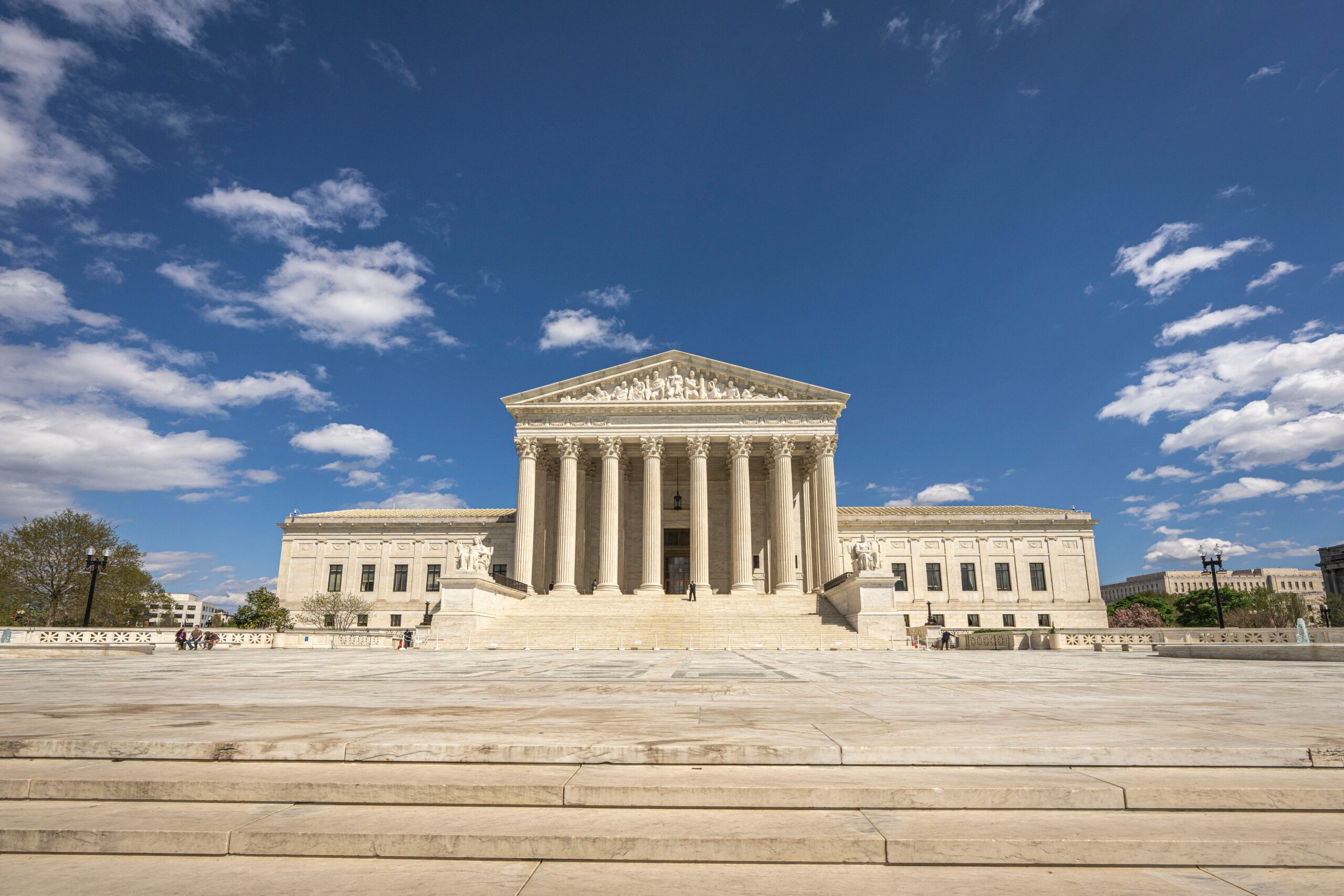
The Supreme Court has agreed to decide whether the executive branch can transform immigration detention policy through a disputed interpretation of a statute Congress enacted in 1996.
On October 1, 2026, the justices granted review in Rhoney, Acting Director v. Barbosa da Cunha, a case arising from the U.S. Court of Appeals for the Second Circuit. The Court’s order, available from the Supreme Court, accepts the case for the 2026–27 term. The Court has not decided the merits, ordered Ricardo Barbosa da Cunha’s release or created a single national detention rule.
That distinction will matter as the case receives political treatment. A grant of review is not an endorsement of either side’s position. It is an acknowledgment that the legal question is consequential enough, and sufficiently unsettled, to require a national answer.
The question before the Court
The case concerns the interaction between two provisions of the Immigration and Nationality Act: 8 U.S.C. § 1225(b)(2)(A), which the administration says requires mandatory detention for a broad category of noncitizens present in the country without formal admission, and § 1226(a), which permits release on bond or conditional parole after an individualized assessment.
The government’s question presented asks whether § 1225(b)(2)(A) mandates detention pending removal proceedings for people who are present in the United States without having been admitted. The administration argues that the statute’s text supports mandatory detention and that conflicting lower-court rulings have produced an unworkable national patchwork. The government’s petition is available through the Department of Justice.
Barbosa da Cunha’s lawyers argue that the government is applying a provision associated with people seeking admission at the border to individuals arrested inside the country after years of residence. The Second Circuit accepted that argument, holding that the government’s interpretation did not cover a person who had lived in the United States for decades and was not apprehended while entering or shortly afterward.
A case about more than one detainee
Barbosa da Cunha is a Brazilian citizen who entered the United States more than 20 years ago, applied for asylum in 2016 and received work authorization. According to the lower-court record described in the government’s petition, he had no criminal convictions, lived with his wife and two U.S.-citizen children and operated a construction business. After immigration officials arrested him in September 2025, an immigration judge denied his request for a bond hearing under the government’s mandatory-detention theory.
The facts are important, but the Supreme Court’s decision will not be limited to deciding whether one person should remain detained. The institutional question is who has authority to determine the reach of a detention system: Congress, through clear statutory language, or the executive branch, through a new interpretation of language that previous administrations had applied differently.
That is the issue beneath the technical statutory dispute. The administration may ultimately prevail if the Court concludes that Congress wrote the law to require its interpretation. But the scale of the claimed power makes the method of change significant. A categorical detention rule is not merely an adjustment in enforcement emphasis. It removes an immigration judge’s opportunity to assess danger, flight risk, family circumstances and other individual facts before continued detention.
A bond hearing is not automatic release
The public debate will likely contain a predictable misunderstanding. A bond hearing does not guarantee release.
If the Supreme Court holds that affected detainees are entitled to hearings under § 1226(a), the government could still argue that a particular person presents a danger or a flight risk. An immigration judge could still order continued detention. What would change is the decision-making process: detention would be subject to an individualized assessment rather than imposed categorically on the basis of the government’s disputed statutory classification.
That difference is the legal center of the case. The question is not whether immigration officials may detain people while removal proceedings continue. It is whether they may deny an entire category of people any opportunity to seek an individualized bond decision.
The patchwork problem
The case reaches the Supreme Court after a direct conflict among federal appeals courts. The Second and Fourth circuits are among those that have rejected the administration’s interpretation. The Fifth and Eighth circuits have upheld it, according to the litigation record and reporting supplied with the case.
The result is a familiar but serious institutional failure: the same federal statute can produce different detention procedures depending on where a person is arrested or detained. Immigration judges, federal district courts, detention agencies, families and employers must operate under rules that are not uniform while the Supreme Court prepares to decide what Congress meant.
I examined the earlier stage of this dispute in The Immigration Detention Fight Is Now a Test of Institutional Limits. At that point, Supreme Court review was a likely consequence of the circuit split. It is now a formal part of the case. The question has moved from whether the lower courts can coexist with conflicting interpretations to whether the justices will permit the executive branch’s interpretation to become the national rule.
Why prior practice matters
The Second Circuit emphasized that the government’s position represented a departure from more than three decades of executive-branch practice across multiple administrations. That history does not override clear statutory text. An agency cannot make an unlawful interpretation lawful merely by pointing to its age.
But prior practice is relevant when an agency asks courts to accept a sweeping interpretation of a statute that Congress has amended without clearly requiring the result now asserted. If the government’s reading would expand mandatory detention from a category associated with border or admission proceedings to a much larger group of people arrested in the interior, the Court will have to decide how much clarity Congress was required to provide.
This is a recurring problem in modern administration. New officials often argue that earlier officials misunderstood an old law. Sometimes that is true. Government agencies should be able to correct legal errors. But when the correction creates a large coercive system—particularly one involving imprisonment—the courts have reason to examine whether interpretation has become a substitute for legislation.
What the Court has not decided
The October 1 order does not establish a nationwide rule. It does not resolve the constitutional questions that may surround detention without an individualized hearing. And it does not tell immigration judges how every pending case should be handled while the litigation continues.
The Court may decide the case narrowly through statutory interpretation. It may address due-process arguments if necessary. It may define the relevant category of noncitizens more narrowly than either side expects. The eventual ruling could apply primarily to long-term residents arrested in the interior, or it could have broader consequences depending on how the justices interpret the statutory structure.
The Court’s docket confirms that the case comes from the Second Circuit and that the petition was granted on October 1. The next important developments will be the briefing schedule, the parties’ formal presentation of the statutory question and the eventual argument date—not speculation that the grant itself has settled the dispute.
The institutional test
The administration has a legitimate interest in consistent immigration enforcement. A national system cannot function indefinitely under contradictory appellate rules. But consistency cannot be achieved simply by selecting the broadest available interpretation and treating judicial disagreement as an administrative inconvenience.
The Supreme Court is being asked to decide whether a contested reading of a 1996 law can support a major expansion of detention authority. That decision will determine more than the availability of bond hearings for one group of immigrants. It will also signal how the justices understand the relationship between executive enforcement, congressional clarity and longstanding administrative practice.
The larger question is straightforward, even if the statute is not: when the government claims a new power to detain, is the legal source of that power clear enough to come from Congress—or is the executive branch asking the courts to approve a policy first and settle the law afterward?