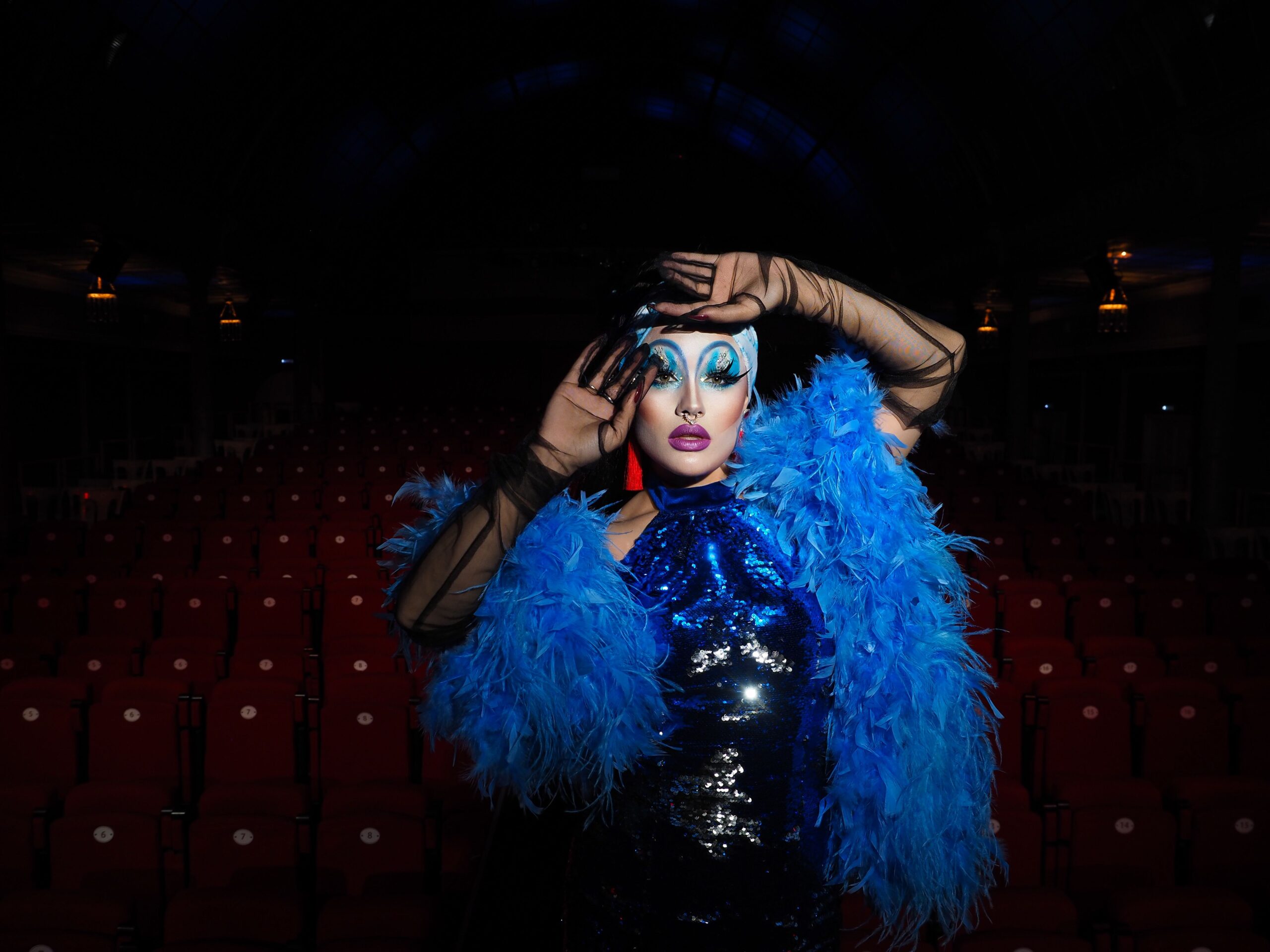
When MS. BLAKK FOR PRESIDENT begins previews at New York’s Vineyard Theatre on October 22, the audience will not be entering an ordinary theatrical space. The production promises a campaign rally, a nightclub and a confession; its environment begins in the lobby and continues through a reoriented theater with floor and table seating. It is, in other words, asking spectators to attend a political performance by becoming part of one.
That is an intelligent formal choice. Joan Jett Blakk’s 1992 presidential campaign was never simply a piece of political biography waiting to be dramatized. It was already an argument about the relationship between public attention and political power. The forthcoming play, written by Tarell Alvin McCraney and Tina Landau and directed by Landau, matters because it must decide whether that argument can survive the journey from protest into cultural institution.
The Vineyard Theatre describes the production as inspired by the true story of Terence Alan Smith, the performer and activist who campaigned as Joan Jett Blakk during the AIDS epidemic. Blakk and Queer Nation Chicago attempted to drag queer politics “out of the closet” and onto the floor of the Democratic National Convention. The language is theatrical because the campaign was theatrical. But theatrical did not mean unserious.
In an era when many queer people were confronting illness, death, official indifference and public contempt, conventional political respectability had not exactly distinguished itself. Blakk’s campaign answered that failure with exaggeration, humor, drag and deliberate impropriety. The joke was not an escape from politics. It was a way of making political exclusion visible.
The camp was the method
Joan Jett Blakk is sometimes remembered as a colorful footnote: an extravagant candidate, a provocative slogan, an entertaining interruption in the solemn machinery of elections. That description is not false, but it is insufficient. It mistakes the campaign’s surface for its purpose.
The New York Public Library’s Schomburg Center finding aid for the Joan Jett Blakk/Lick Bush in ’92 Archive records campaign speeches, promotional materials, press clippings, academic essays and documentary material from Blakk’s 1991 Chicago mayoral and 1992 presidential campaigns. The archive identifies Smith’s work as public performance art intended to raise the profile of LGBT issues and combat homophobia. It also preserves the less glamorous machinery of political memory: flyers, speeches, reviews, invitations and paperwork.
That distinction matters. A campaign is not only its memorable image. It is also organizing, publicity, argument and the labor required to make an excluded community appear in public as a political subject. Blakk’s performance did not merely ask to be liked. It forced an audience to acknowledge that the supposedly serious political world was itself a performance—one with costumes, scripts, rituals and rules about who was permitted to speak.
The slogan “Lick Bush in ’92” was funny. It was also an act of political compression. It turned the decorum of presidential politics inside out and made the body, sexuality and anger of queer protest impossible to separate from the language of the campaign. The joke carried information the respectable version of politics preferred not to receive.
A theater can preserve dissent—or domesticate it
MS. BLAKK FOR PRESIDENT has been in development for years. In a 2019 interview with American Theatre, McCraney and Landau discussed Blakk’s campaign as a response to the AIDS crisis and to a political culture that had failed to recognize queer lives as worthy of urgent attention. The production’s arrival in New York is therefore not the discovery of an unknown historical episode. It is the institutional presentation of a history that has already been documented, performed and preserved by the people who made it.
That creates the central problem. A theater audience arrives prepared to appreciate performance. The very institution that once might have regarded Blakk’s candidacy as vulgar or unserious can now display it as daring, historically important and artistically sophisticated. Dissent has acquired a season brochure.
There is no shame in that transformation. Archives, theaters and museums are among the means by which fragile histories remain available. But preservation is not the same as harmlessness. The question is whether the play allows Blakk’s campaign to remain unruly—or whether it converts a political tactic into an attractive artifact.
Immersion may help. If spectators sit inside a rally-nightclub-confessional rather than before a conventional historical drama, they may experience some of the campaign’s instability: the uncertain boundary between entertainment and confrontation, pleasure and accusation, audience and participant. A standard biographical play could make Blakk seem merely ahead of her time, which is often a flattering way of making the past safe.
But immersion has its own danger. An audience can leave feeling that it has participated in dissent when it has really purchased a well-designed evening about dissent. The theater may offer proximity without consequence, the sensation of political risk without the risk itself. One can admire the barricade from a comfortable seat, particularly when the seat has been marketed as premium floor seating.
Visibility is not acceptance
Blakk’s campaign understood something contemporary culture still struggles to articulate: visibility is not the same as acceptance. To be seen can mean being mocked, commodified or neutralized. It can mean that an institution has learned how to display a challenge without allowing the challenge to alter its habits.
That is why the play should not be judged primarily by whether it makes Joan Jett Blakk seem inspirational, respectable or newly fashionable. Those are modest ambitions. The stronger test is whether it preserves the campaign’s refusal to behave properly.
Political spectacle is hardly new. Candidates have always used costume, staging, symbolism, slogans and carefully managed intimacy. What has changed is the permanence of the spectacle. Contemporary politics does not occasionally become theatrical; it operates inside an almost continuous theater of personality, outrage and recognition.
Blakk’s example offers a useful distinction. Performance can disguise power, making authority seem natural, intimate or inevitable. It can also expose power by making its rituals look strange. The first kind of spectacle asks the public to believe. The second asks the public to notice.
The forthcoming production will be most valuable if it keeps that distinction alive. It should not present Blakk as a charming historical eccentric who anticipated the age of political branding. She was responding to a crisis in which conventional language had proved inadequate and conventional visibility had arrived too late. Her campaign used performance not to escape reality, but to puncture the official version of it.
The recent recasting of Ato Blankson-Wood in the role of Terence Alan Smith/Joan Jett Blakk, after Wayne Brady withdrew because of vocal problems, has brought additional attention before previews begin. That development is newsworthy, but it is not the production’s meaning. The larger question remains whether the performance can carry the historical pressure that made Blakk’s original performance necessary.
A theater cannot recreate the AIDS crisis, the political indifference or the particular public spaces in which Blakk’s campaign intervened. Nor should it pretend that a night at the Vineyard is equivalent to organizing under conditions of abandonment. What it can do is refuse the comforting distance of historical admiration.
The best version of MS. BLAKK FOR PRESIDENT will leave audiences entertained, certainly. Blakk understood entertainment too well to apologize for it. But it should also leave them slightly less confident that spectacle is politically empty, or that history becomes meaningful merely because an institution has learned how to frame it.
The performance was the politics. The play’s challenge is to remember why.