Colorado voters turned down Amendment 83 on November 3. Preliminary results put the measure at roughly 45 percent in favor and 55 percent opposed, although the final certified count remains the one worth hanging a hat on.
The result did not ban hunting. It did not take away fishing. It did not close a season or cancel a license. It left Colorado’s existing system in place.
That system is not glamorous. It is made of licenses, season dates, bag limits, draw systems, wildlife surveys, habitat work, wardens, access agreements and the occasional unpleasant decision to tell people they cannot do what they would rather do.
That is also why the vote matters.
Amendment 83 would have placed a constitutional right to hunt, fish and harvest fish and wildlife by traditional methods in the Colorado Constitution. It also would have named hunting and fishing the state’s preferred means of managing wildlife, while preserving regulatory authority for scientific conservation, public safety and future opportunity. The measure’s defeat means those words will not be added to the constitution. The practical management questions remain exactly where they were.
The Colorado Legislative Council’s 2026 ballot information booklet made the immediate point plainly: a no vote meant hunting and fishing would continue under existing state and federal law. The Colorado Parks and Wildlife regulatory system still governs season dates, licenses, bag limits, methods of take and other requirements.
A right is not a tag
The campaign around Amendment 83 dealt in large ideas: heritage, freedom, conservation and protection from future political pressure. Those ideas are real. Hunting and fishing are important parts of Colorado life, and the people who buy licenses and equipment help support the wildlife system they use.
But a constitutional promise cannot do the work of a wildlife agency.
It cannot create more elk when a herd is below objective. It cannot put water in a dry creek. It cannot reopen a road washed out by a storm or make private land public. It cannot lower the cost of a license, reduce the distance to a trailhead or make an overcrowded drainage less crowded.
It cannot guarantee that a hunter will draw a limited license. Colorado’s own regulations recognize that opportunity is managed by unit, species, season and available license numbers. A legal opportunity is not automatically a usable one.
That distinction is easy to miss from a ballot pamphlet. It is harder to miss when you are standing at the truck before daylight, looking at a locked gate, a closed road, a thin herd or a mountain that is still several miles farther than the map suggested.
Wildlife management has to say no sometimes
Hunting can be tradition, recreation, food, family practice and a management tool. Those purposes often fit together. They do not always point in the same direction.
A responsible wildlife system has to be able to say yes when the population and conditions support harvest. It also has to be able to say not here, not this year, not this many or not this method when the evidence demands it.
That is not hostility toward hunting. It is what management looks like when the animal is real and the numbers are not slogans.
Colorado Parks and Wildlife is charged with managing wildlife and providing outdoor recreation, while the Parks and Wildlife Commission establishes rules involving seasons, licenses and methods. The agency’s official regulations cover everything from license requirements to season dates and bag limits. Those rules are not an admission that hunting is illegitimate. They are the mechanism that allows a shared resource to survive pressure from many users.
The same applies to fishing. A river may be legally open and still be too warm for responsible angling. A lake may be accessible and still be under stress. A closure or method restriction may frustrate people who planned a trip months in advance, but the fish do not owe anyone a convenient calendar.
What the vote actually says
It would be a mistake to read the result as a rejection of hunting and fishing. Colorado voters were not asked whether those activities should disappear. They were asked whether a proposed set of constitutional language should be added to the state’s governing document.
They declined to do that.
Supporters feared that future lawmakers, agencies or ballot campaigns could restrict hunting and fishing. Opponents argued that the activities were already lawful and that phrases such as “traditional methods,” “preferred means” and “necessary” could create future arguments in court.
Both sides were looking beyond the immediate election. Supporters were concerned about what might happen to hunting policy later. Opponents were concerned that constitutional language could make future biological or public-safety decisions slower, more expensive or harder to adjust.
The vote settled that particular question for now. It did not settle the larger argument over how much authority wildlife managers should have when conditions change.
The machinery matters more than the slogan
If Colorado wants to protect hunting and fishing, the durable work is less dramatic than a constitutional campaign. It means maintaining habitat. It means collecting credible population data. It means keeping access routes open where the public has a legal right to use them. It means enforcing boundaries and regulations. It means making license systems understandable and responding honestly when opportunity is limited.
It also means hunters and anglers accepting responsibilities that do not fit neatly into a political slogan: reporting disease, following carcass-transport rules, respecting private property, checking emergency changes and accepting restrictions when the resource cannot withstand more pressure.
The strongest defense of hunting is not the claim that every restriction is an attack. It is the demonstration that regulated opportunity can produce healthy wildlife, responsible use and public trust.
Colorado voters did not constitutionalize hunting. That leaves the state with the same difficult job it had before the election: keeping the opportunity legitimate by keeping the resource healthy enough to support it.
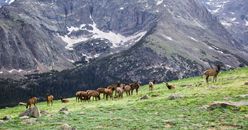
The elk do not read amendments. The people managing them have to read the data, the landscape and the conditions in front of them. So do the people carrying rifles and fishing rods into that landscape.