The next phase of the Roadless Rule debate will not begin with a single timber sale or road project. It will begin with a series of local decisions about forests, budgets, wildfire protection, recreation and public access.
The U.S. Department of Agriculture is accepting public comments through October 6, 2026, on a proposal to rescind the 2001 Roadless Area Conservation Rule. The proposal would remove the national regulation covering more than 44 million acres of inventoried roadless areas in the National Forest System, most of them in the West.
That does not mean 44 million acres are immediately being opened to logging. The proposal would not approve a specific road, timber sale, mine or fuels-treatment project. Existing forest plans would remain in effect, and future projects would still require site-specific environmental review under the National Environmental Policy Act and compliance with other laws.
What would change is where the argument happens. Instead of a national restriction setting a common baseline, more decisions would move to individual forest plans, transportation plans and local Forest Service officials.
Local control is also local responsibility
USDA describes the rescission as a way to give forest managers more flexibility to reduce wildfire risk, conduct vegetation management and consider roads, timber, minerals or energy access where local conditions justify it. The agency also acknowledges that actual changes would be constrained by terrain, budgets, existing plans and legal requirements.
That distinction matters for communities being promised greater control. Authority on paper is not the same as money, staff or long-term accountability.
The Forest Service has identified a deferred maintenance backlog of roughly $6.9 billion for roads and bridges, according to the proposal’s supporting analysis. Building or reopening a road may be possible under a changed rule, but the harder question is who maintains it afterward and what happens when federal maintenance money does not follow.
For a rural county, a road could improve emergency access, support a fuels-treatment project or make a timber sale more practical. It could also increase traffic, construction disruption, maintenance obligations and pressure to accept projects whose financial benefits are difficult to measure. A forest manager may gain flexibility while a county inherits more responsibility.
Wildfire is not a one-word answer
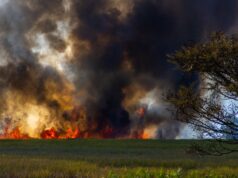
The administration has presented the Roadless Rule as an obstacle to forest-health work and wildfire reduction. California officials dispute that description, arguing that the existing rule already permits hazardous-fuels treatments, prescribed fire and temporary emergency access when needed to protect public health and safety. California said more than 240,000 acres of its roadless lands have already undergone vegetation treatments.
Both sides are identifying real questions, but neither “more roads” nor “no roads” is a universal wildfire solution. A road may help firefighters reach one location while creating new construction, maintenance or human-ignition risks elsewhere. The relevant question is not whether roads are inherently good or bad. It is whether a particular project produces a documented safety benefit that justifies its ecological and public costs.
That evidence will have to emerge forest by forest. The current proposal does not identify which roadless areas would change first or which projects are currently waiting for the rule to disappear.
The costs extend beyond timber
Roadless areas are also part of the infrastructure supporting drinking water, fisheries, wildlife habitat, hunting, fishing and outdoor recreation. California’s formal opposition, submitted September 23, identified approximately 4.4 million affected acres in the state and argued that changes could threaten water supplies and recreation economies.
USDA’s own analysis recognizes potential recreation losses from noise, visible infrastructure, temporary closures and reduced opportunities for remote recreation. It estimates possible annual recreation-related losses of approximately $6.1 million in affected operable areas, while also acknowledging that expanded access could benefit some users.
That split reflects the practical reality of public forests: one new road can create an economic opportunity for a contractor, timber operator or local business while reducing the quiet, scenery or remoteness that supports another business. The effects will not be distributed evenly, and they will not all appear in a Forest Service project budget.
Tribes and subsistence users face an even broader set of questions involving hunting, fishing, cultural practices and access. The Forest Service says it will hold public subsistence hearings in Alaska, but the proposal reviewed for this story did not yet provide dates or locations. Those consultations cannot be treated as a procedural footnote when the land supports communities whose needs may not be captured by timber receipts or recreation visits.
What happens after October 6
The comment deadline is the immediate development, not the end of the story. The more consequential evidence will come later through forest-plan amendments, transportation planning, environmental reviews and the first project proposed under the new framework.
Readers should watch for four things: whether local managers identify specific wildfire or access problems that the existing rule prevents them from addressing; whether project sponsors disclose construction and maintenance costs; whether water, recreation and wildlife impacts are measured before approval; and whether local communities and Tribes have meaningful influence before decisions are made.
The Roadless Rule’s future will therefore be judged less by the language of rescission than by what follows it. If “local control” means communities receive clearer choices, reliable funding and enforceable accountability, the change may produce more responsive forest management. If it mainly transfers disputes and maintenance burdens downward while benefits flow elsewhere, the country will have removed a national safeguard without creating a workable local replacement.